
Frieden … Krieg … Frieden … Krieg … ? … – Peace … War … Peace … War … ? … – Béke … Háború … Béke … Háború … ?
Neo – Essentialism Studies | Essentials through Interaction & Generation + AI
Neo – Essentialismus Studien | Wesentliche durch Interaktion und Generierung + KI
Neo – Esszencialista Tanulmányok | Az Esszencia Interakció és Generálás + MI
(Best viewed on PC and Monitor with 1920×1200 resolution)
(Optimale Darstellung auf PC und Monitor mit einer Auflösung von 1920×1200)
(Optimális megjelenítés PC-n és monitoron 1920×1200 felbontással)
■ Inhalte der Studien:
- Durch Luftangriffe katastrophal zerstörte städtische Strukturen
- Weinende und schreiende Kriegsopfer
- Nach dem Krieg
■ Contents of the studies:
- Urban structures catastrophically destroyed by air raids
- Weeping and screaming war victims
- After the war
■ Tanulmányok Tartalma:
- Légitámadások következtében katasztrofálisan elpusztult városi szerkezetek
- Zokogó és sikoltozó háborús áldozatok
- A háború után
■ ■ ■
■ ■ ■
DIE AUSSTELLUNG | THE EXHIBITION | A KIÁLLÍTÁS
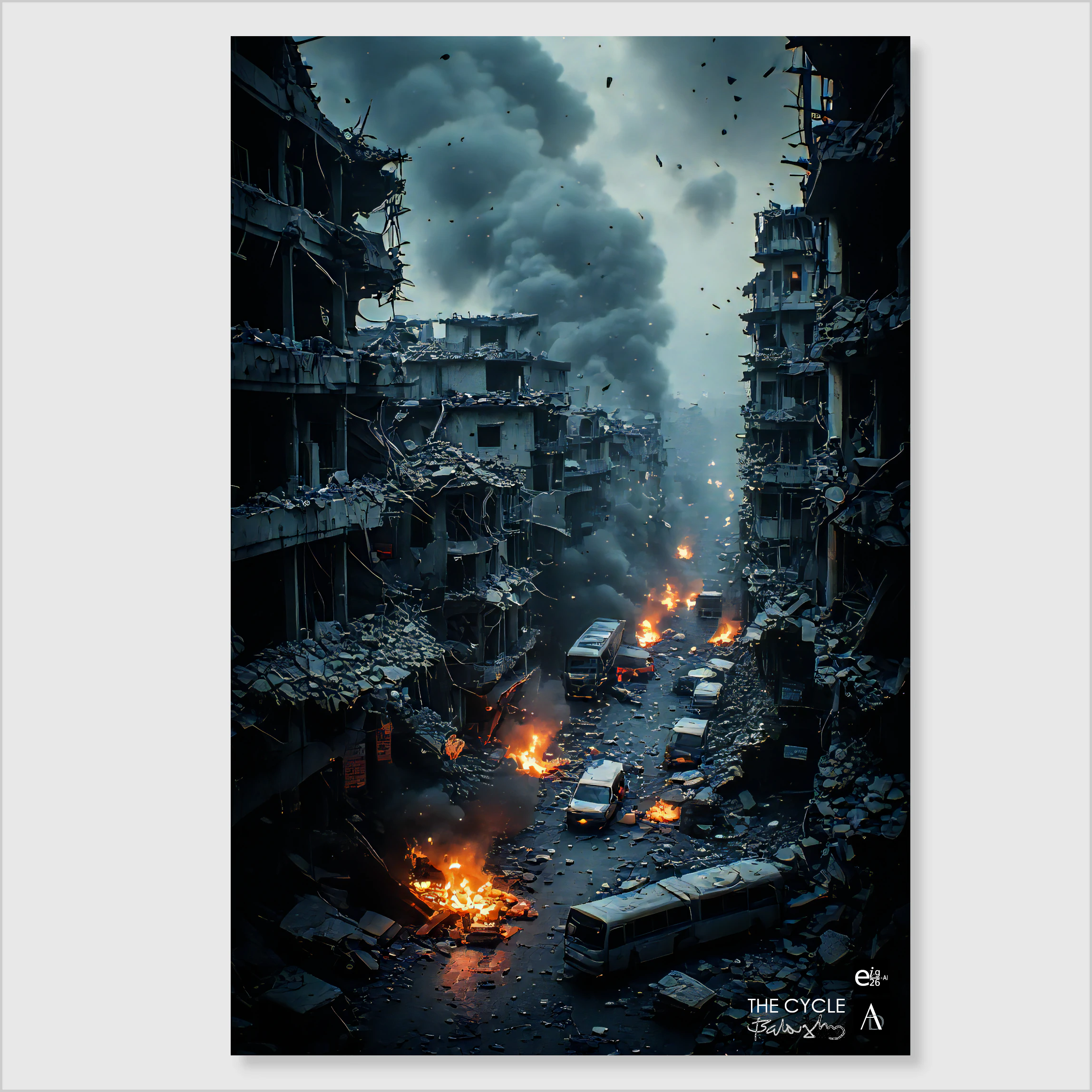
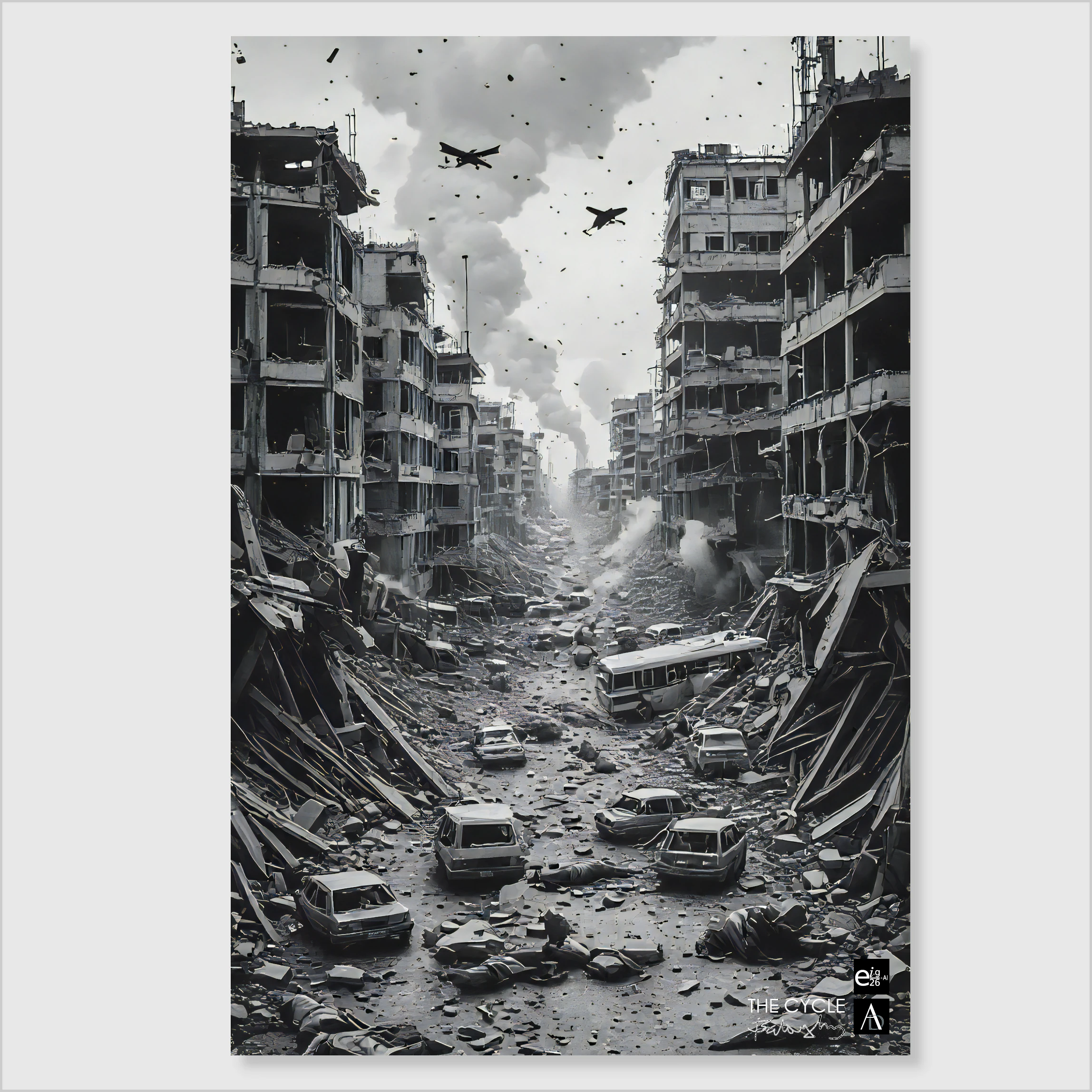
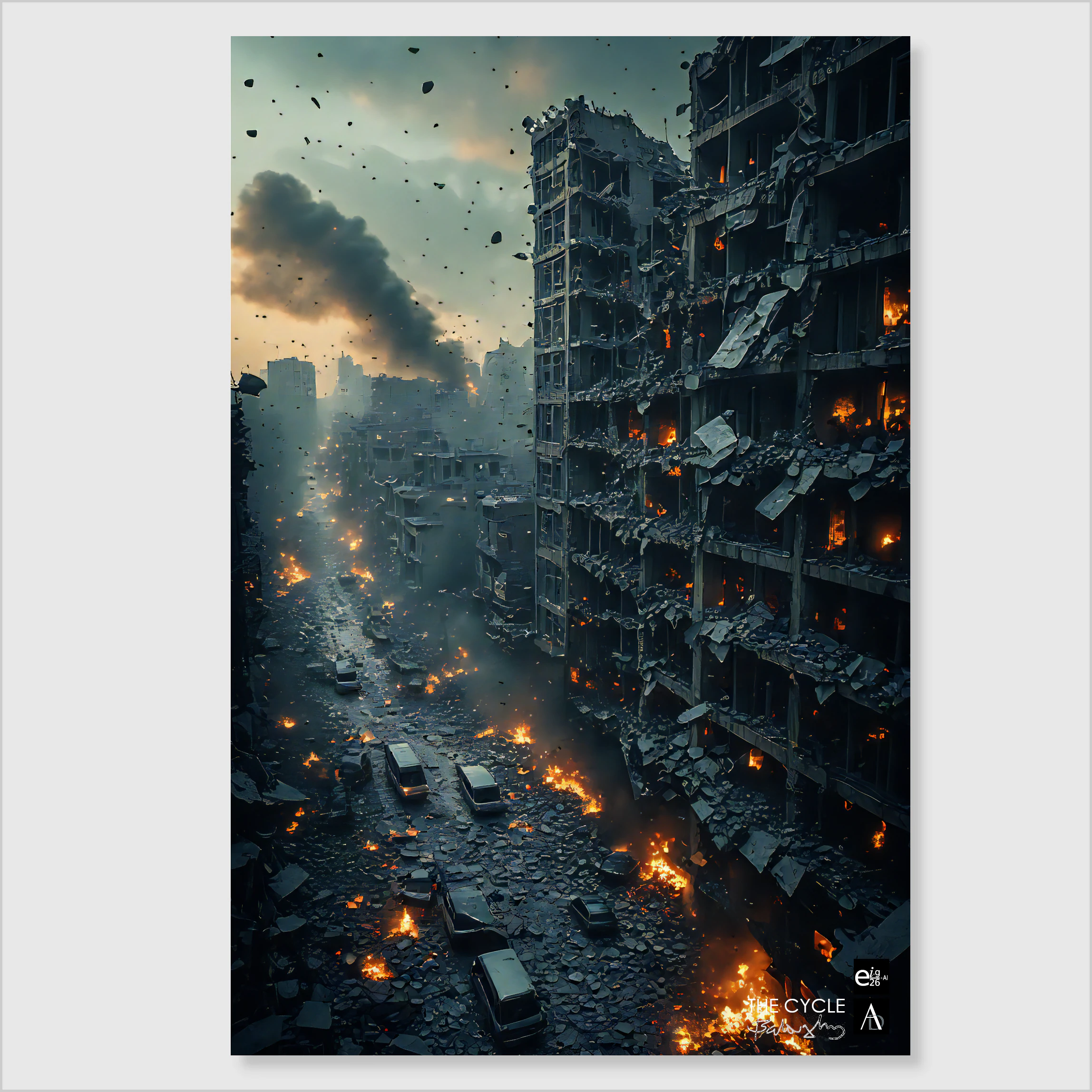
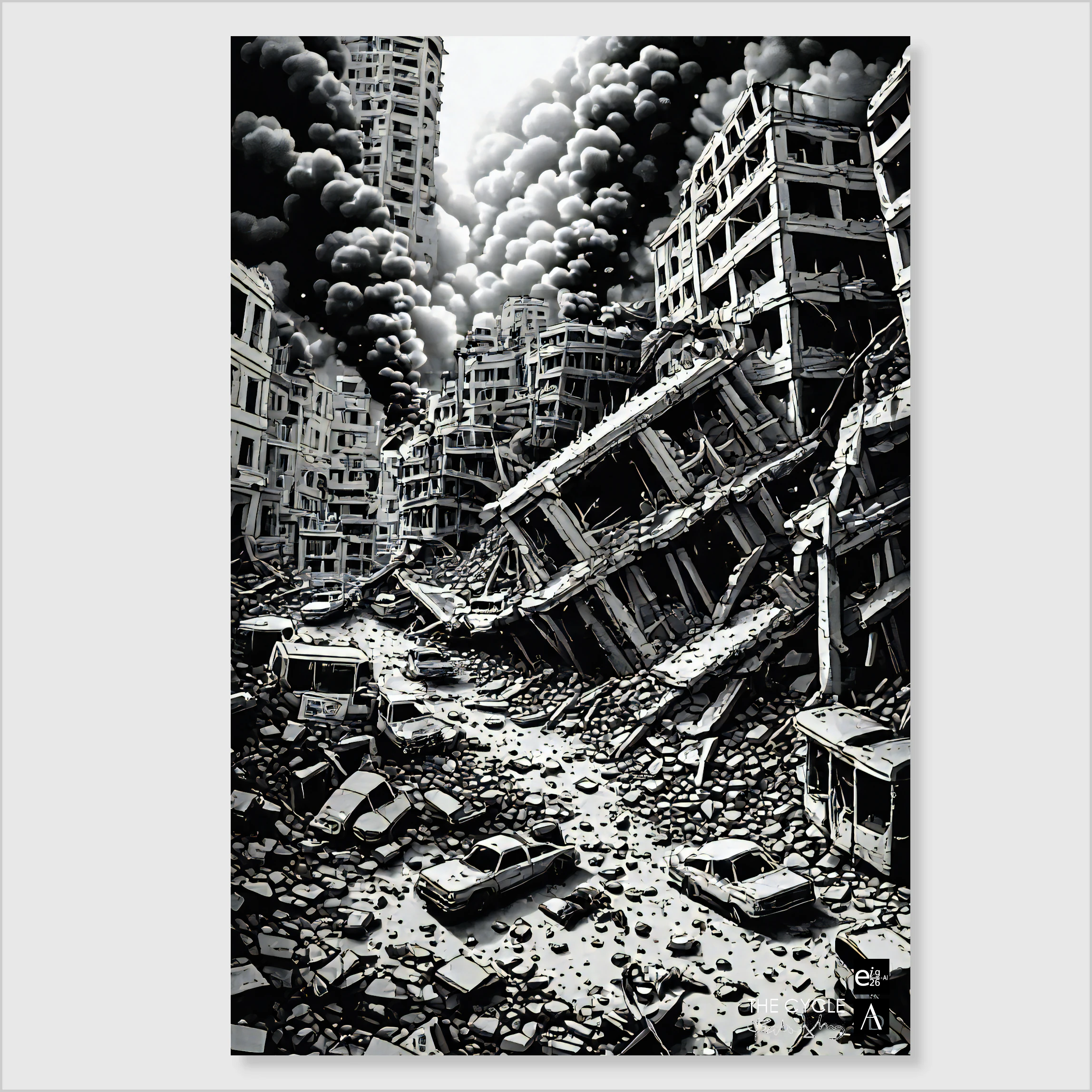
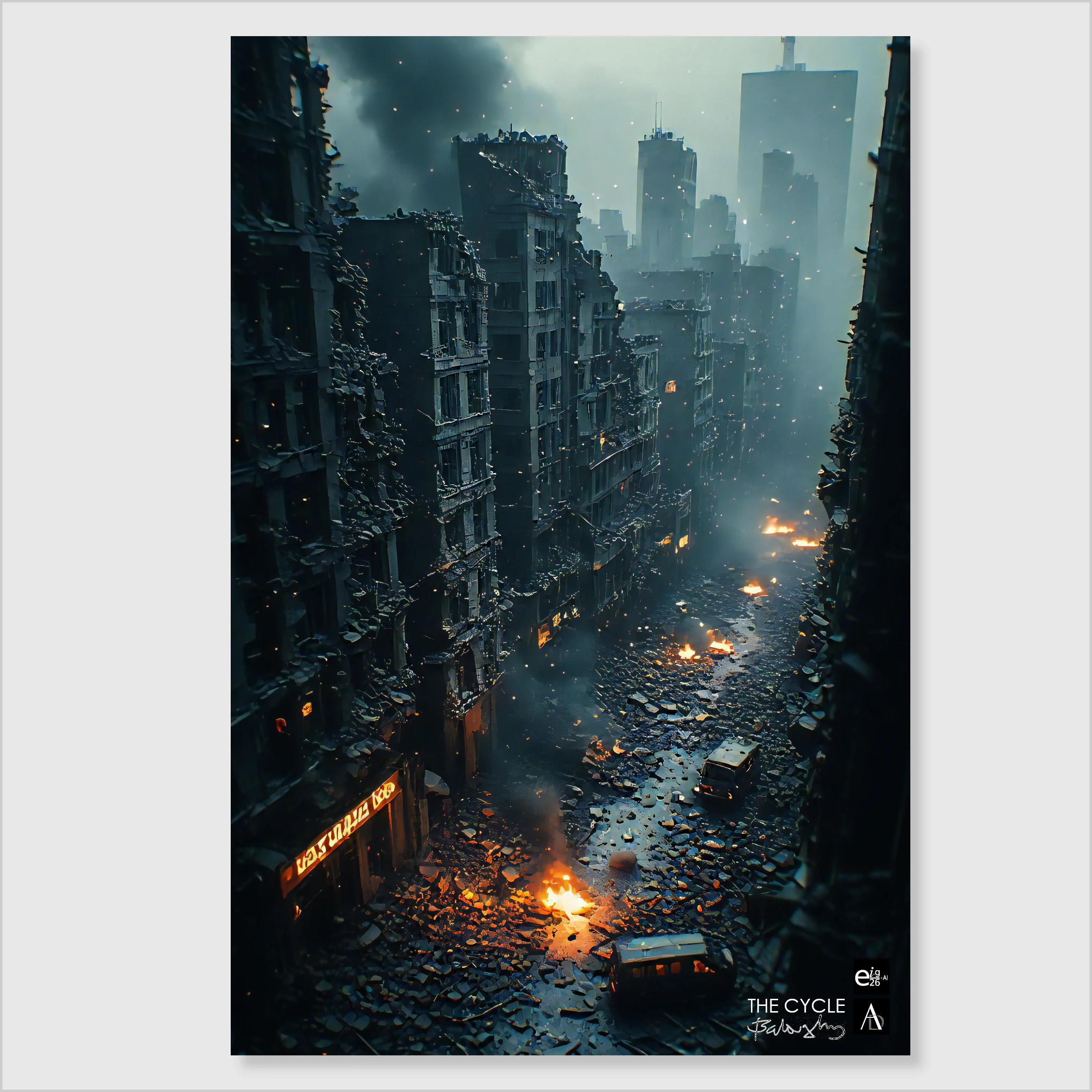
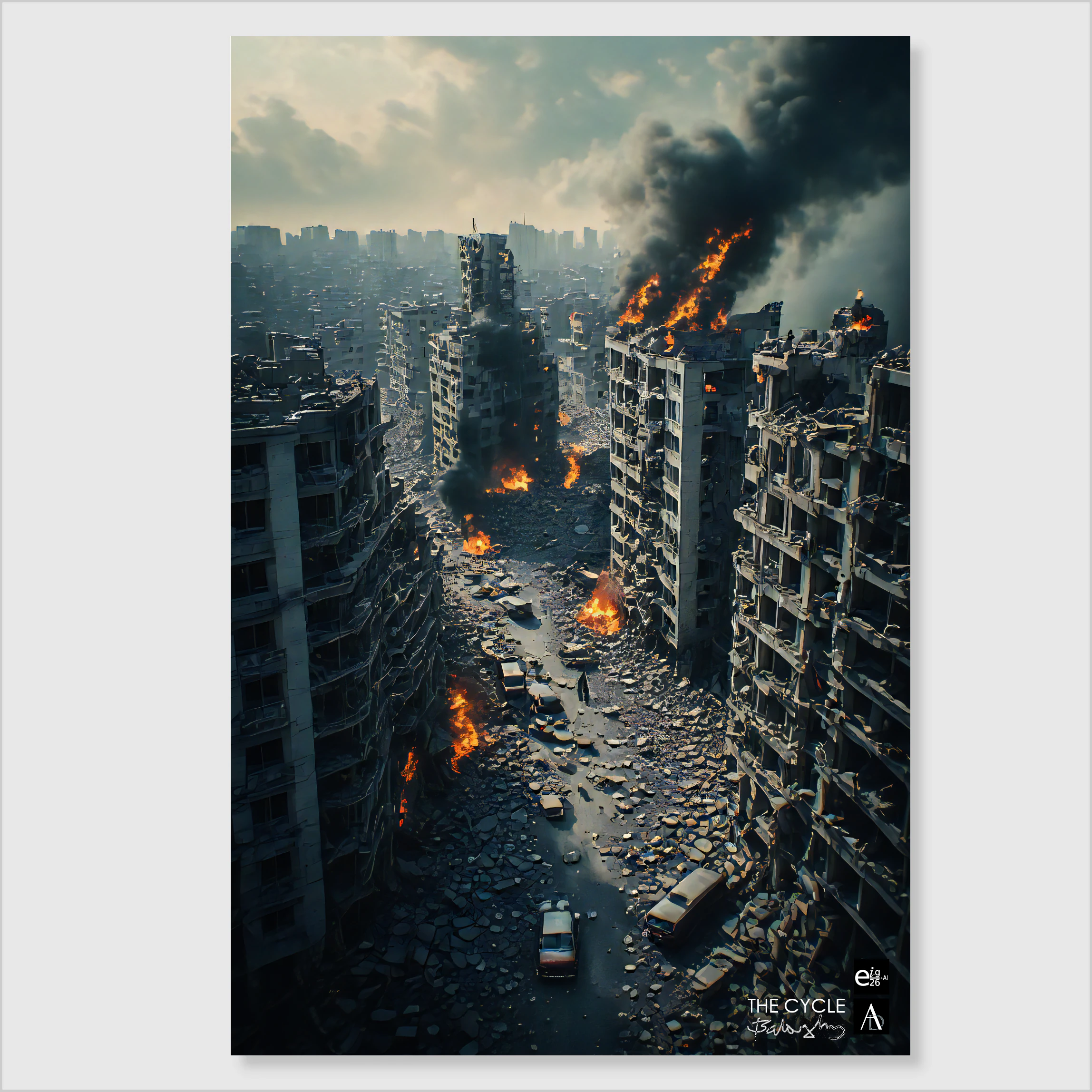
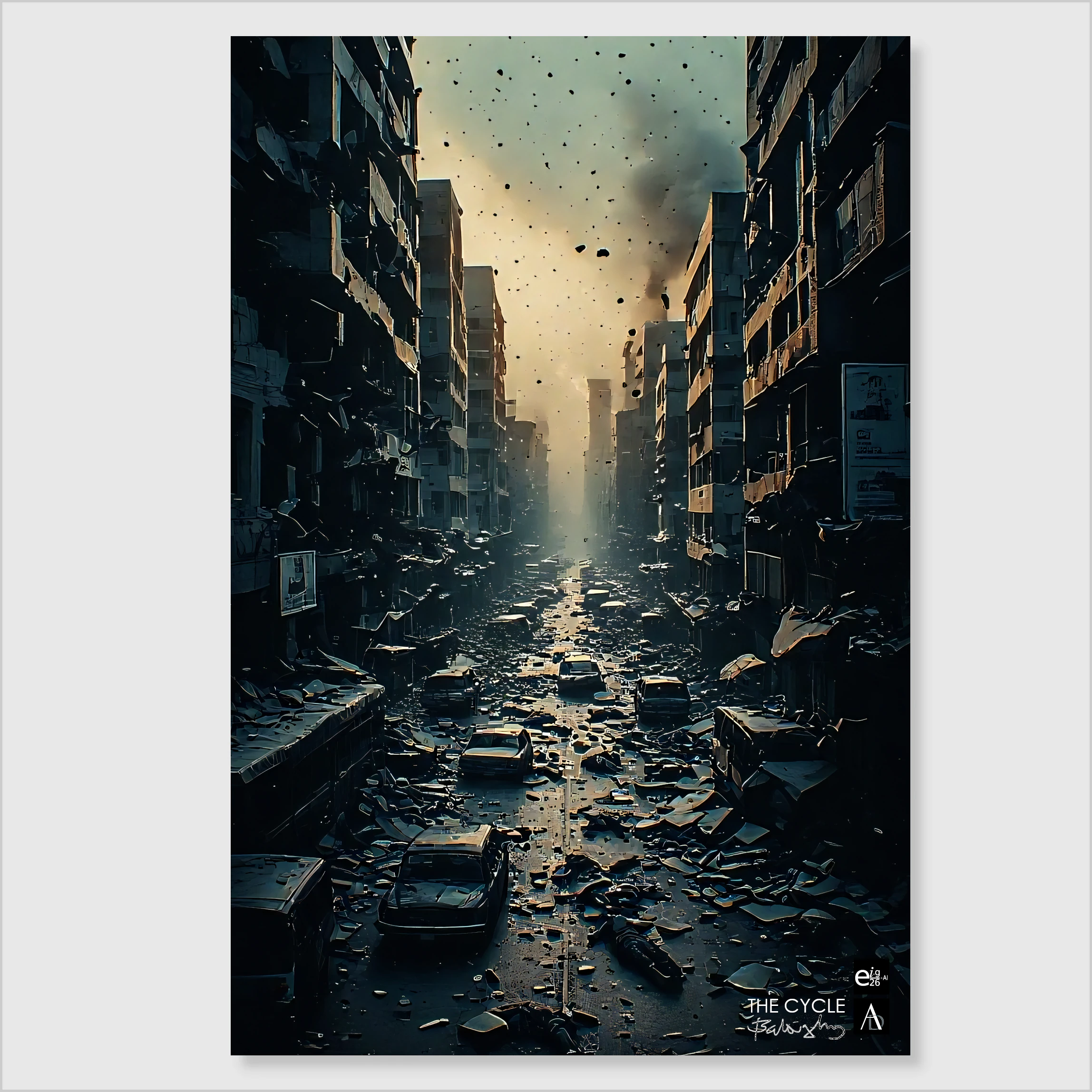
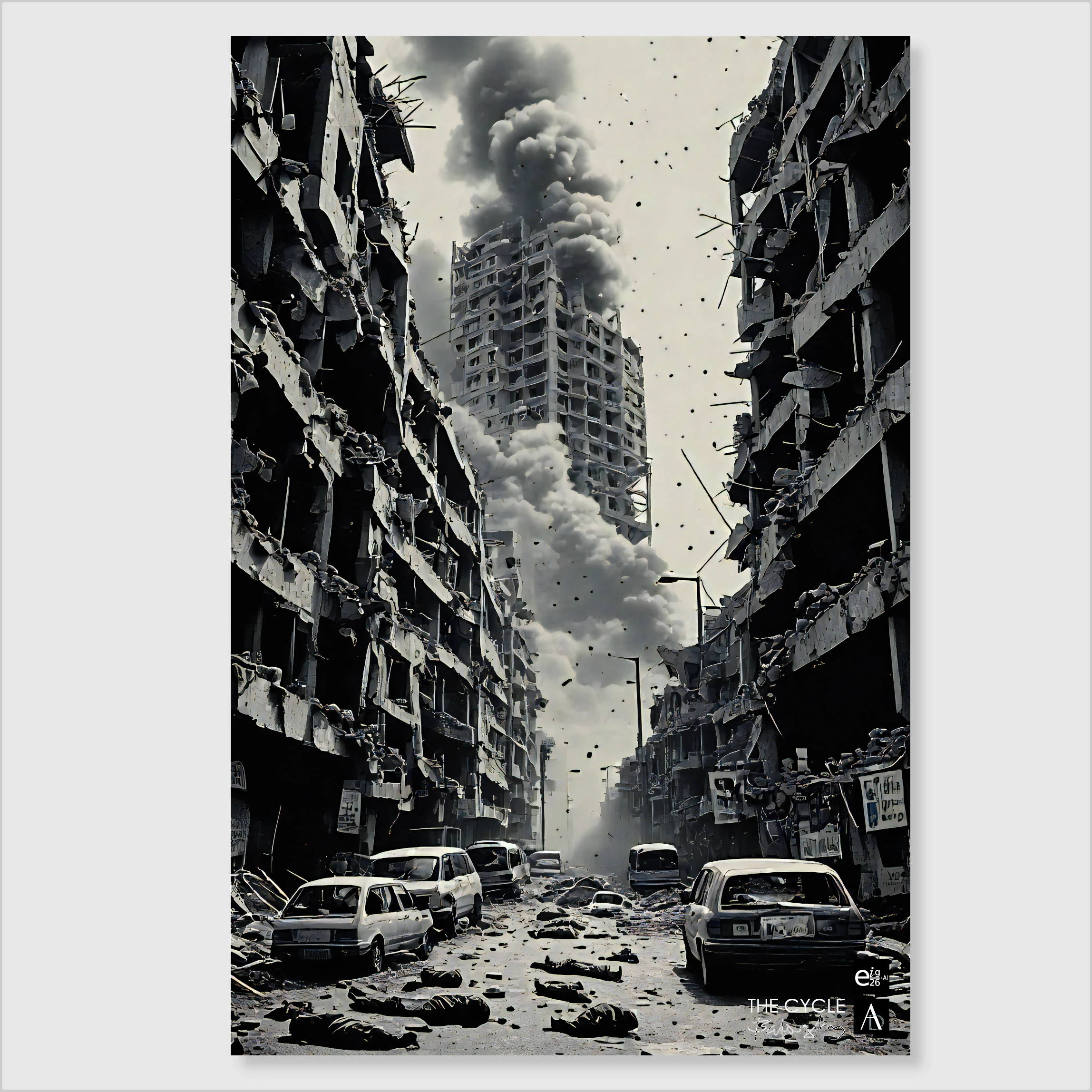
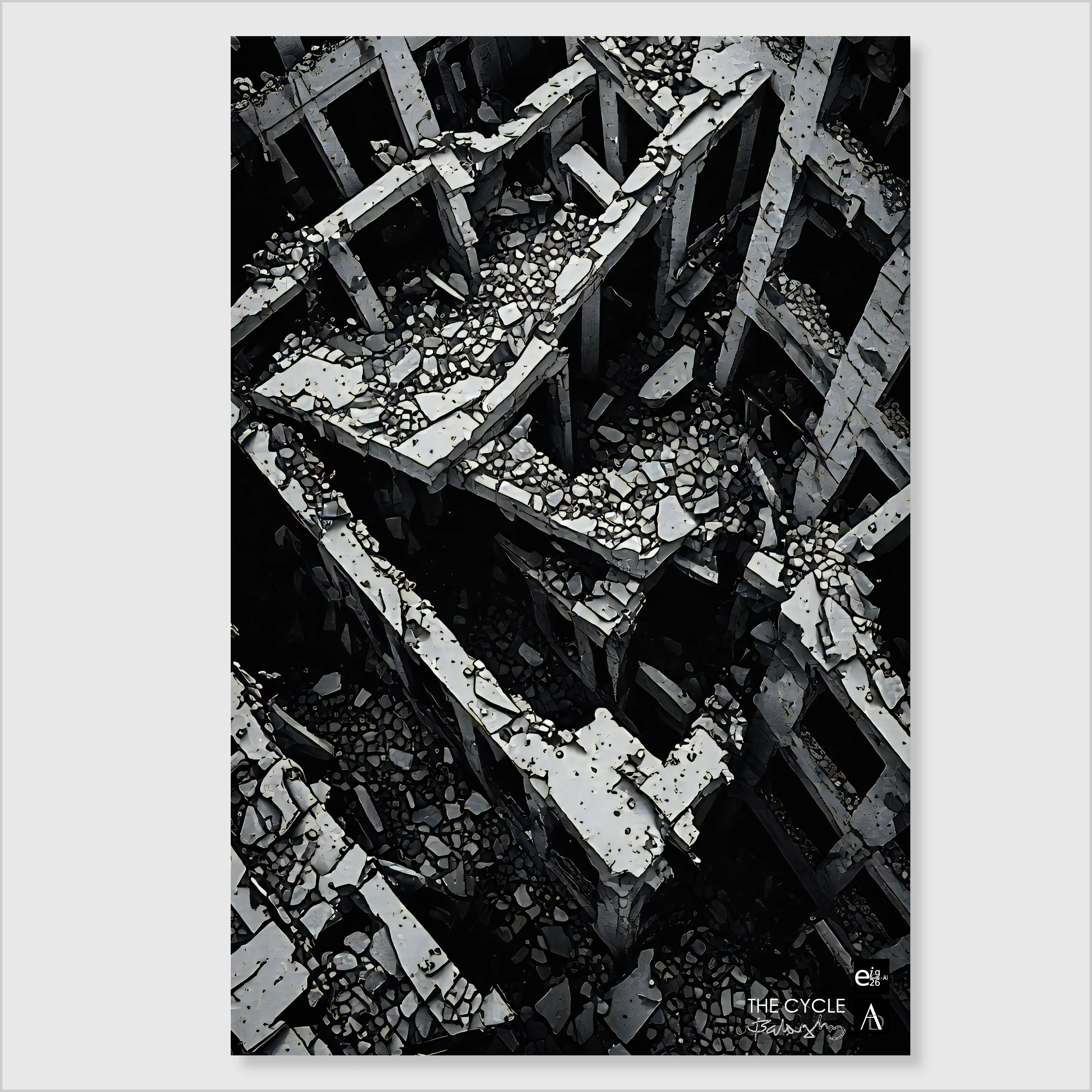
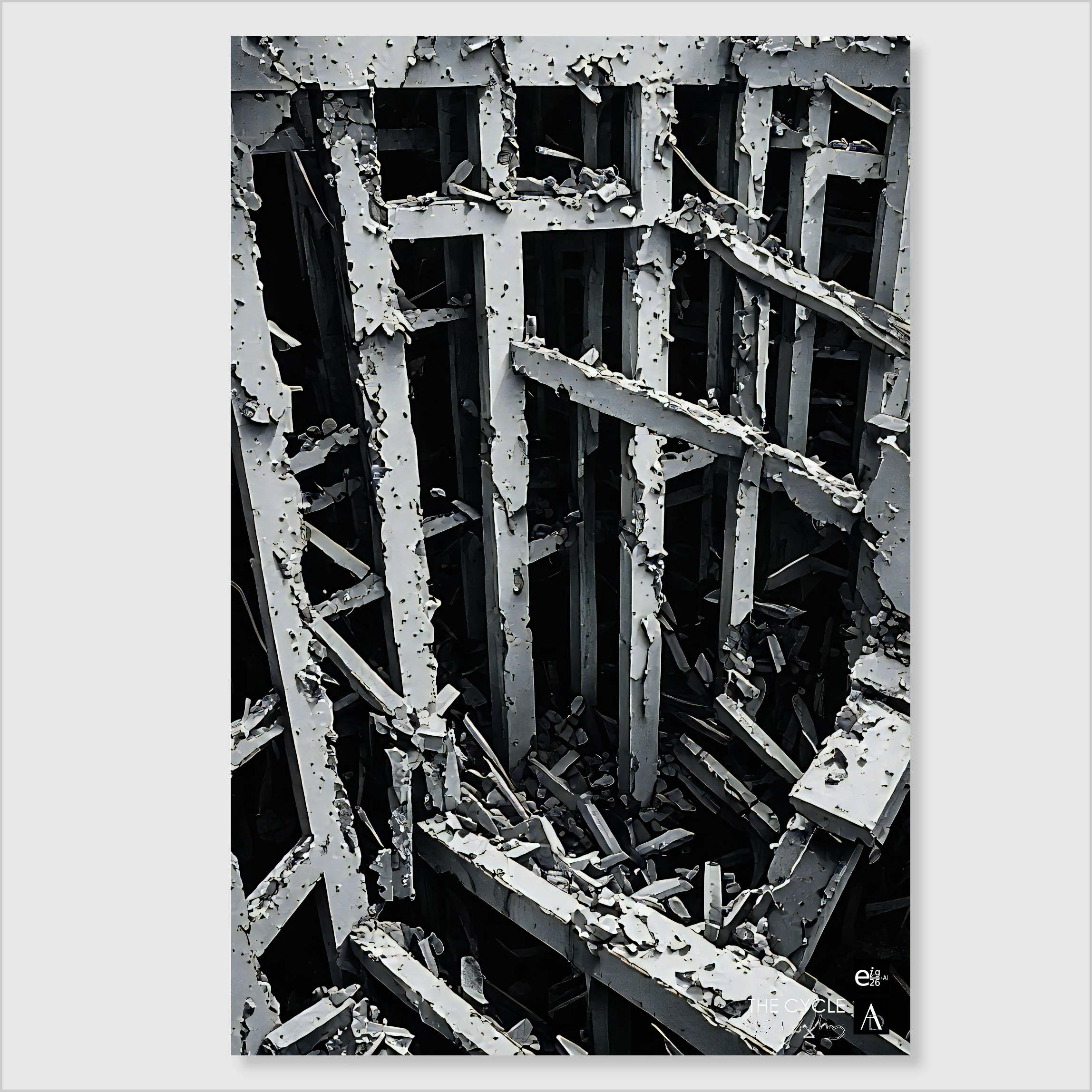
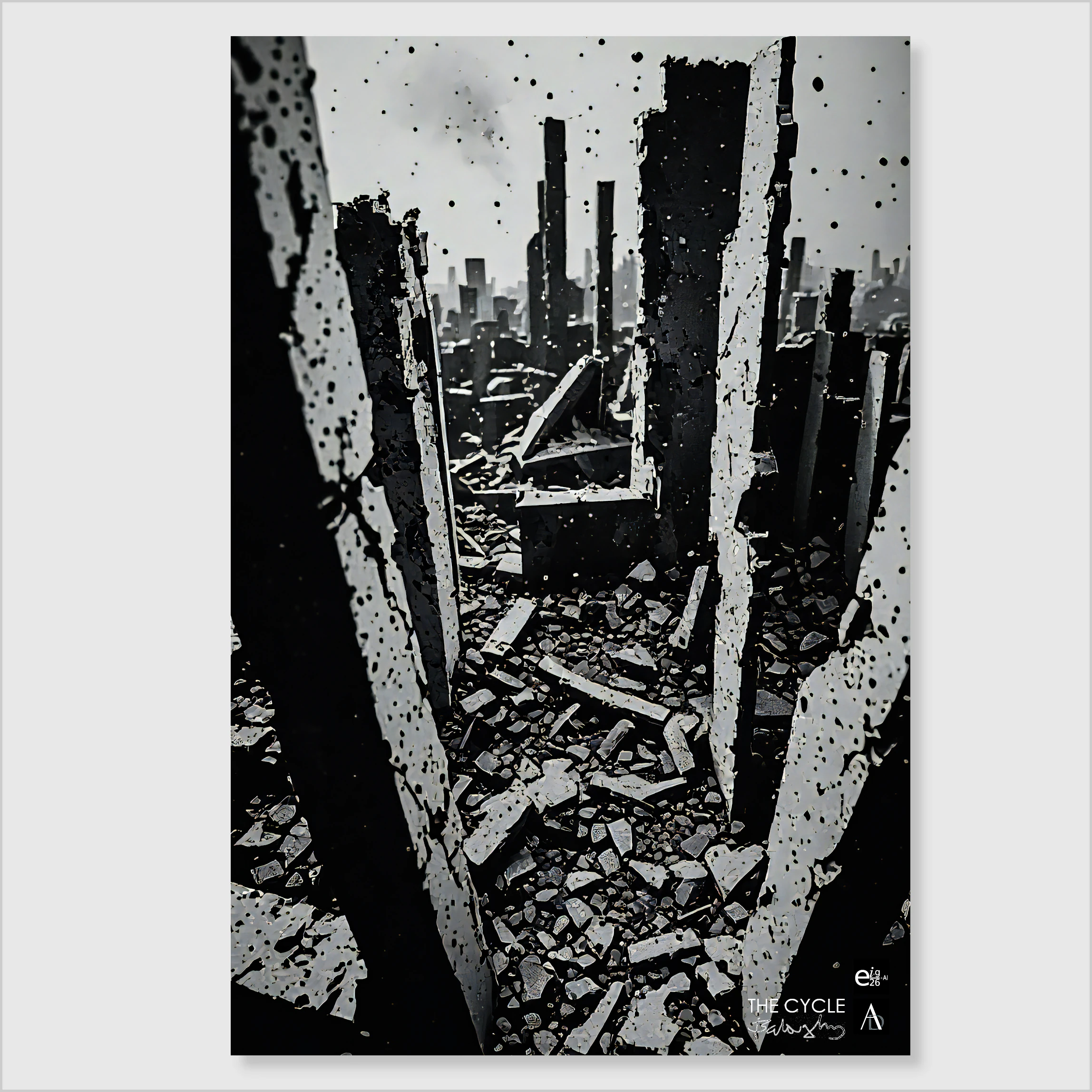


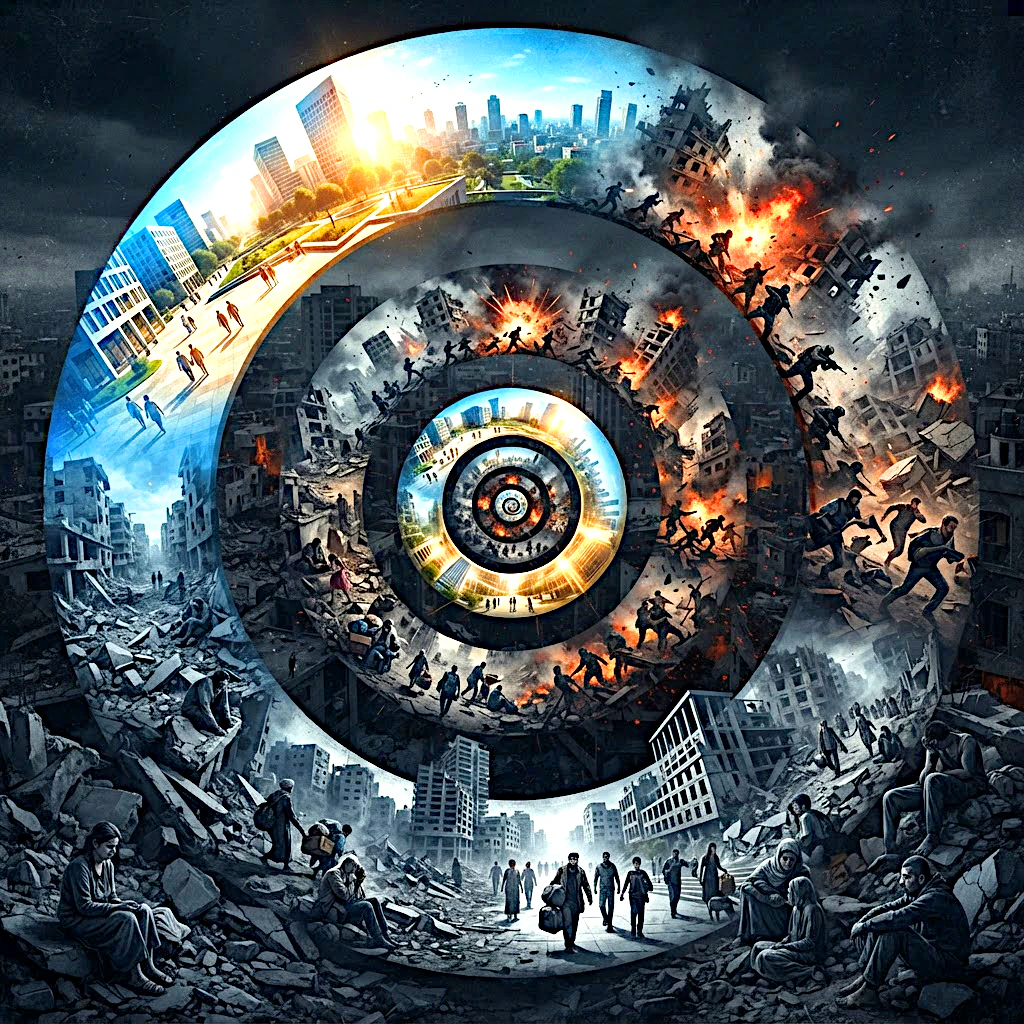
1. Krieg: Zerstörung, Vernichtung, Schutt und Asche
1. War: destruction, annihilation, rubble and ashes
1. Háború: Pusztítás, megsemmisítés, romok és hamu
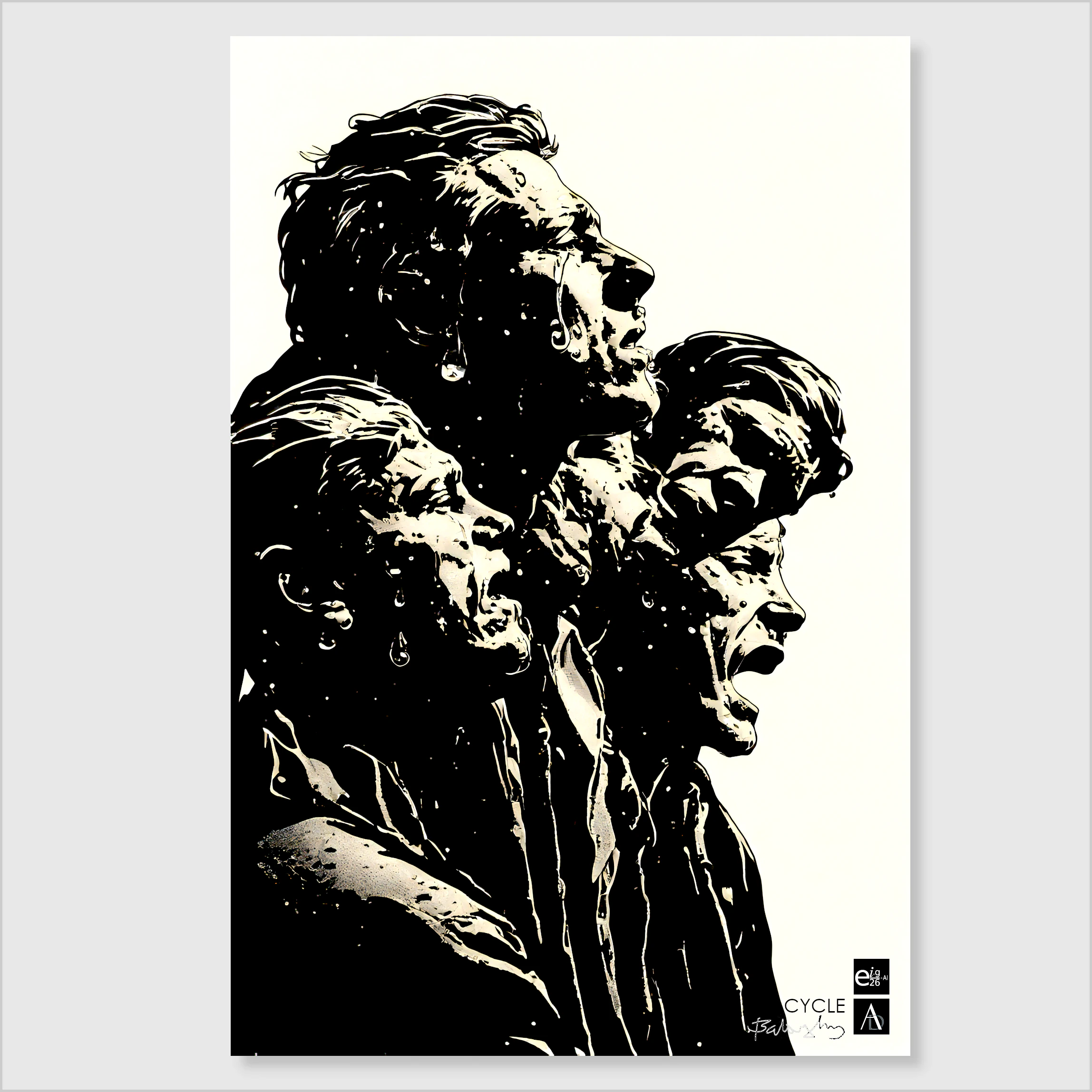
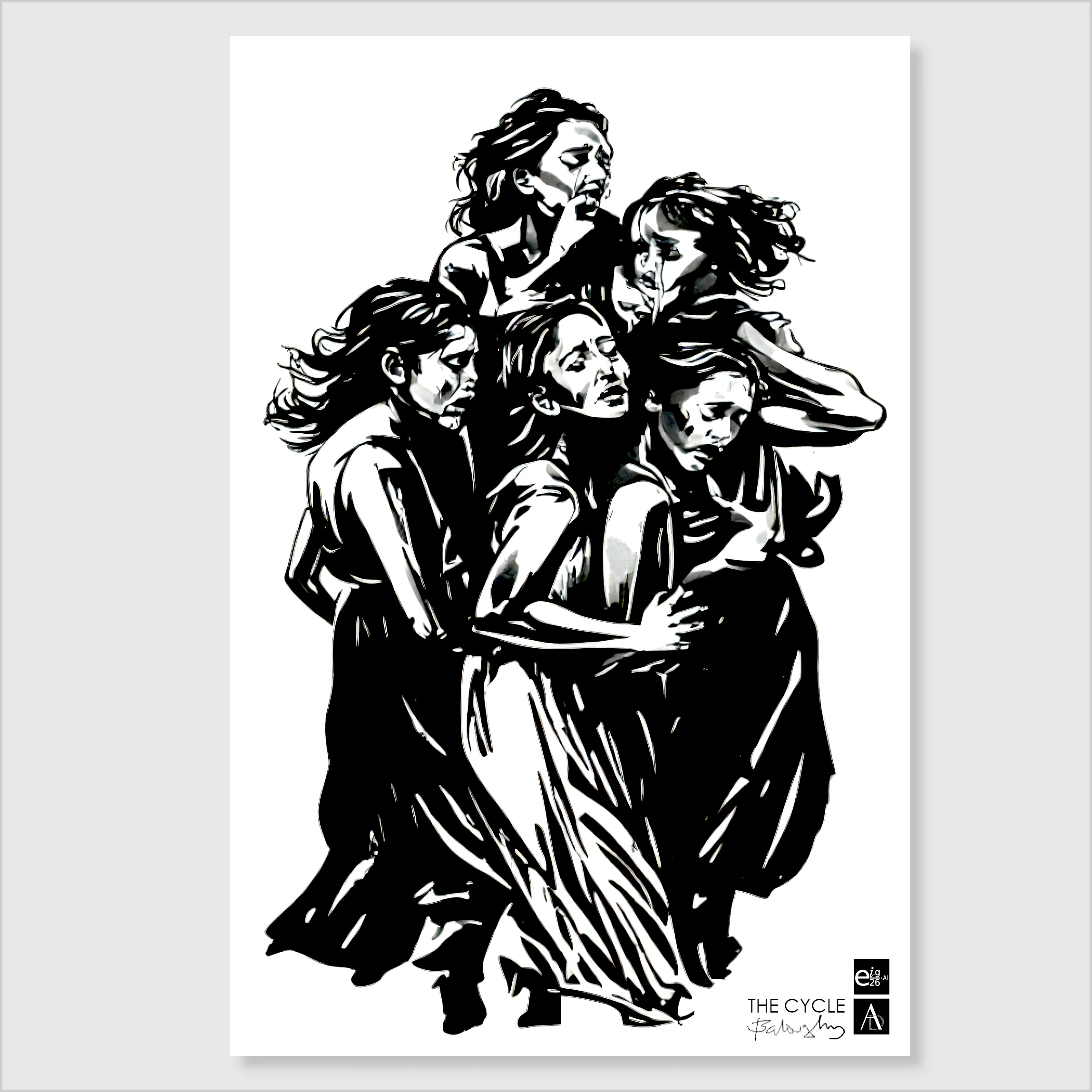
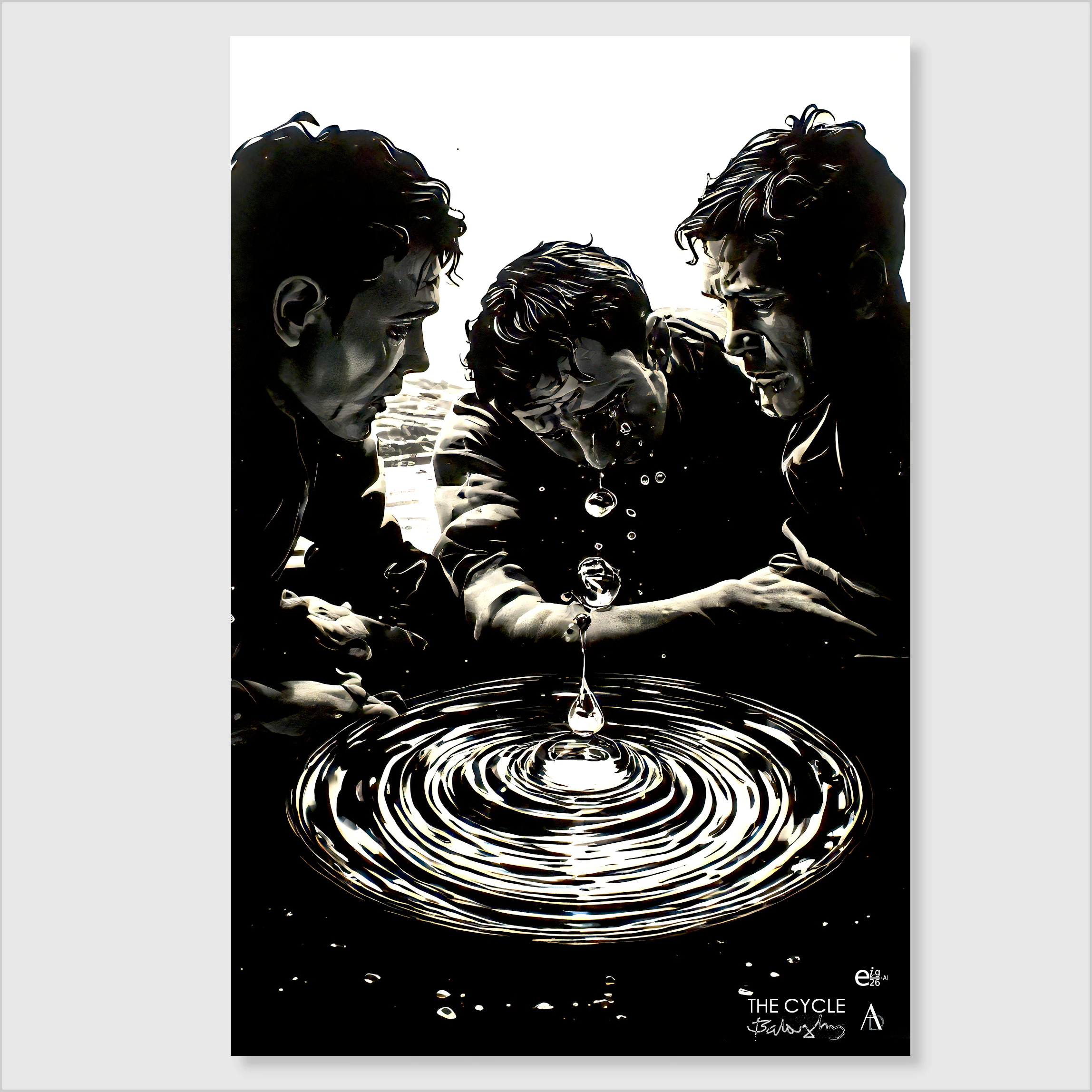
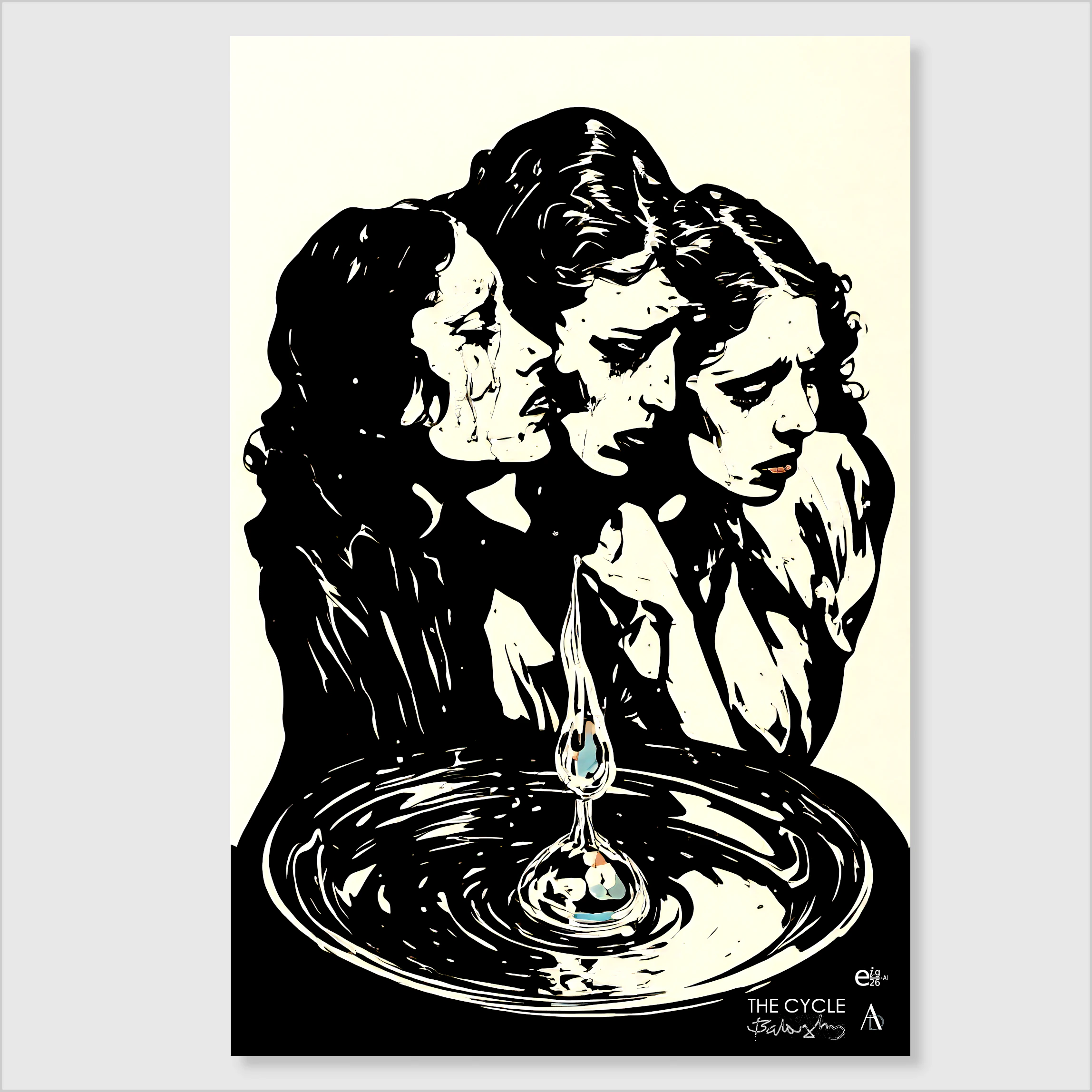
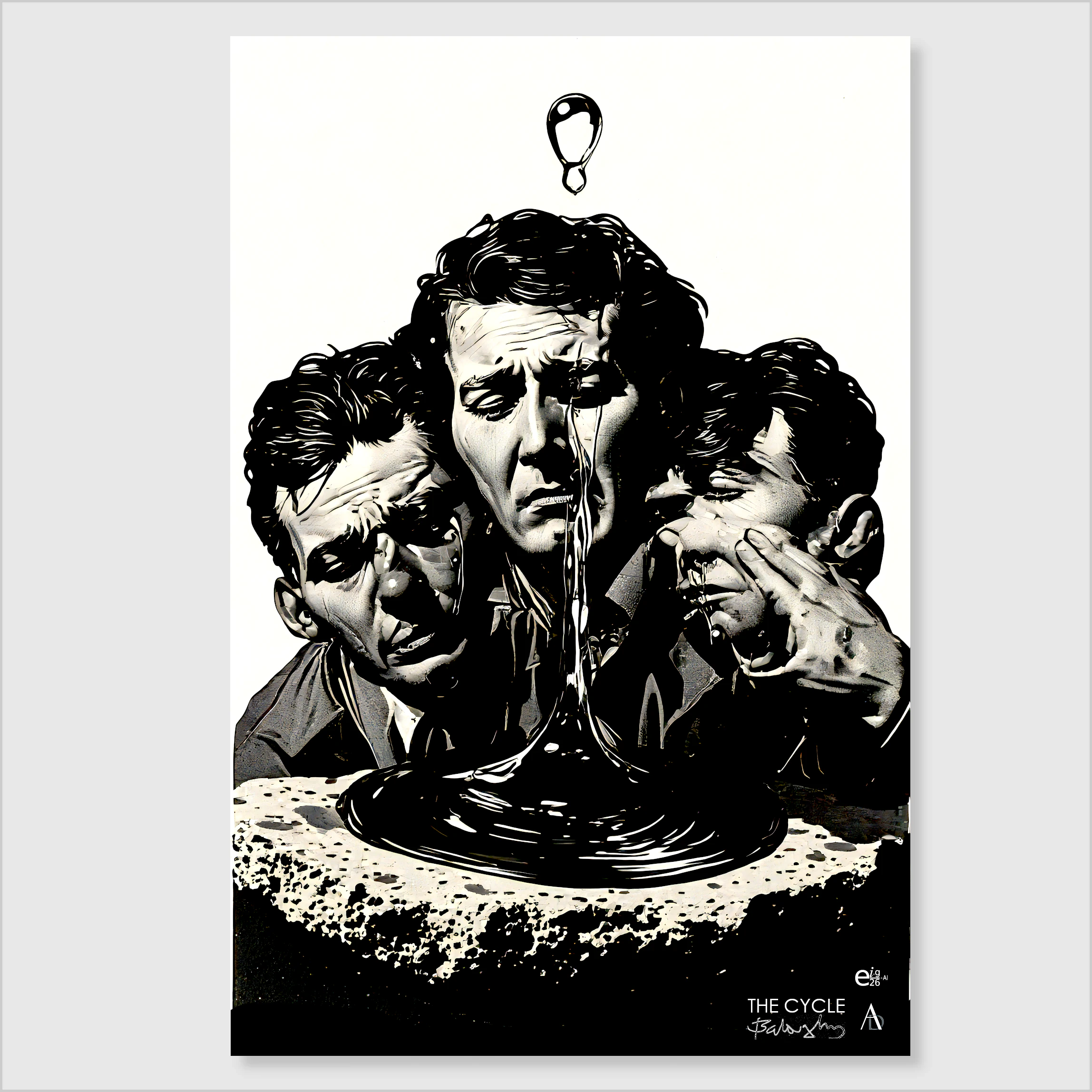
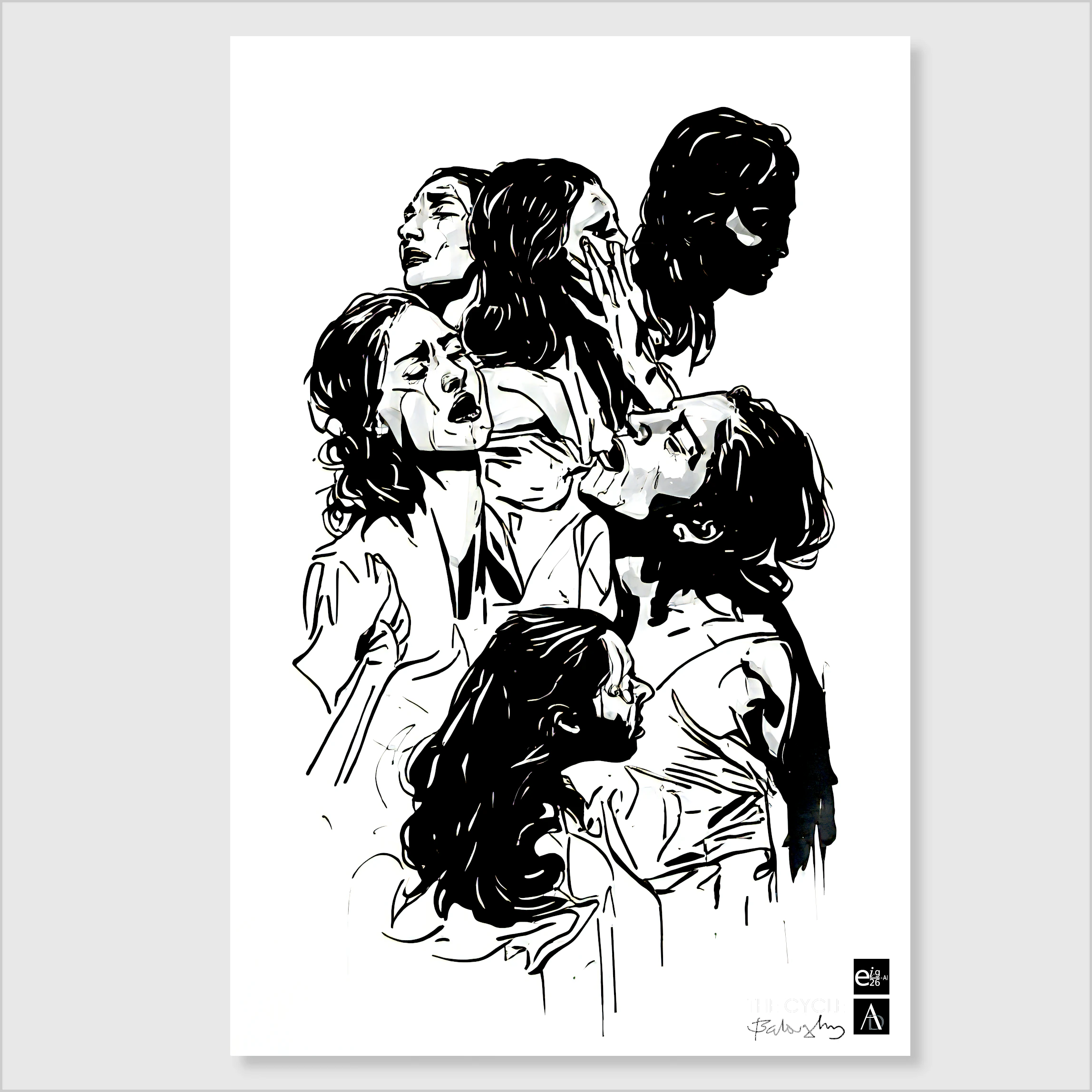
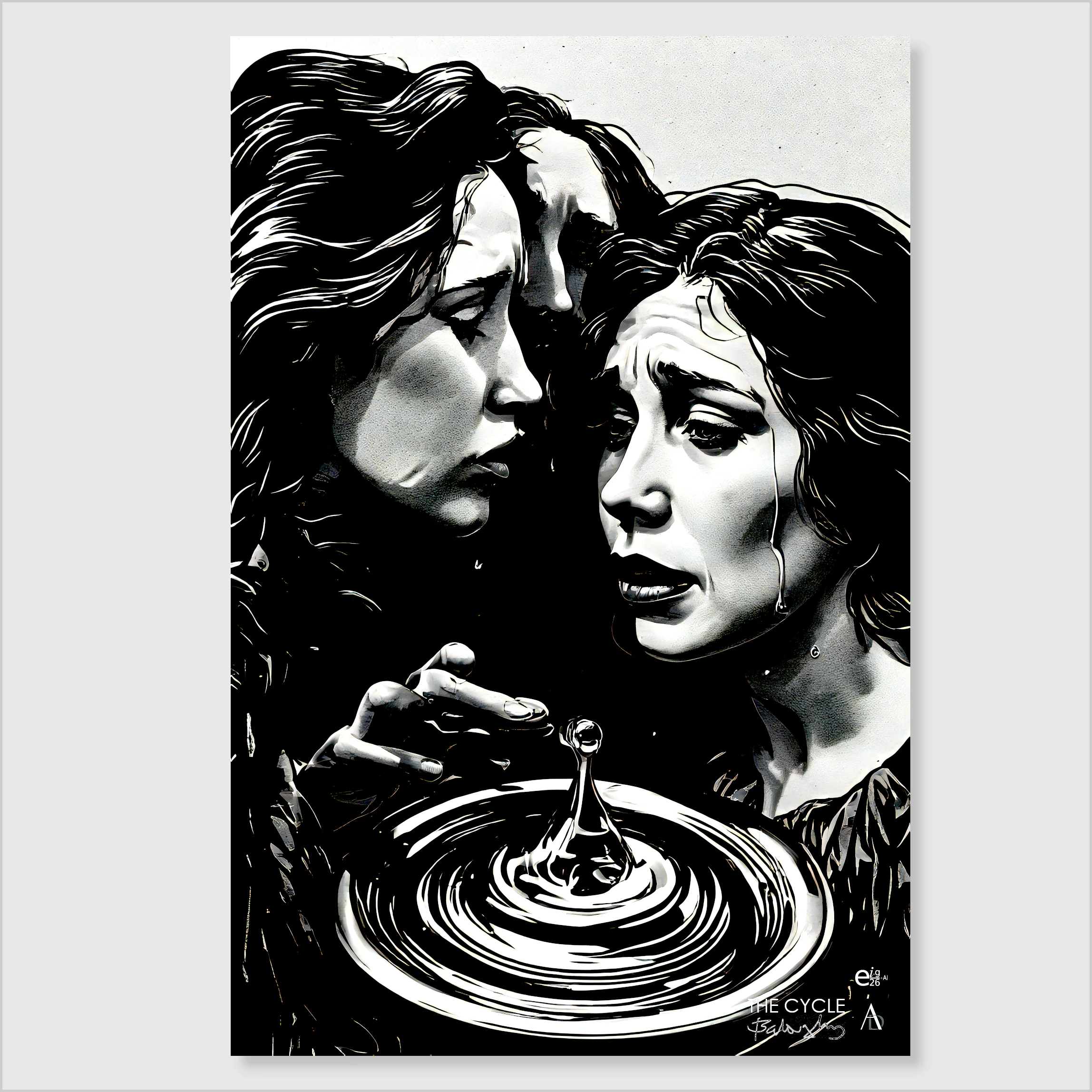
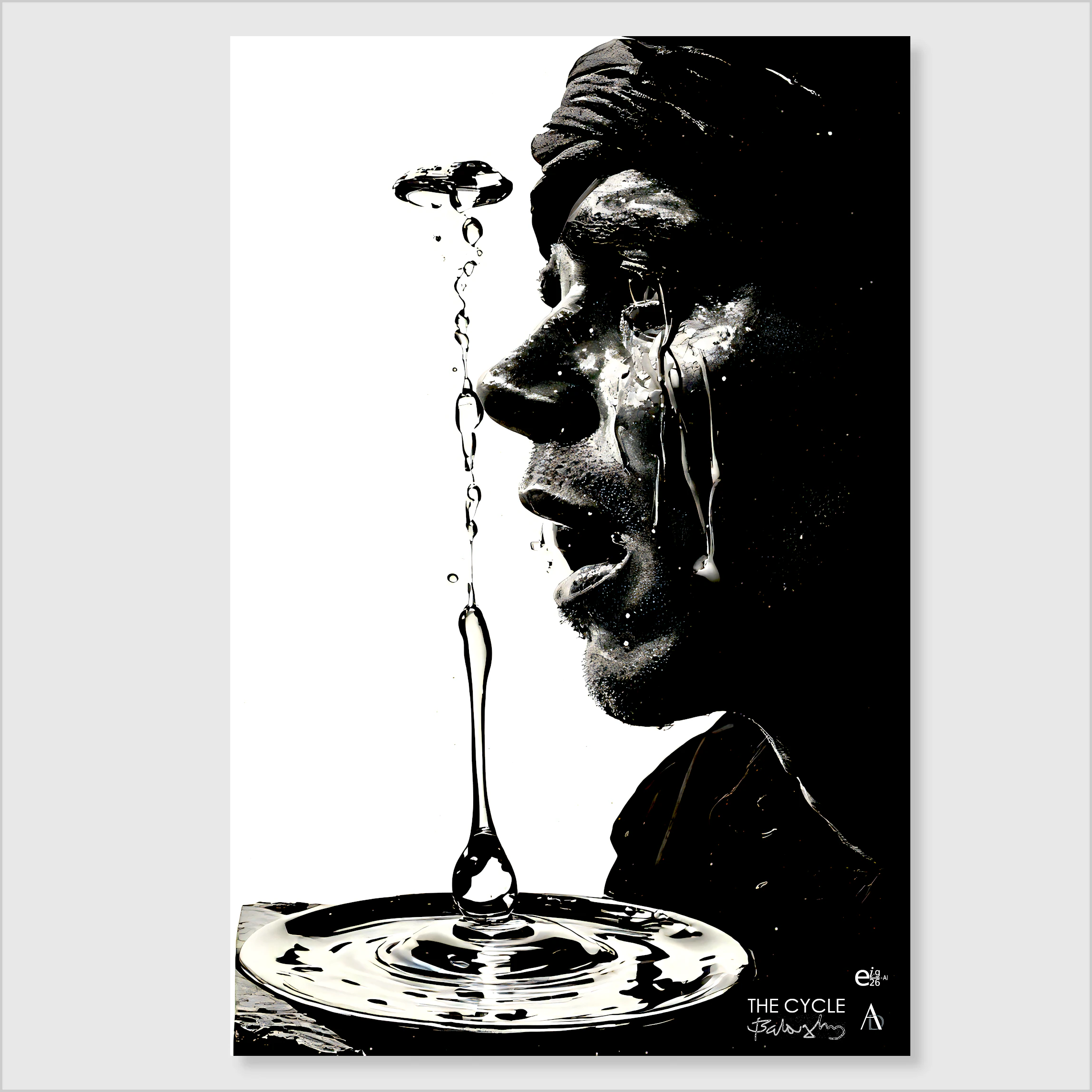
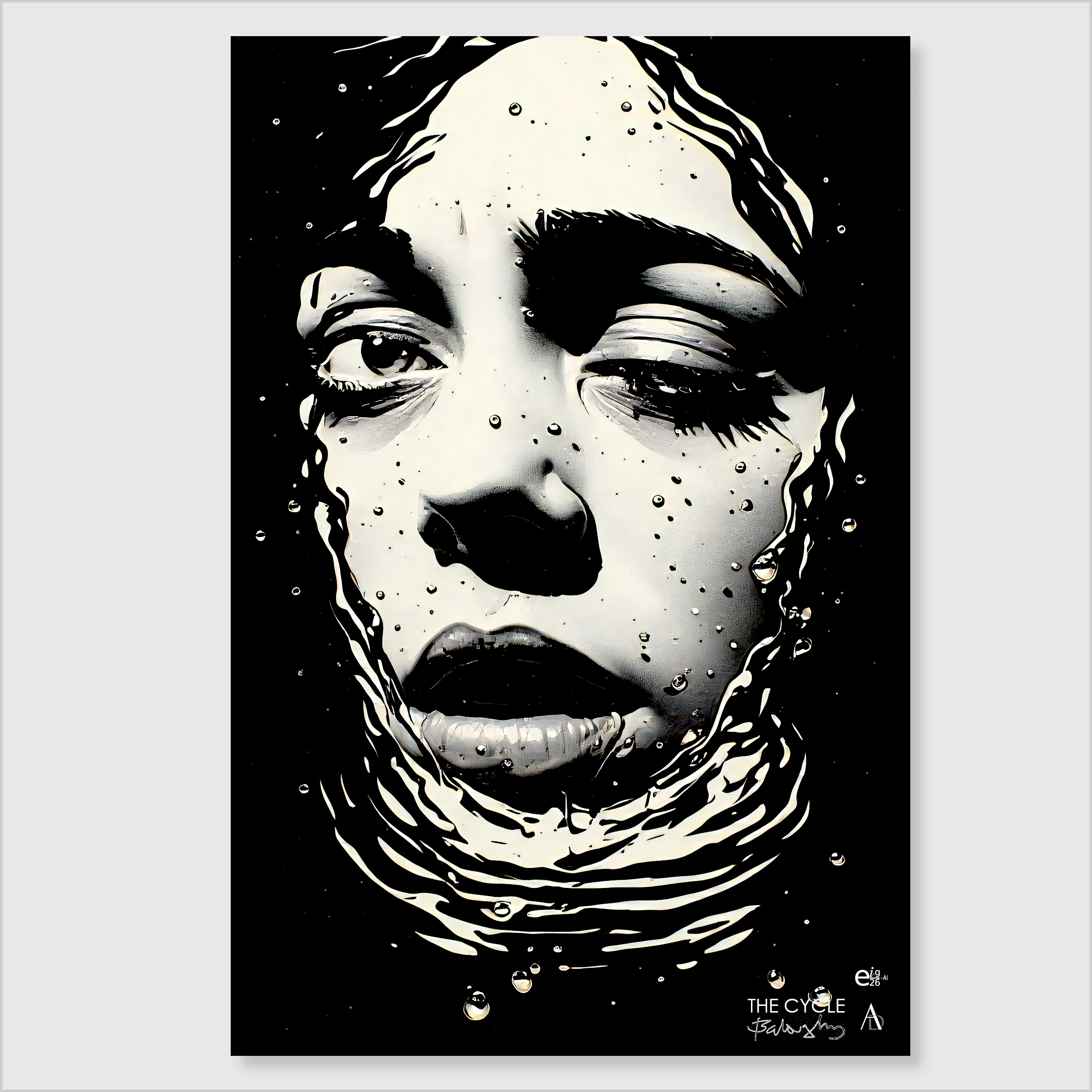
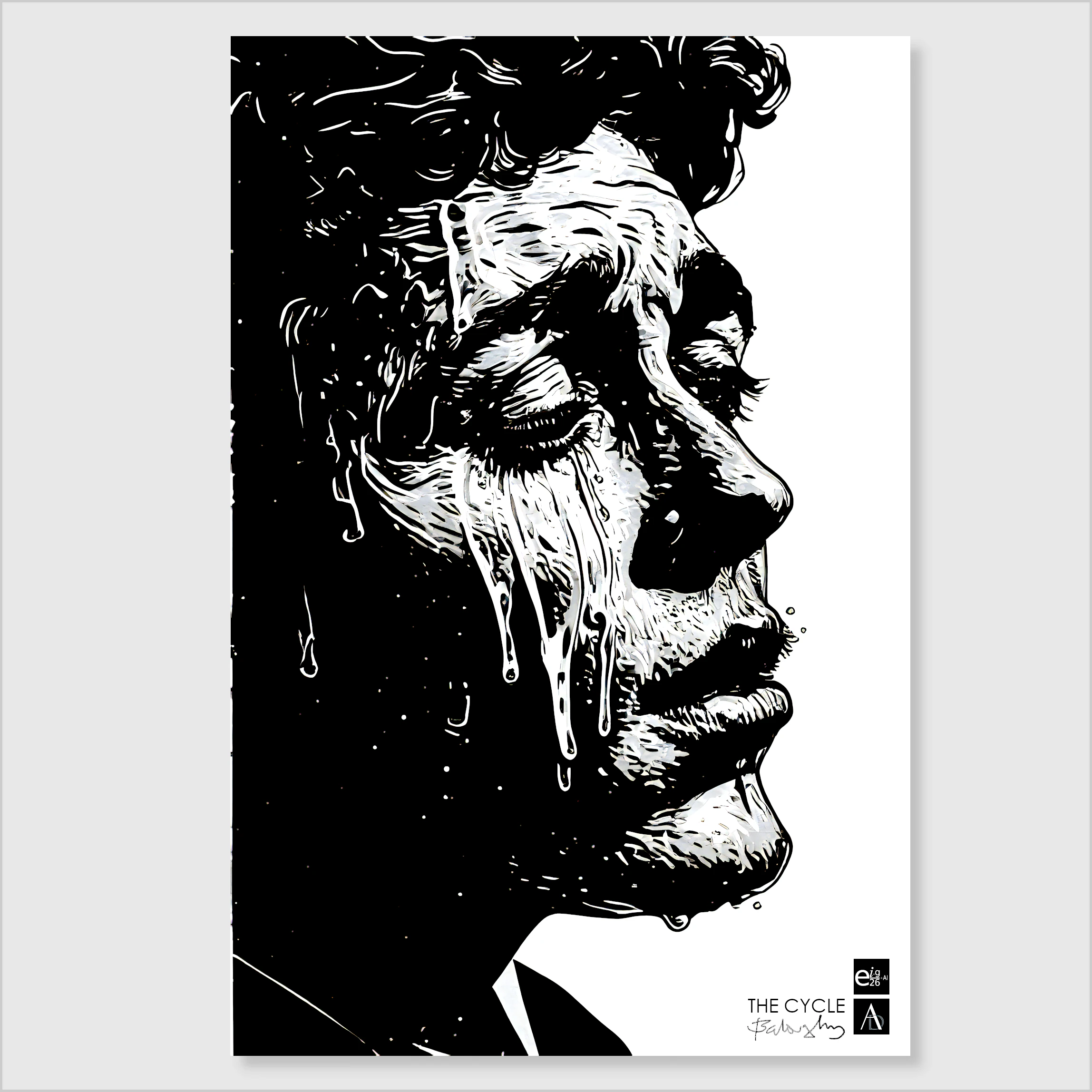
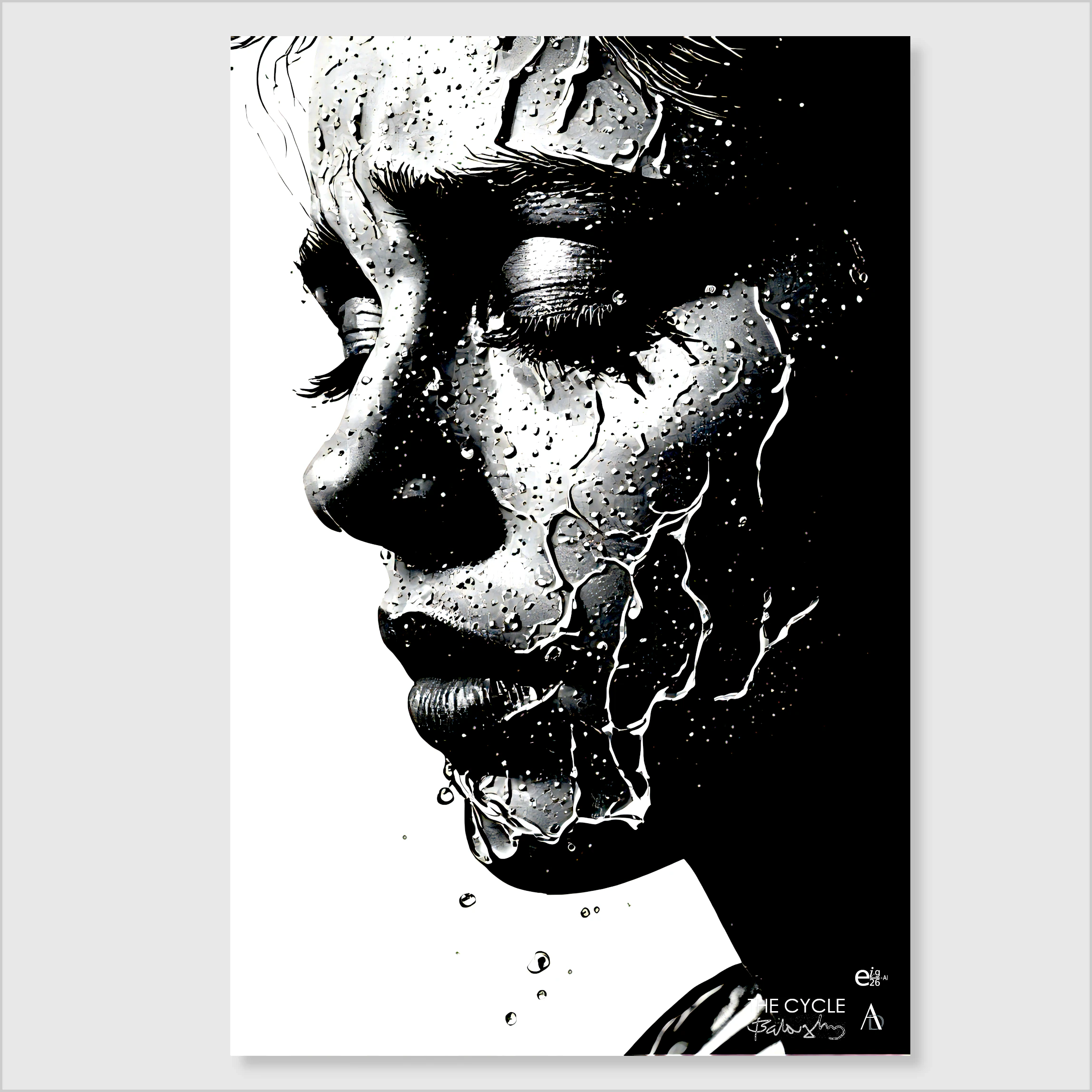
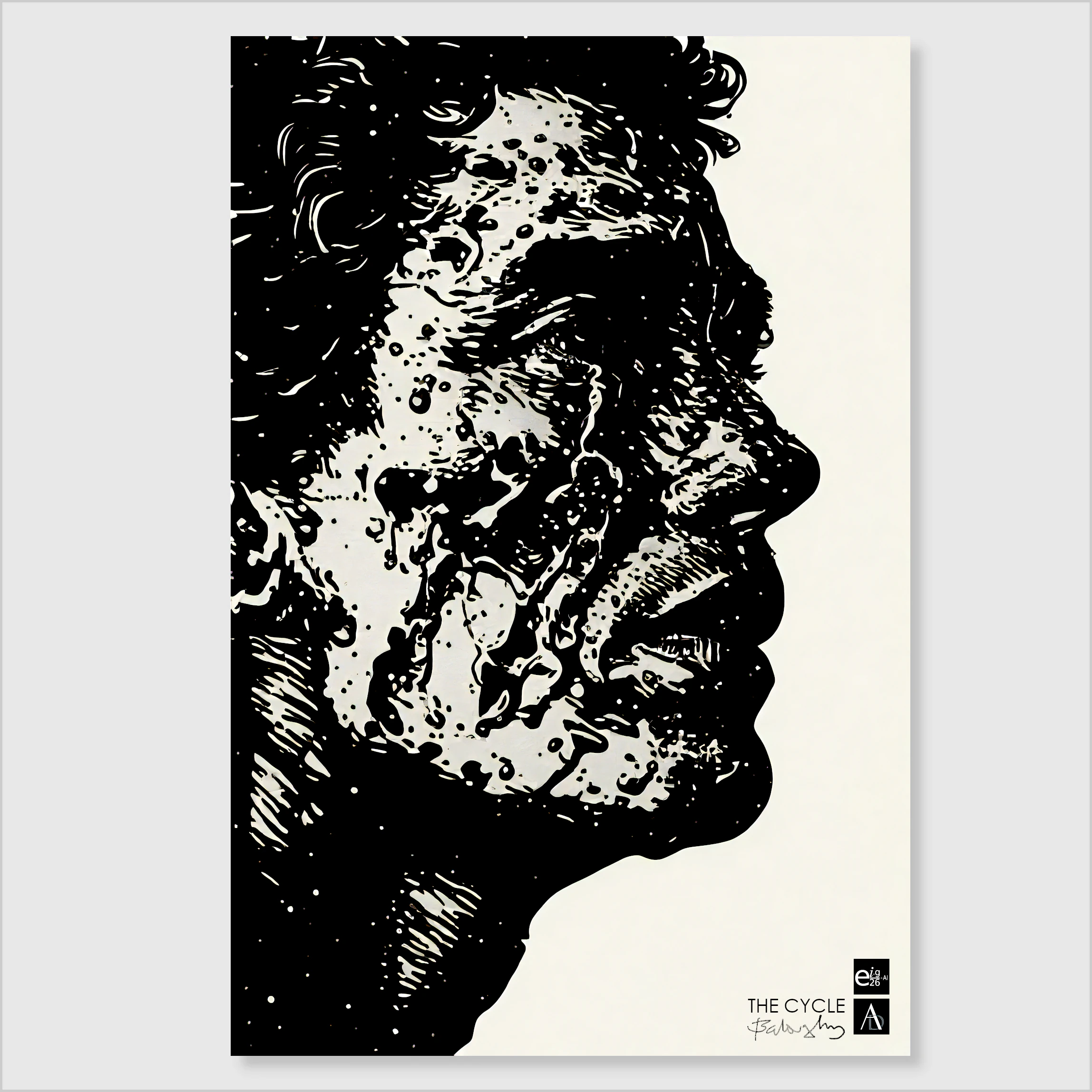
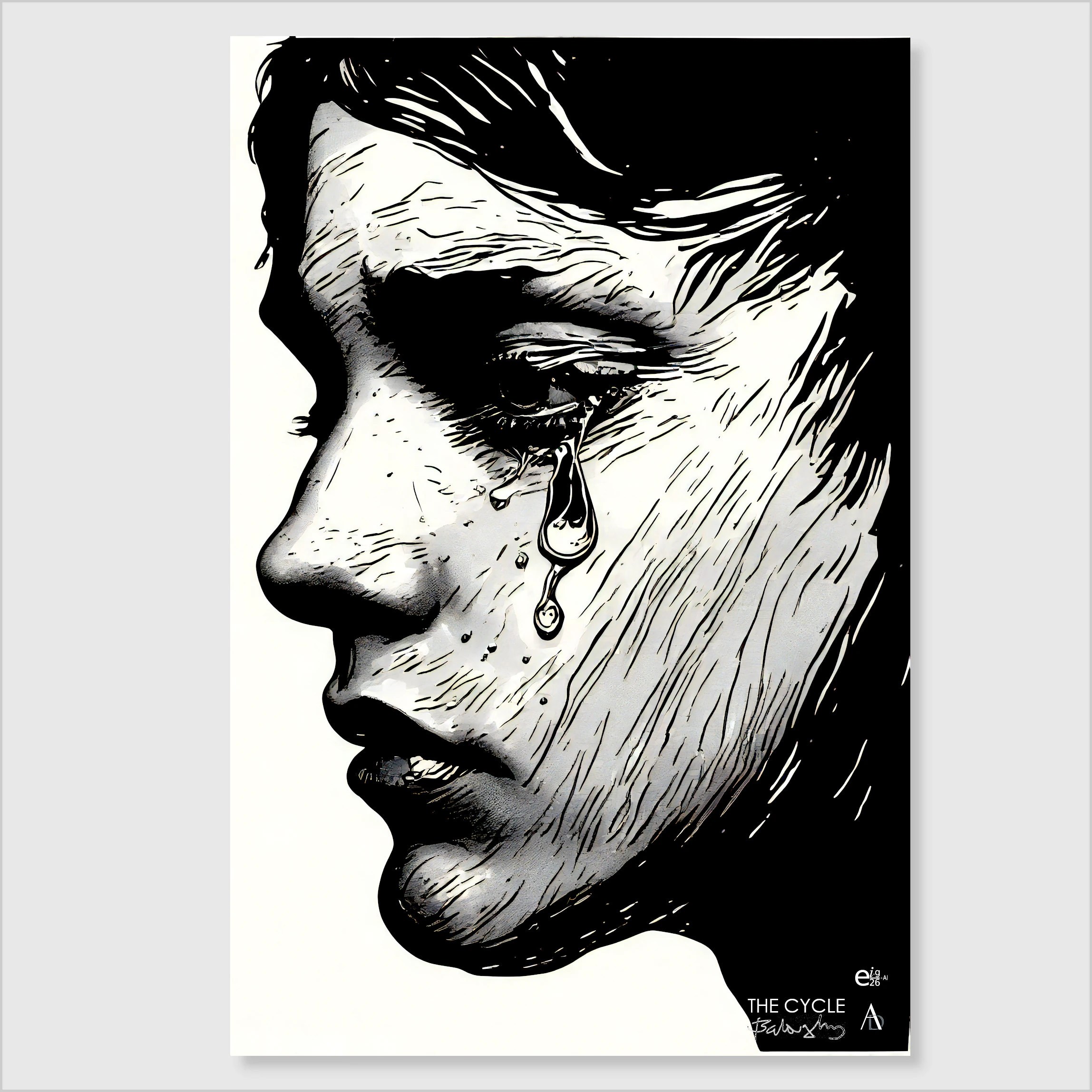
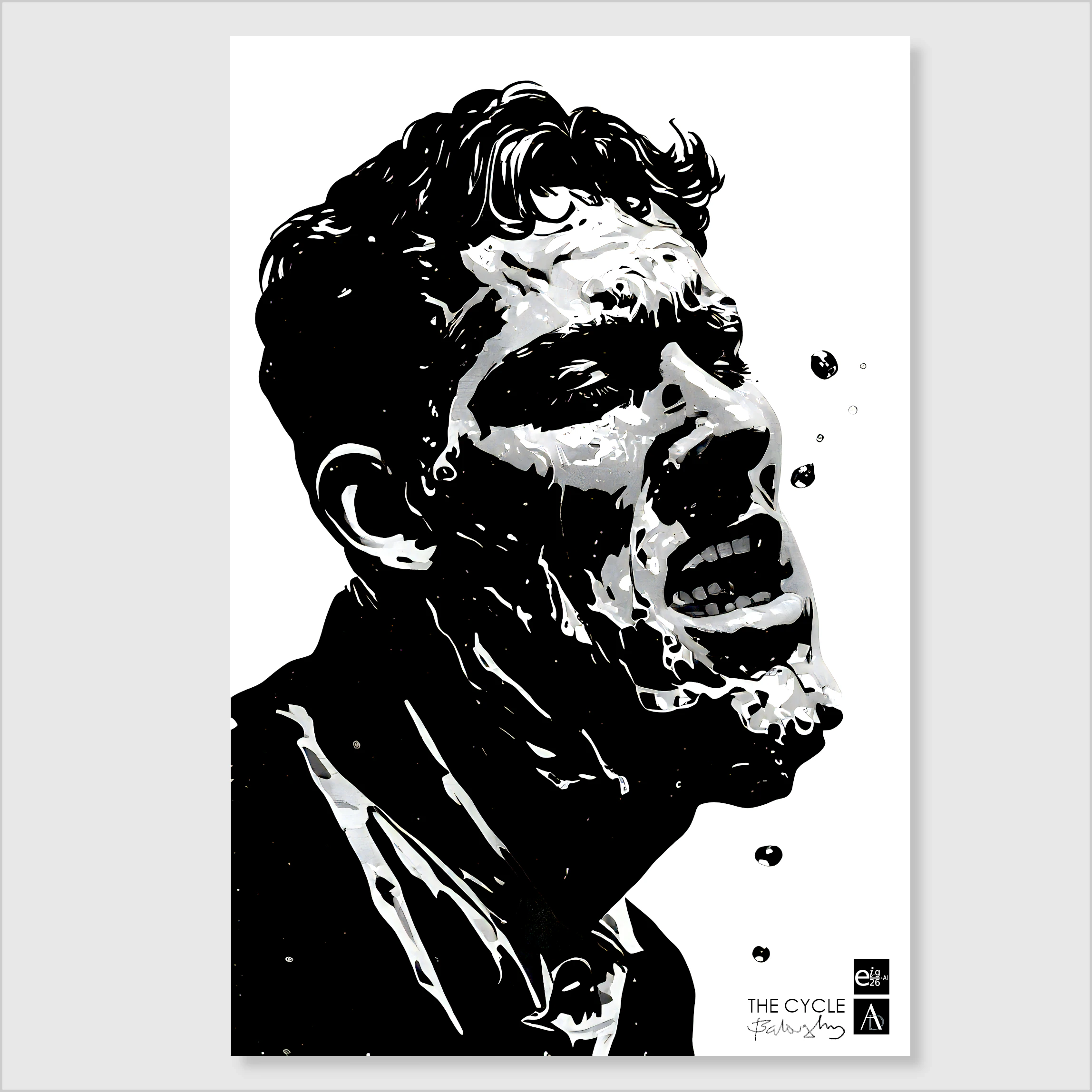
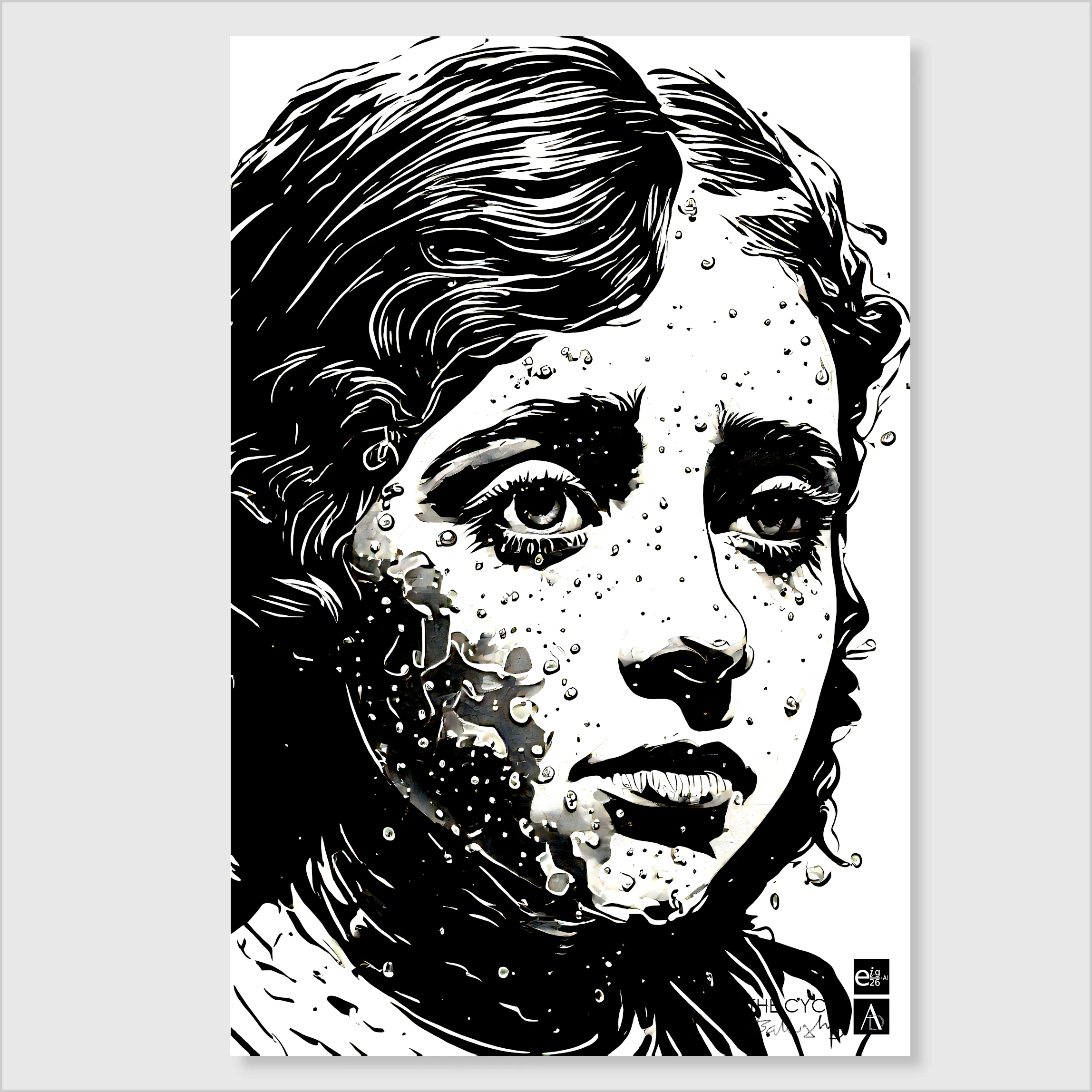
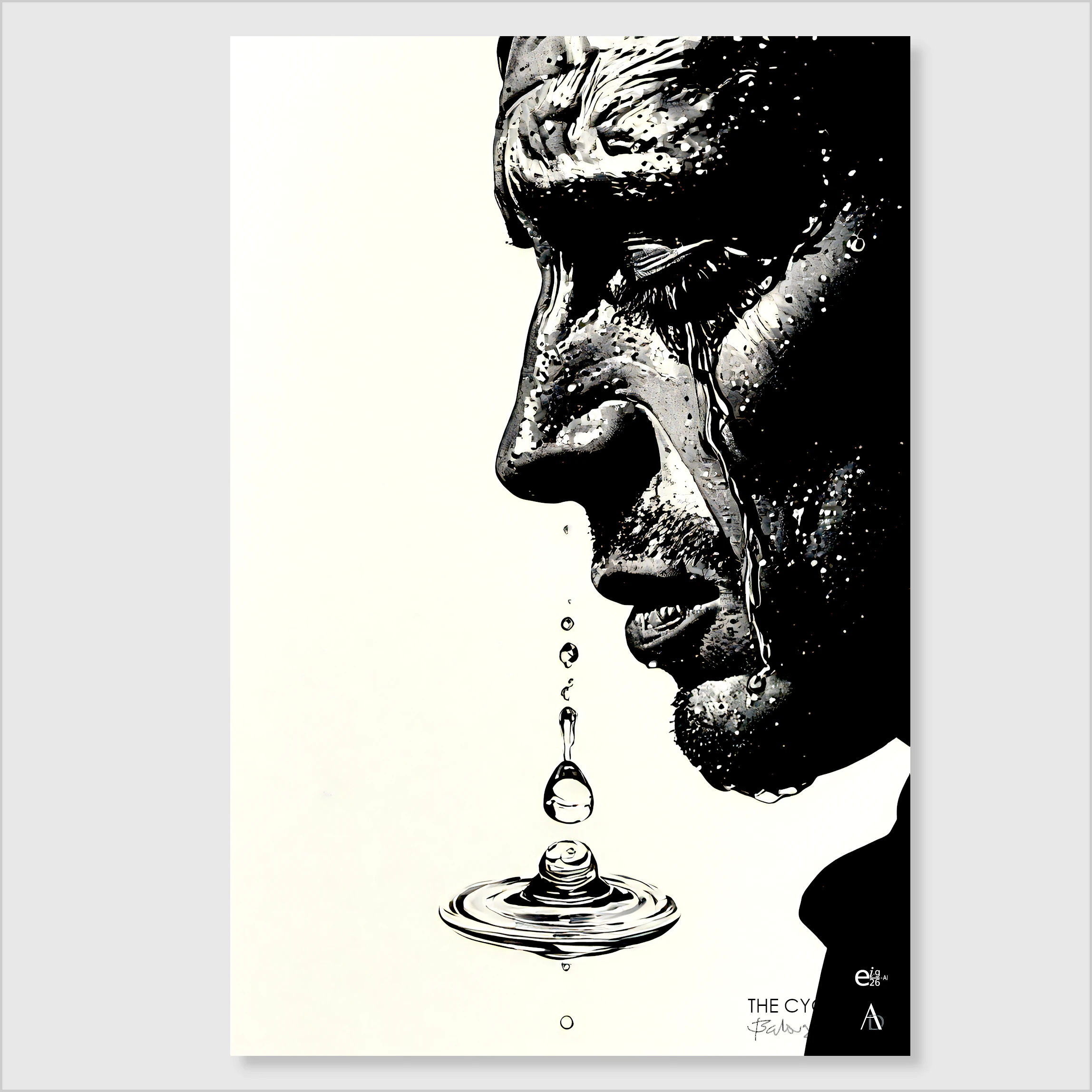
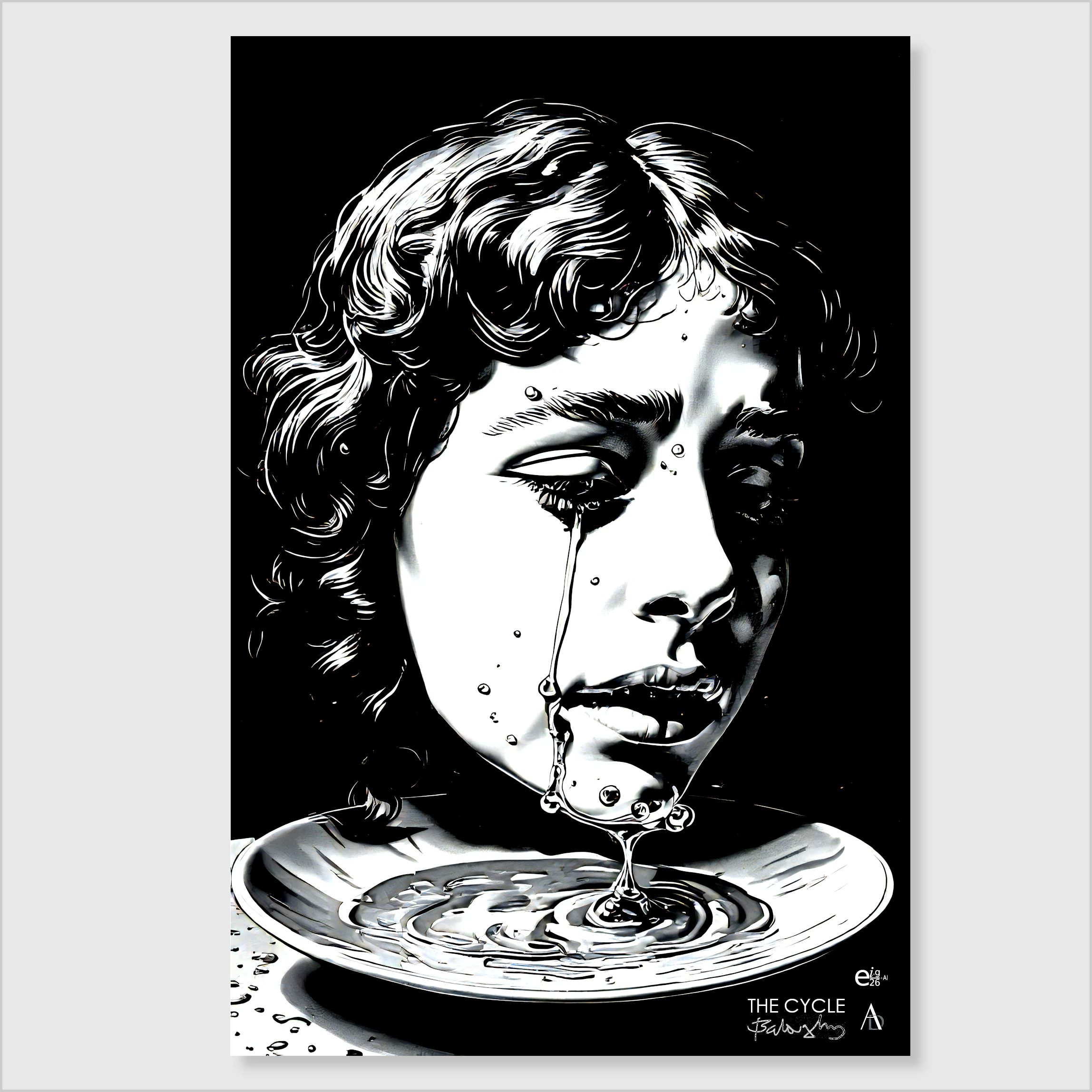
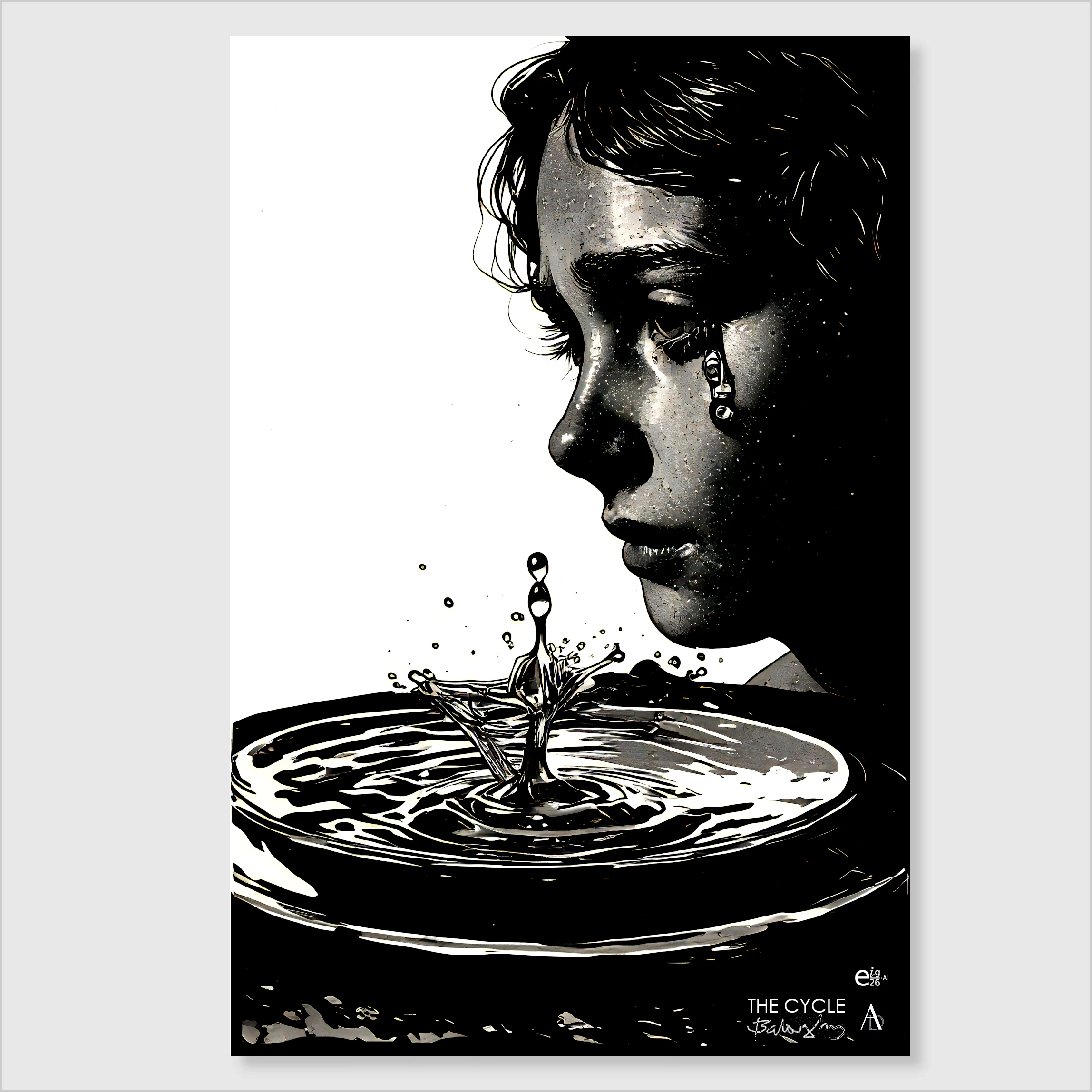
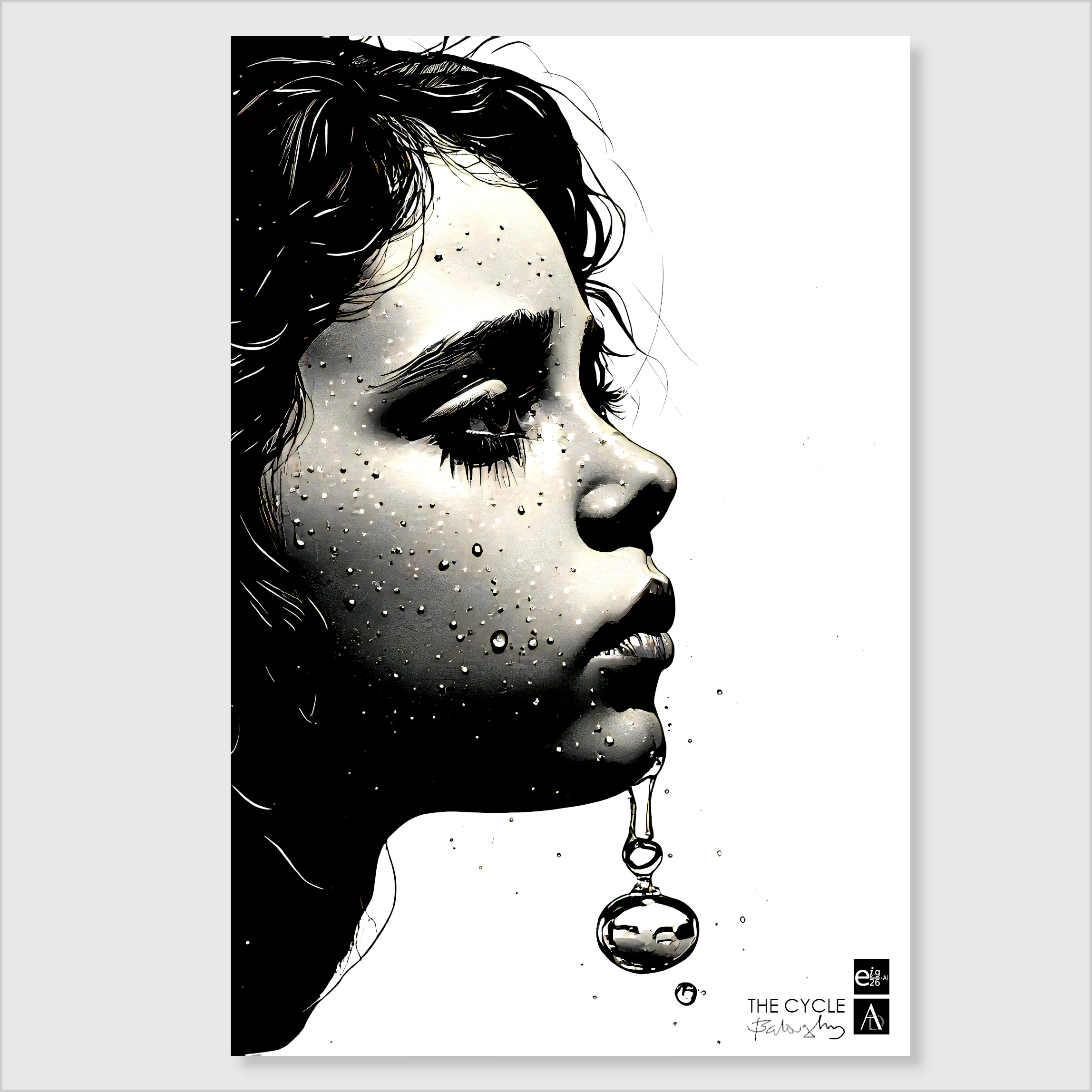
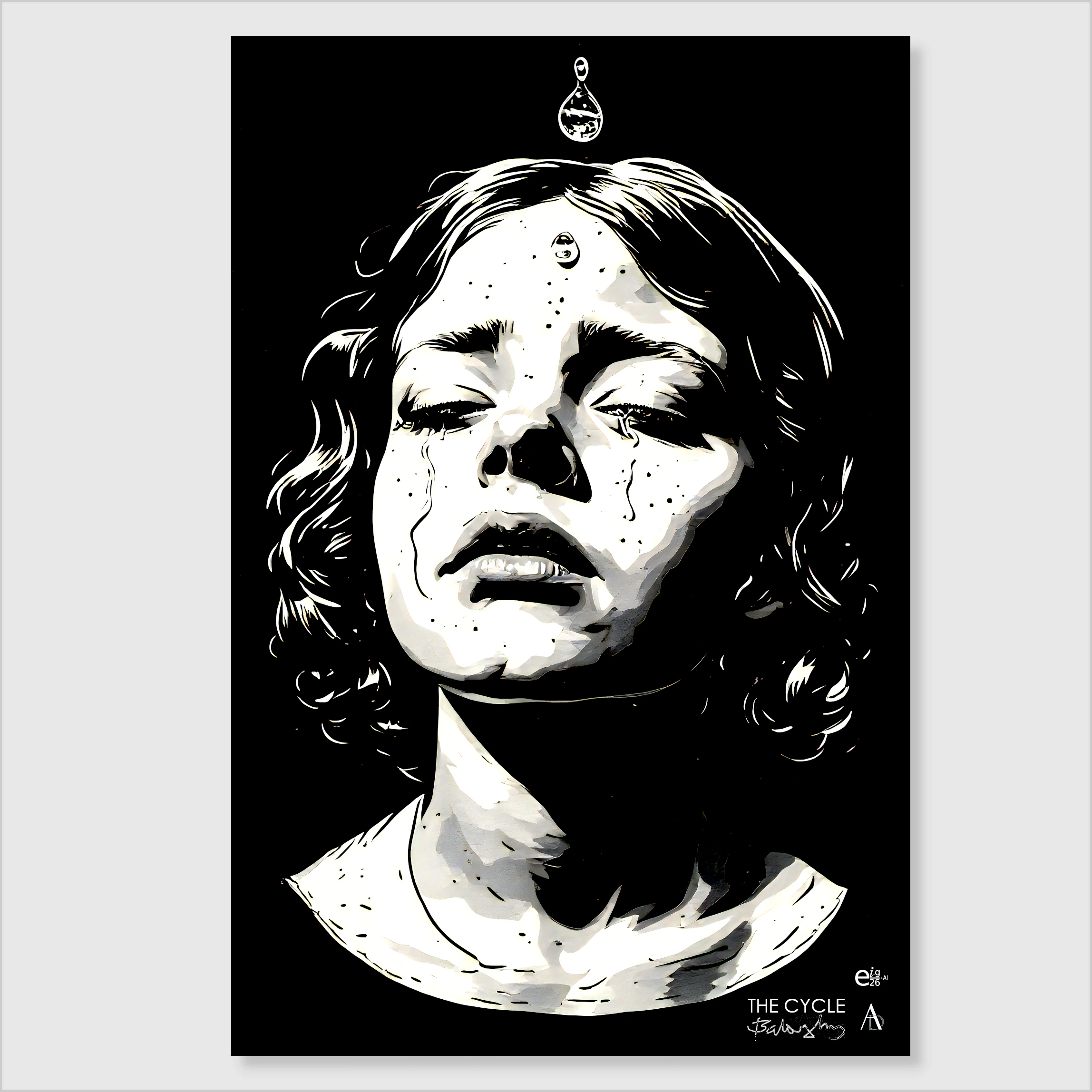
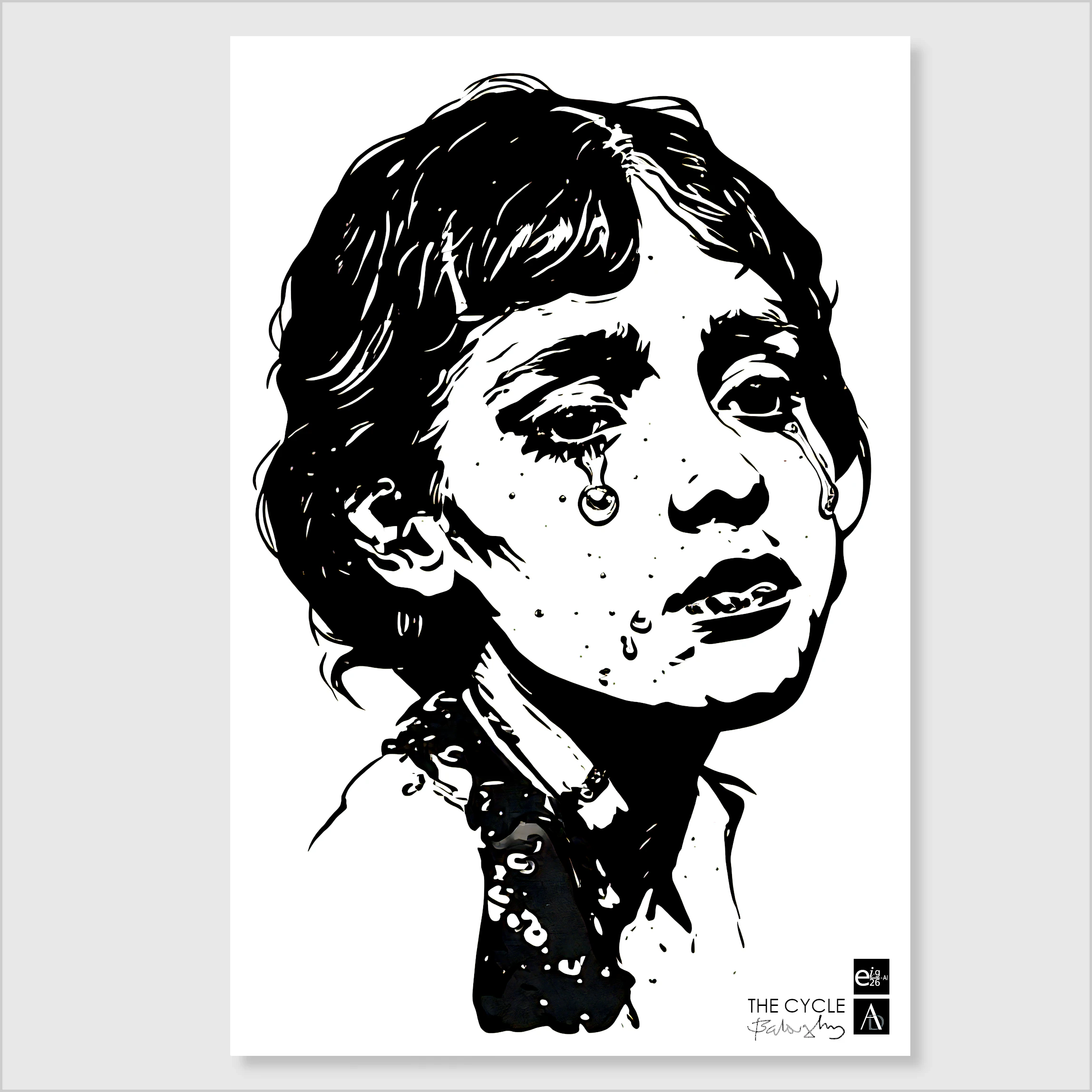
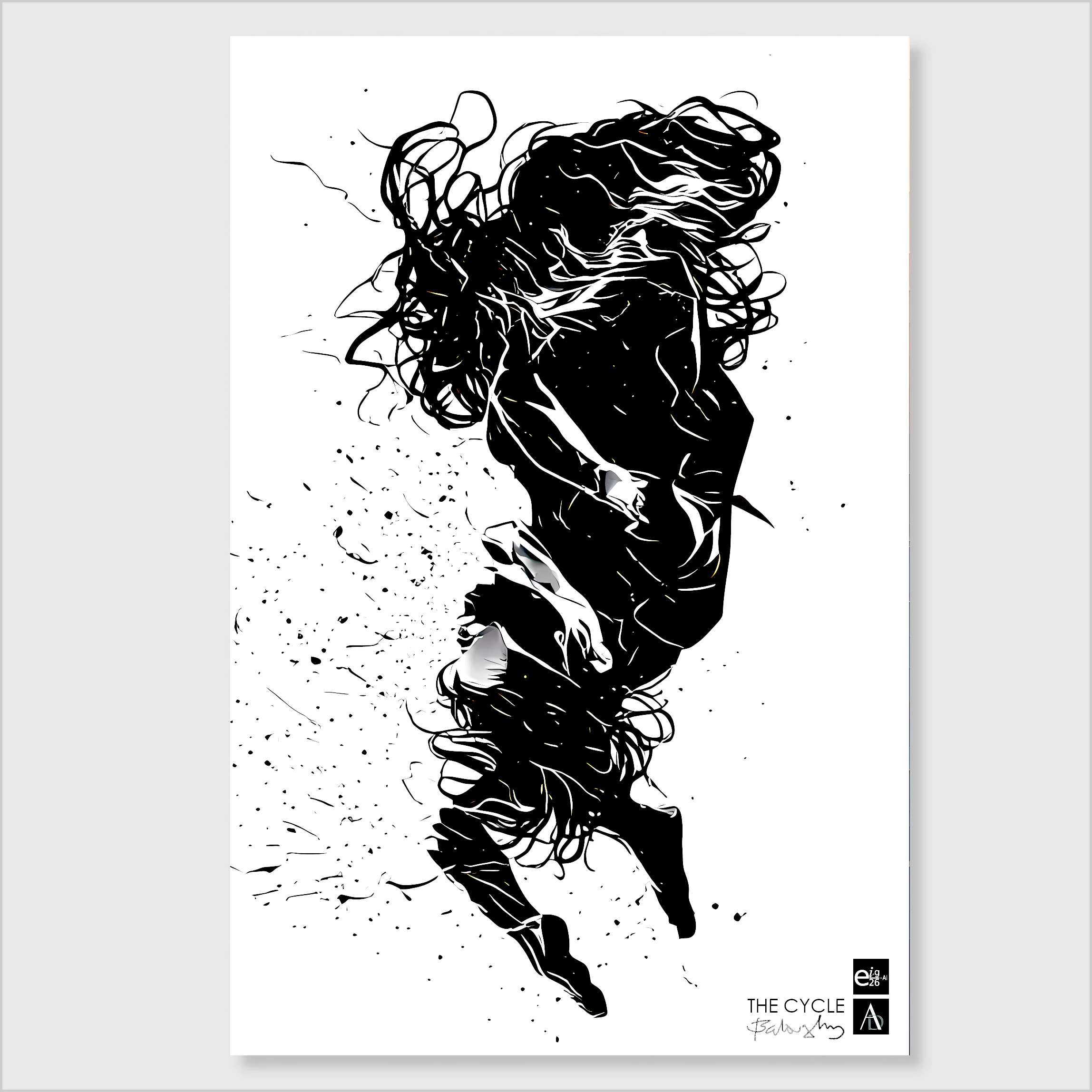
2. Die Folgen: Verluste, Schmerzen, Tränen, Kriegsopfer
2. The consequences: losses, pain, tears, war casualties
2. A következmények: veszteségek, fájdalmak, könnyek, áldozatok
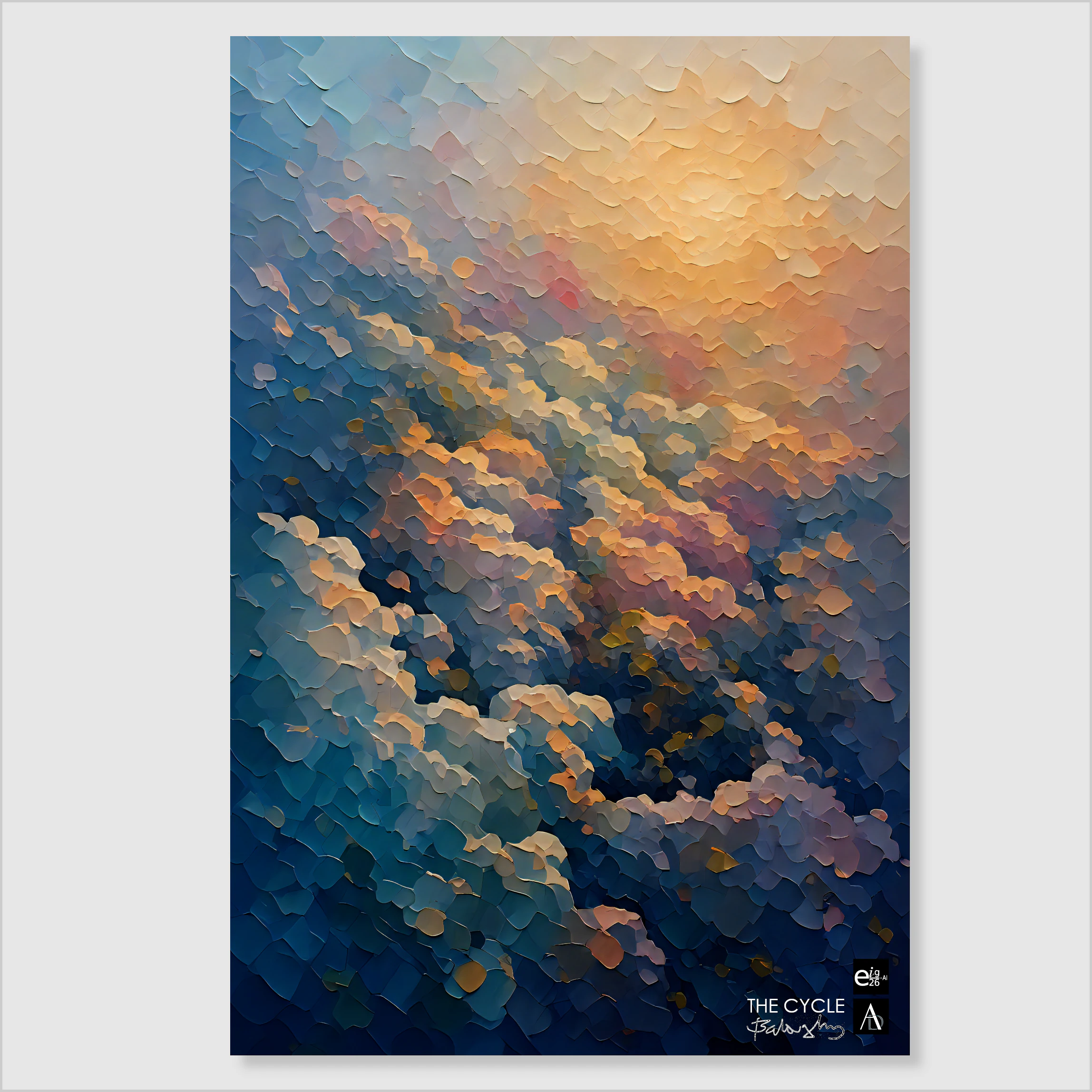
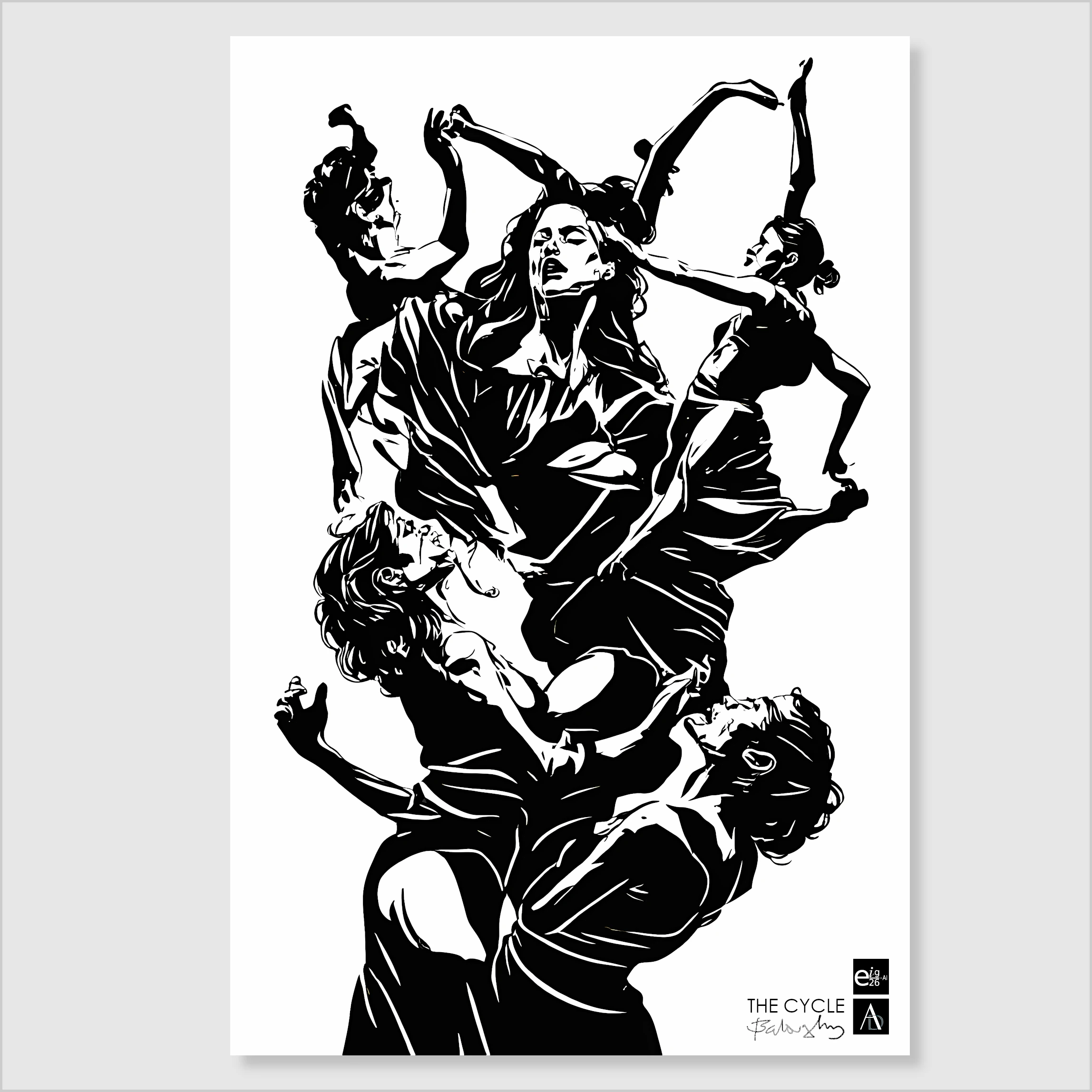
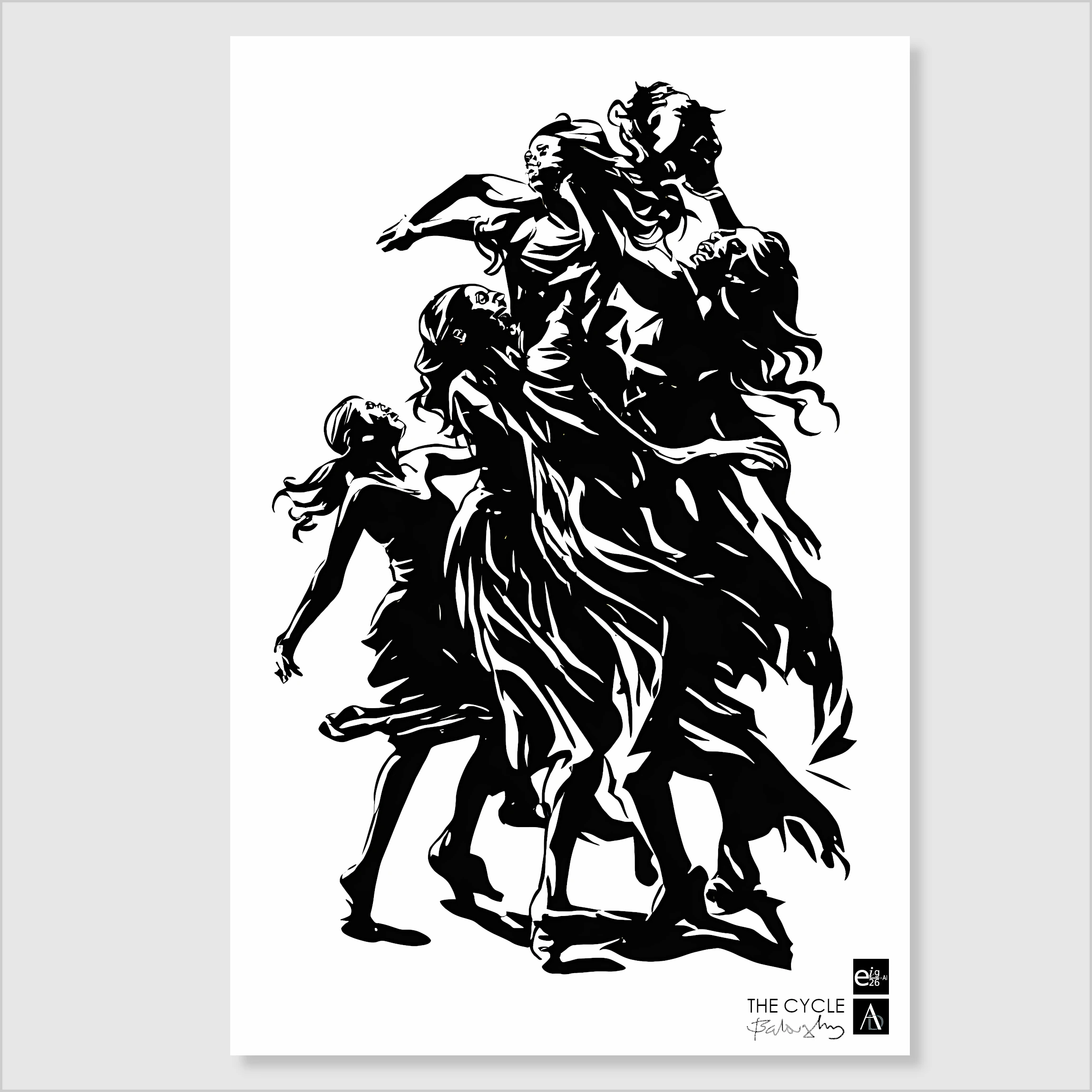
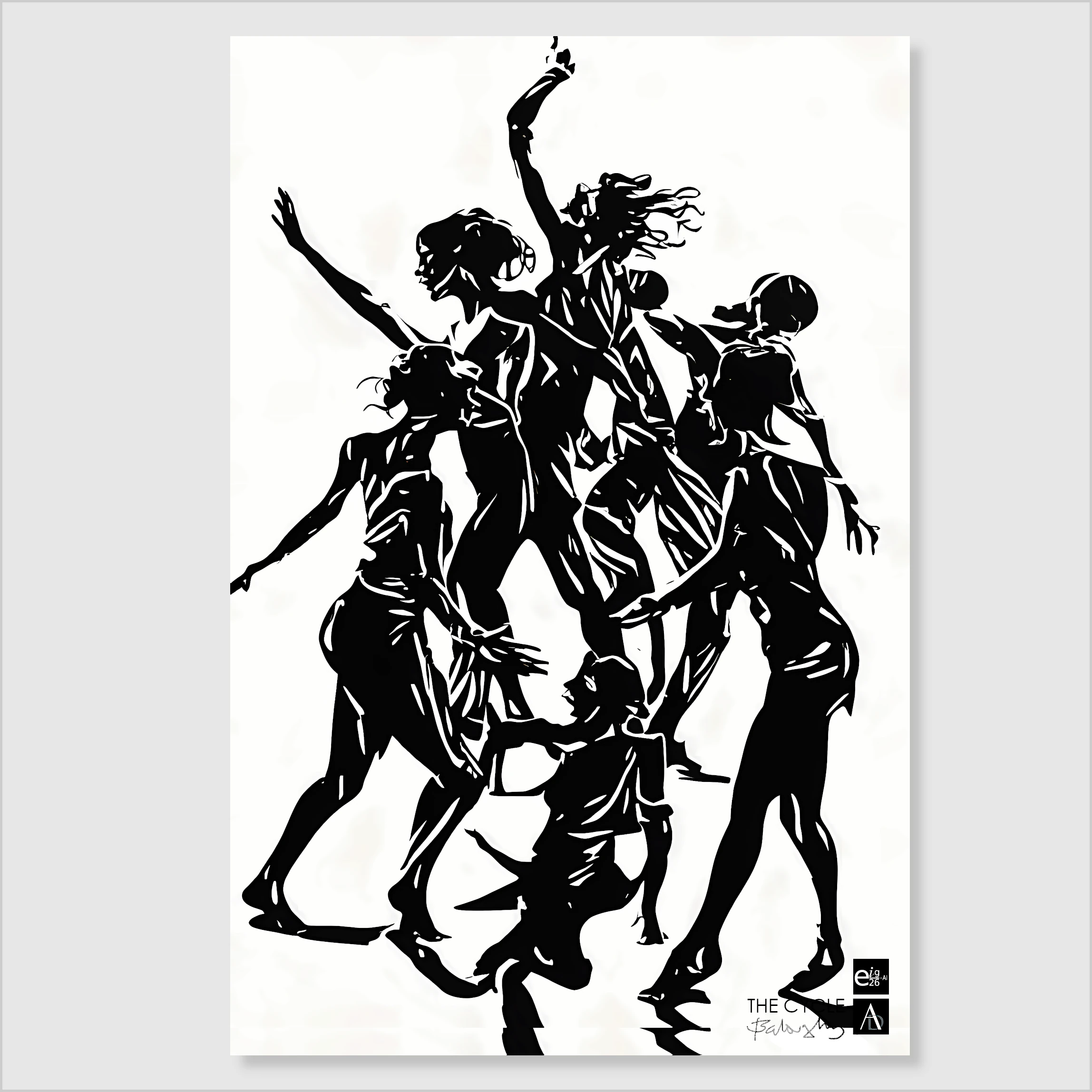
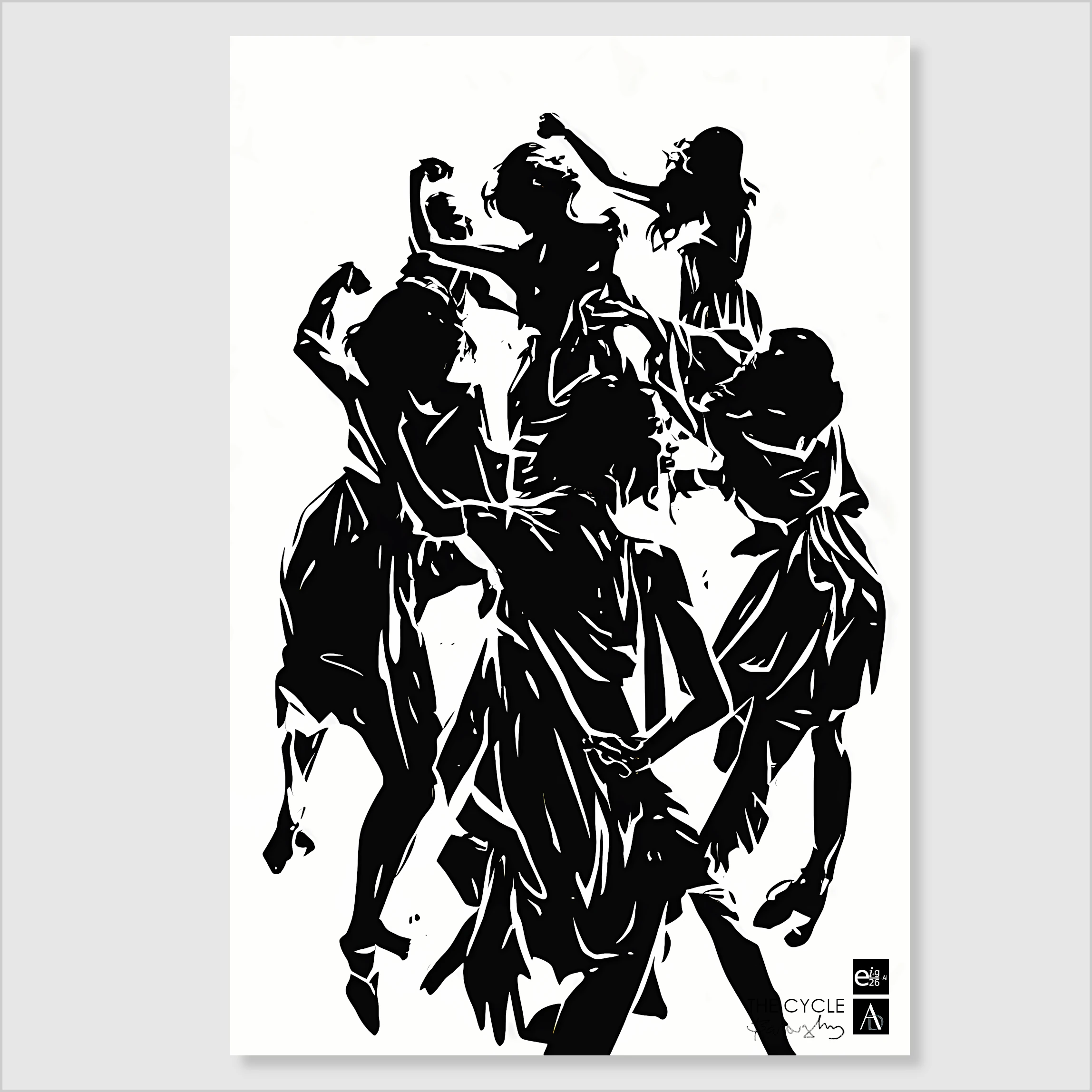
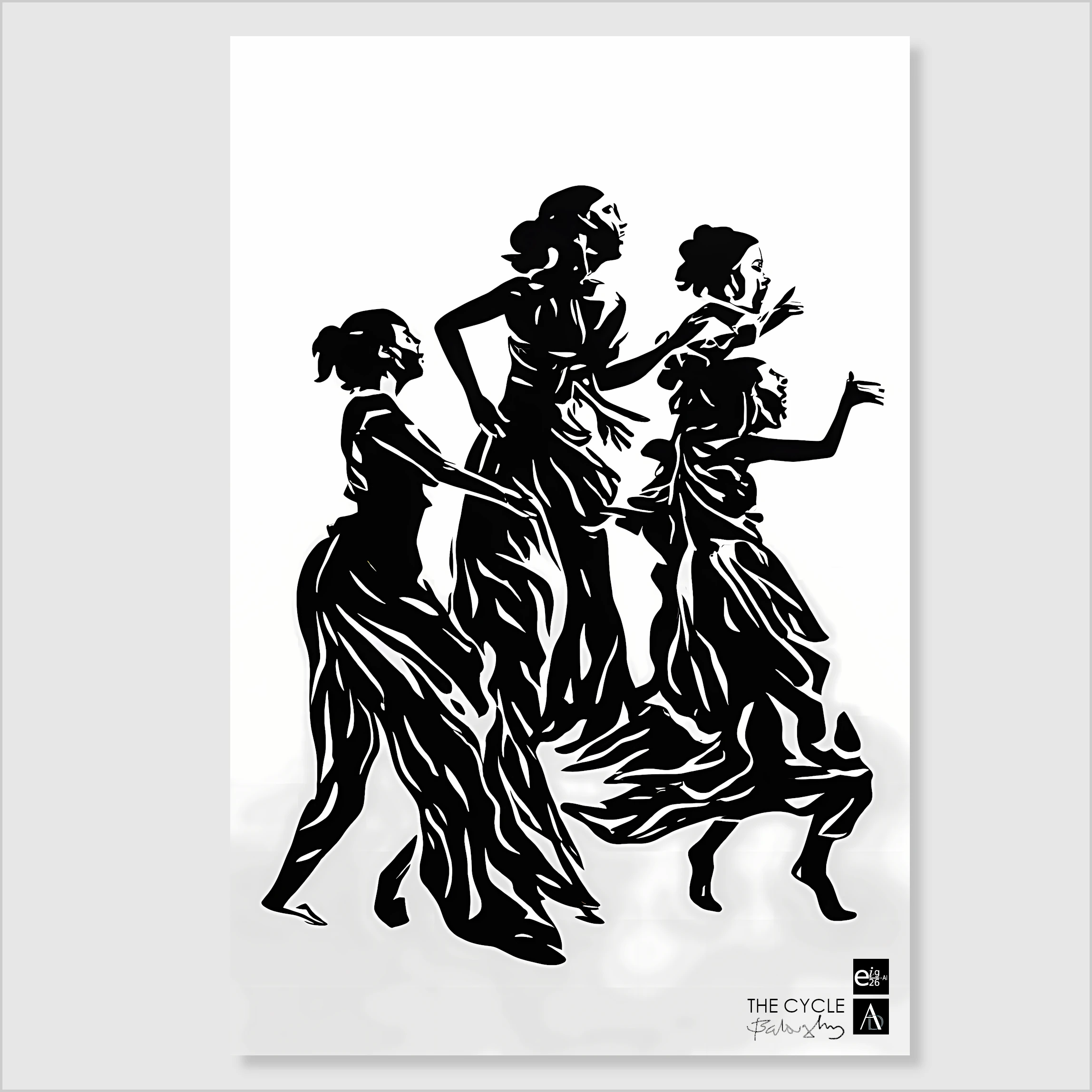
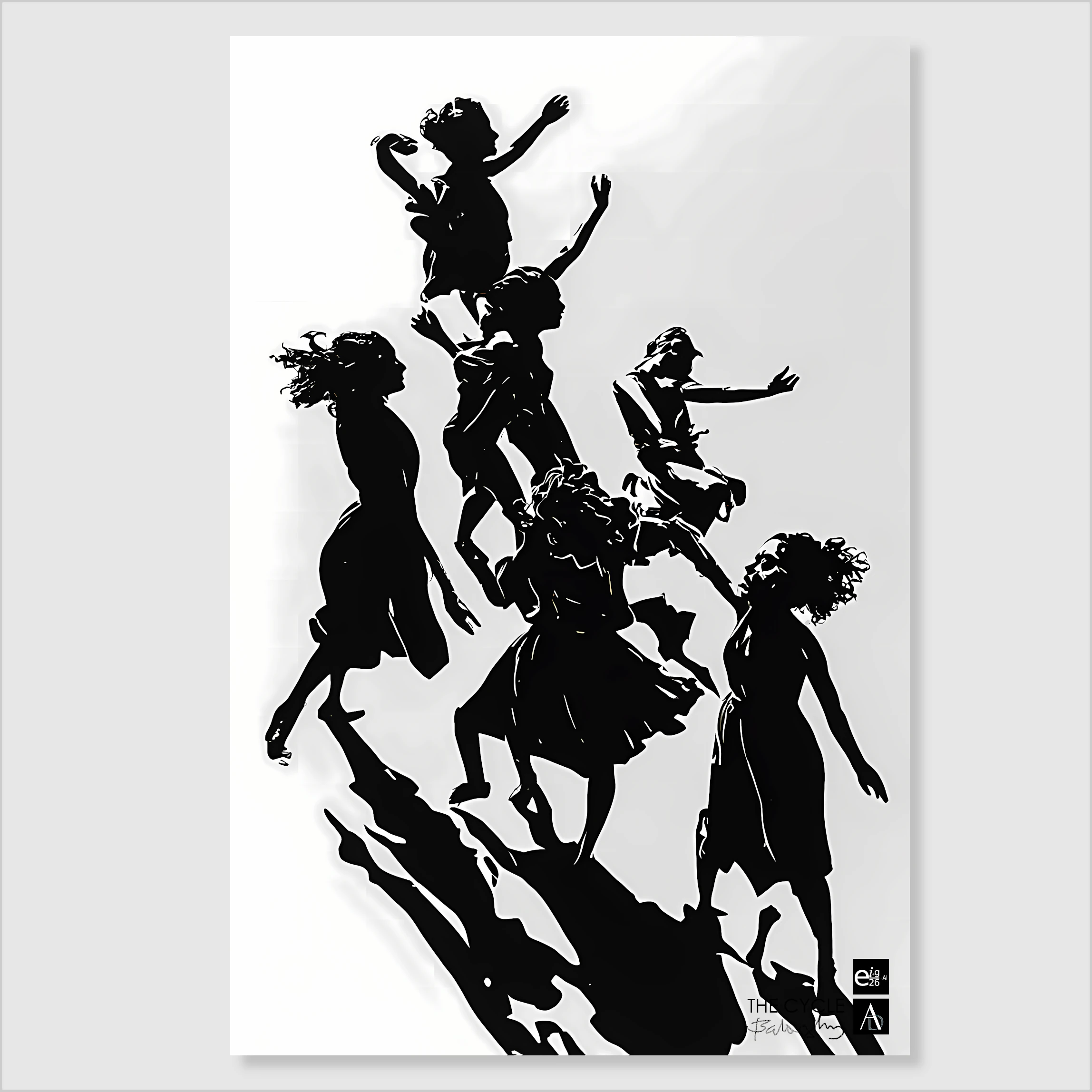
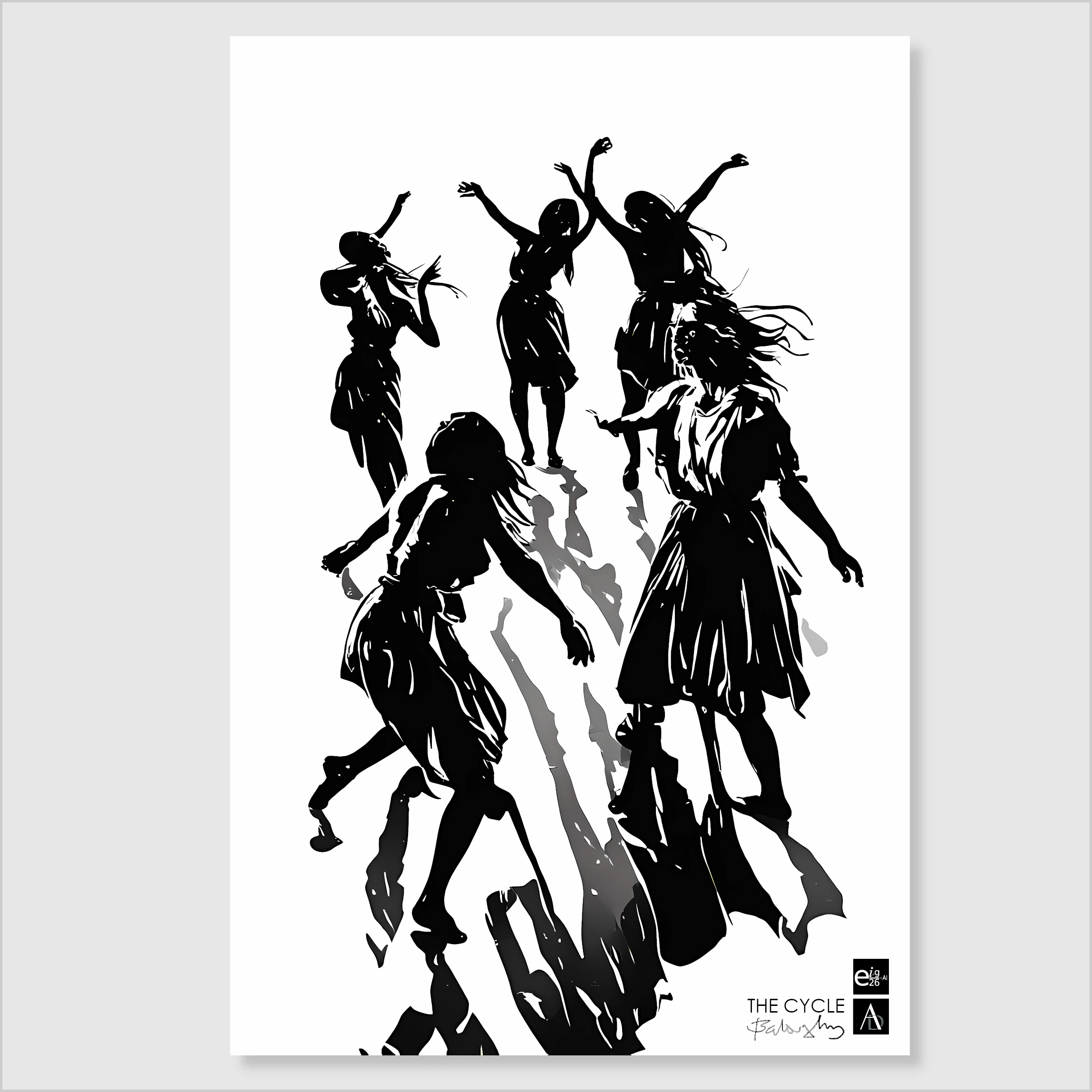
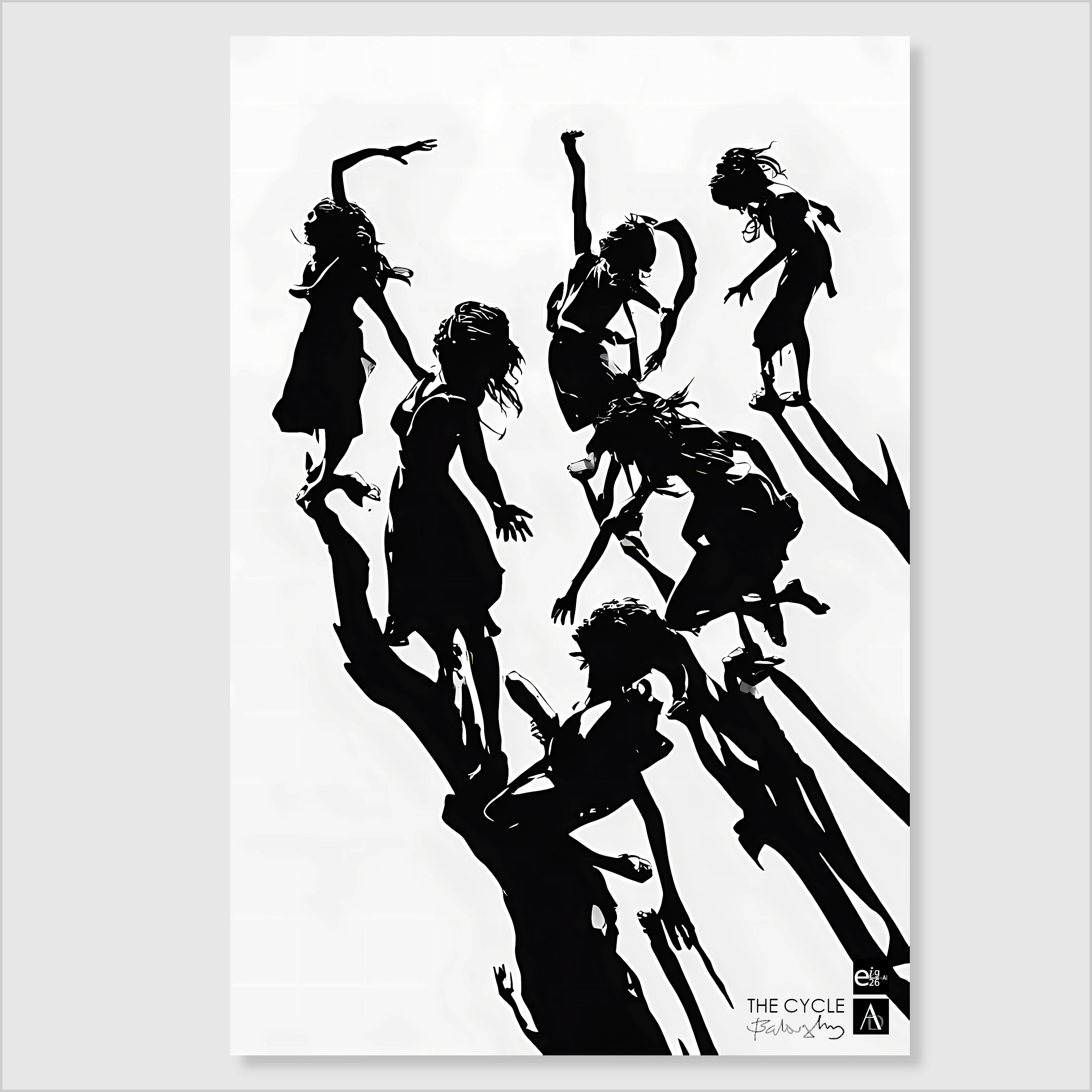
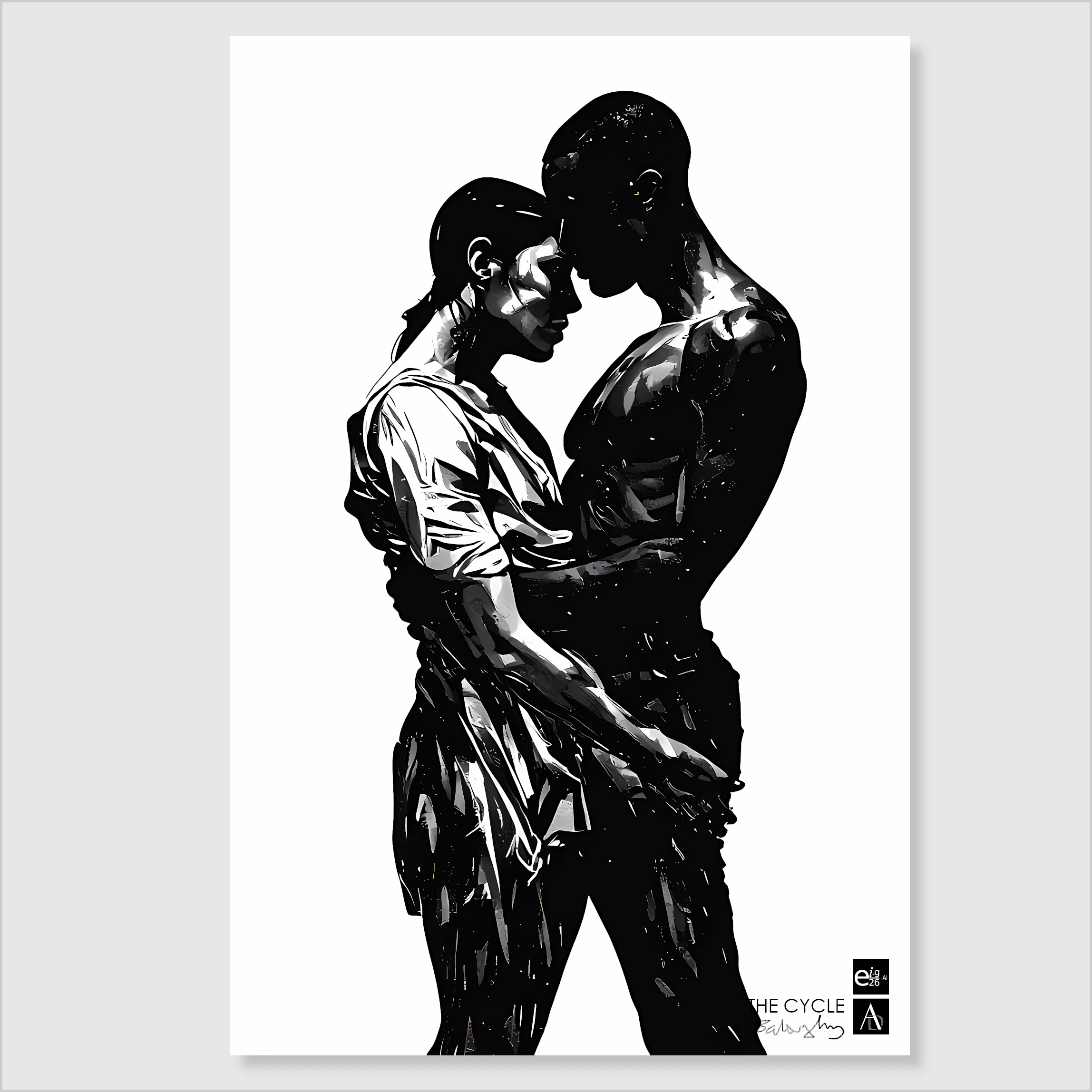
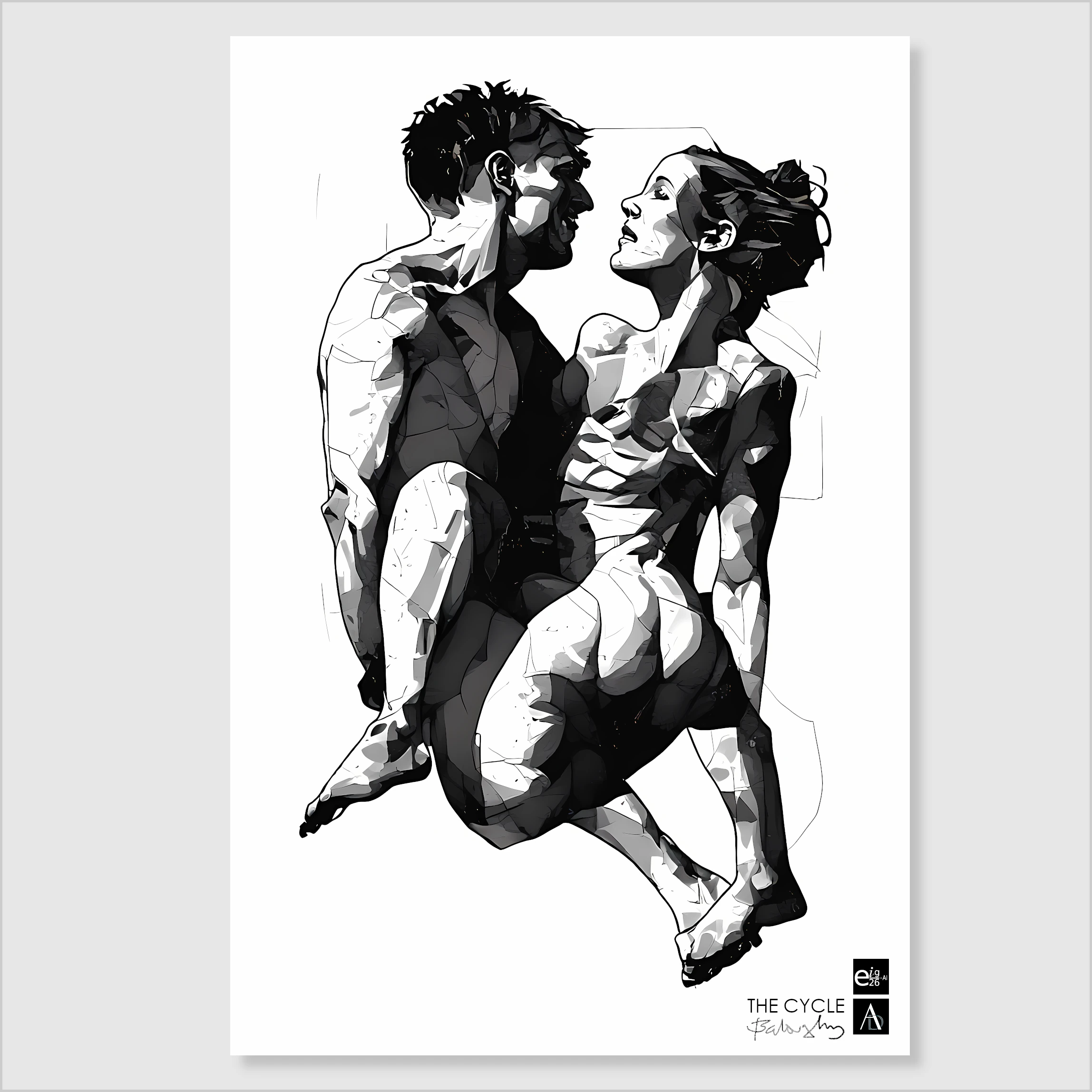

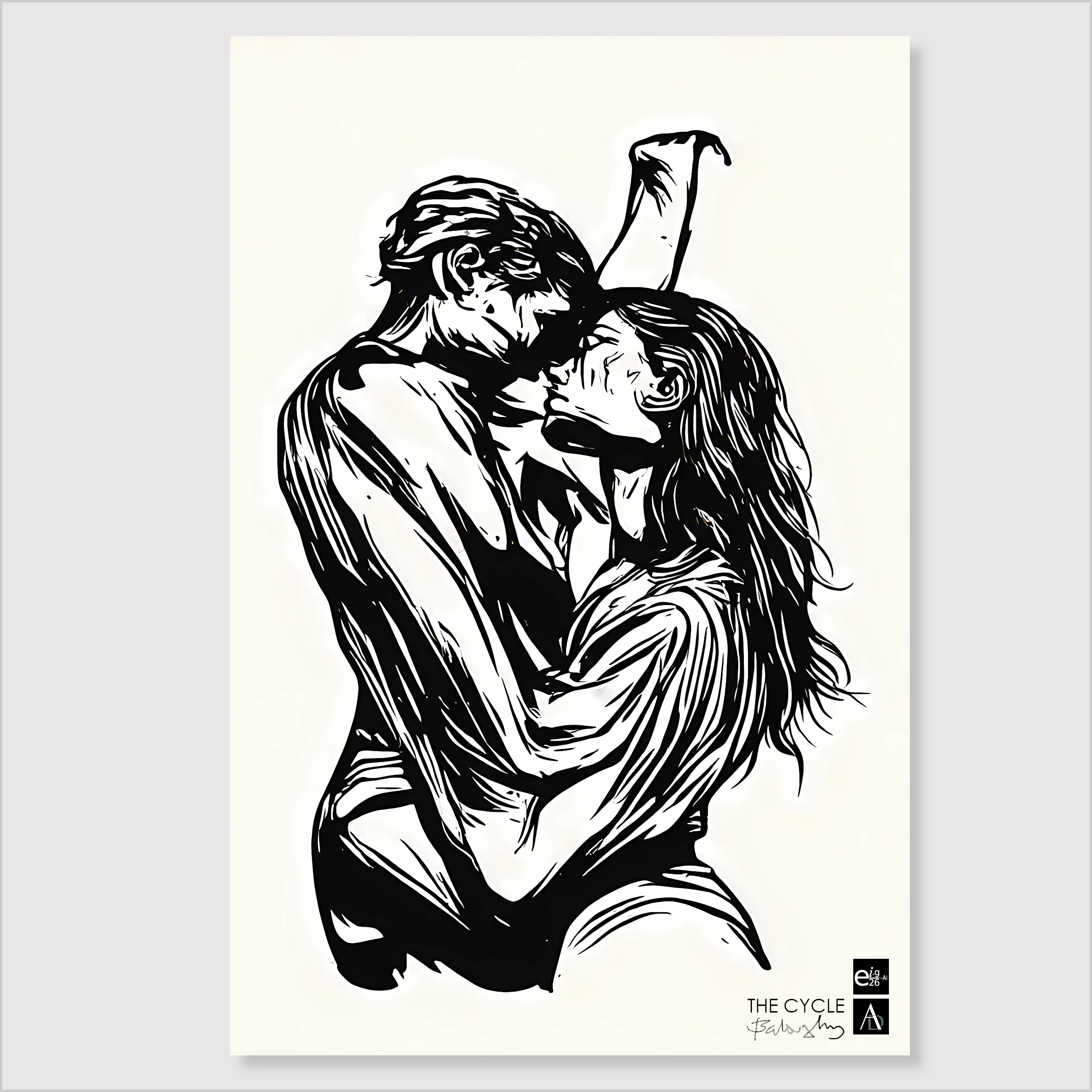

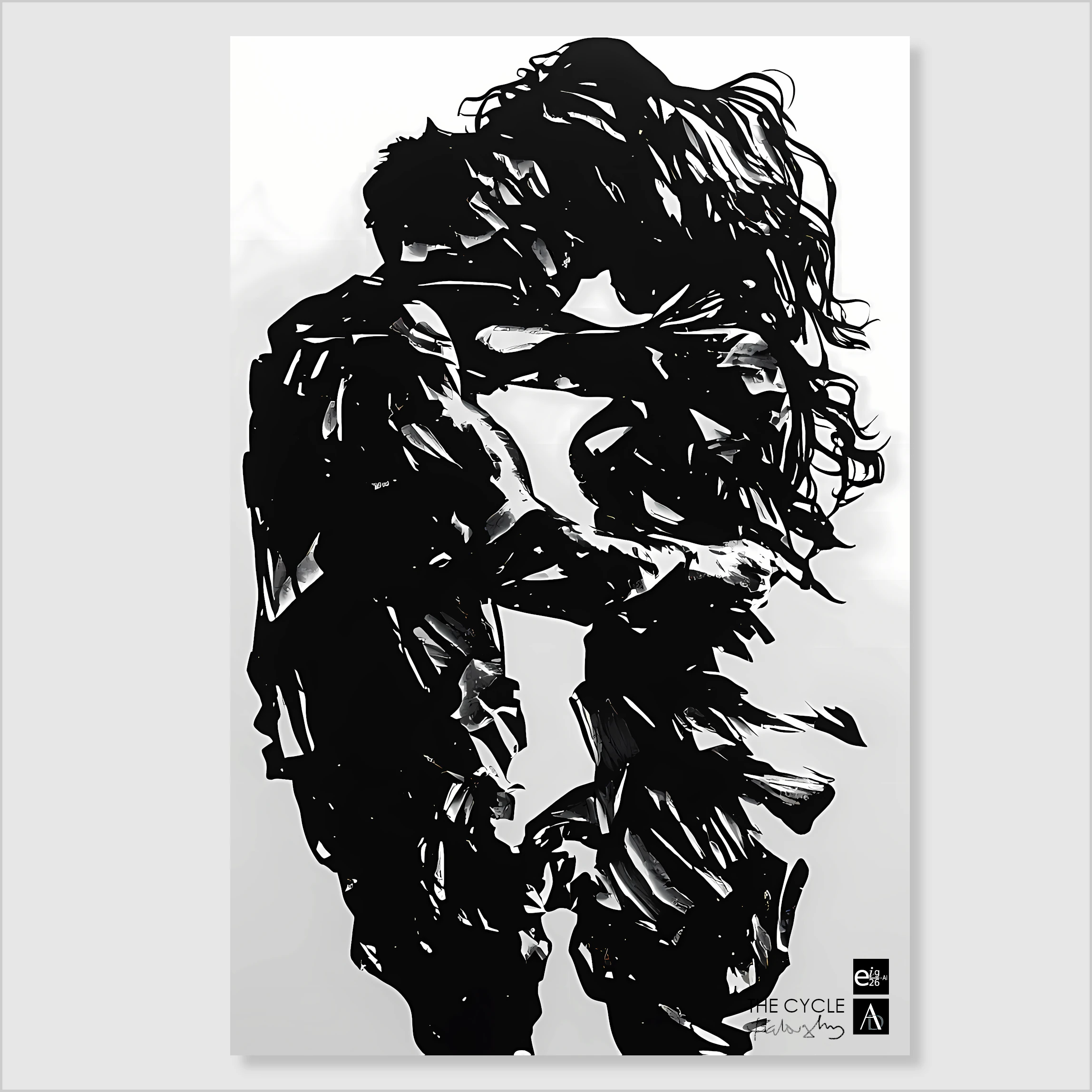
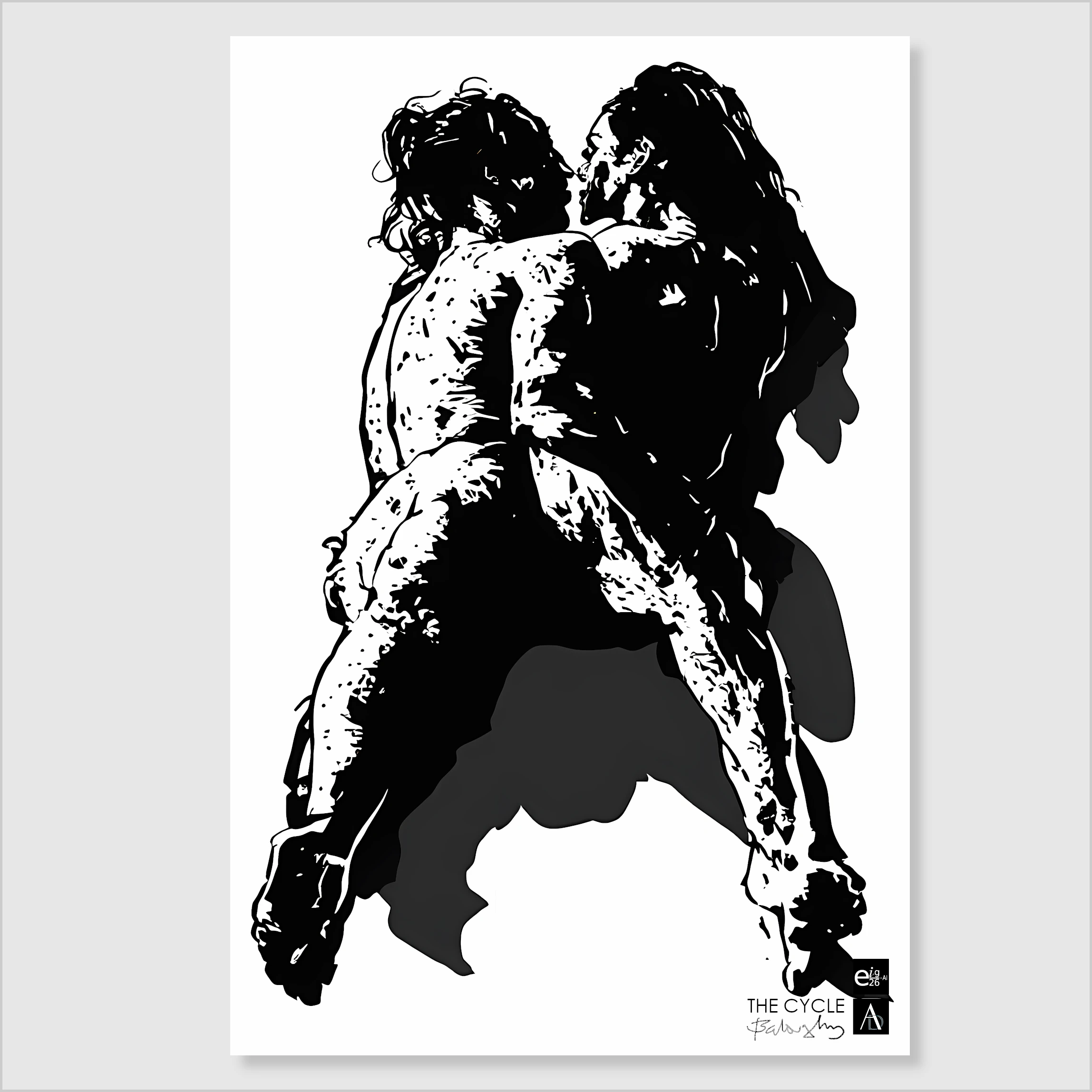
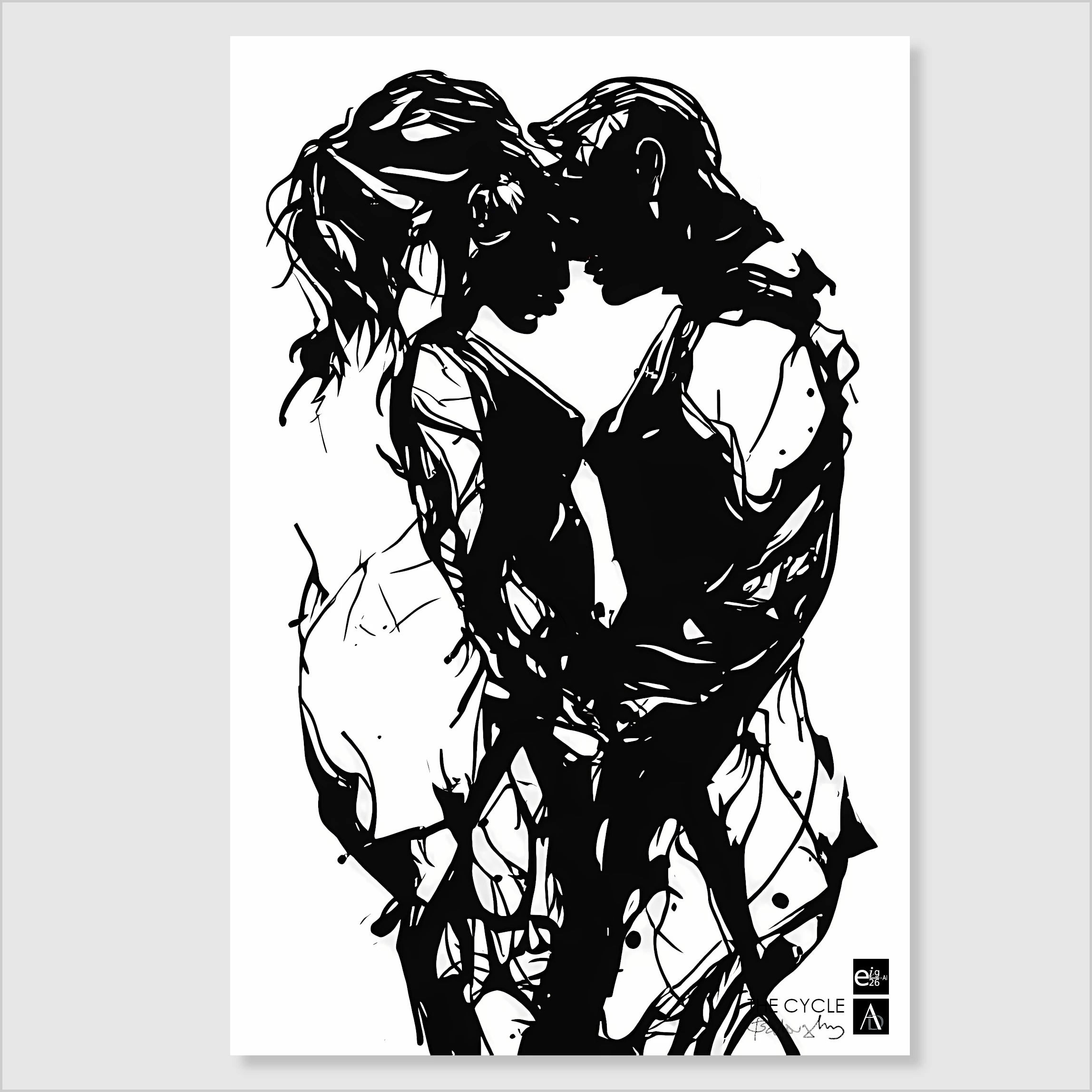
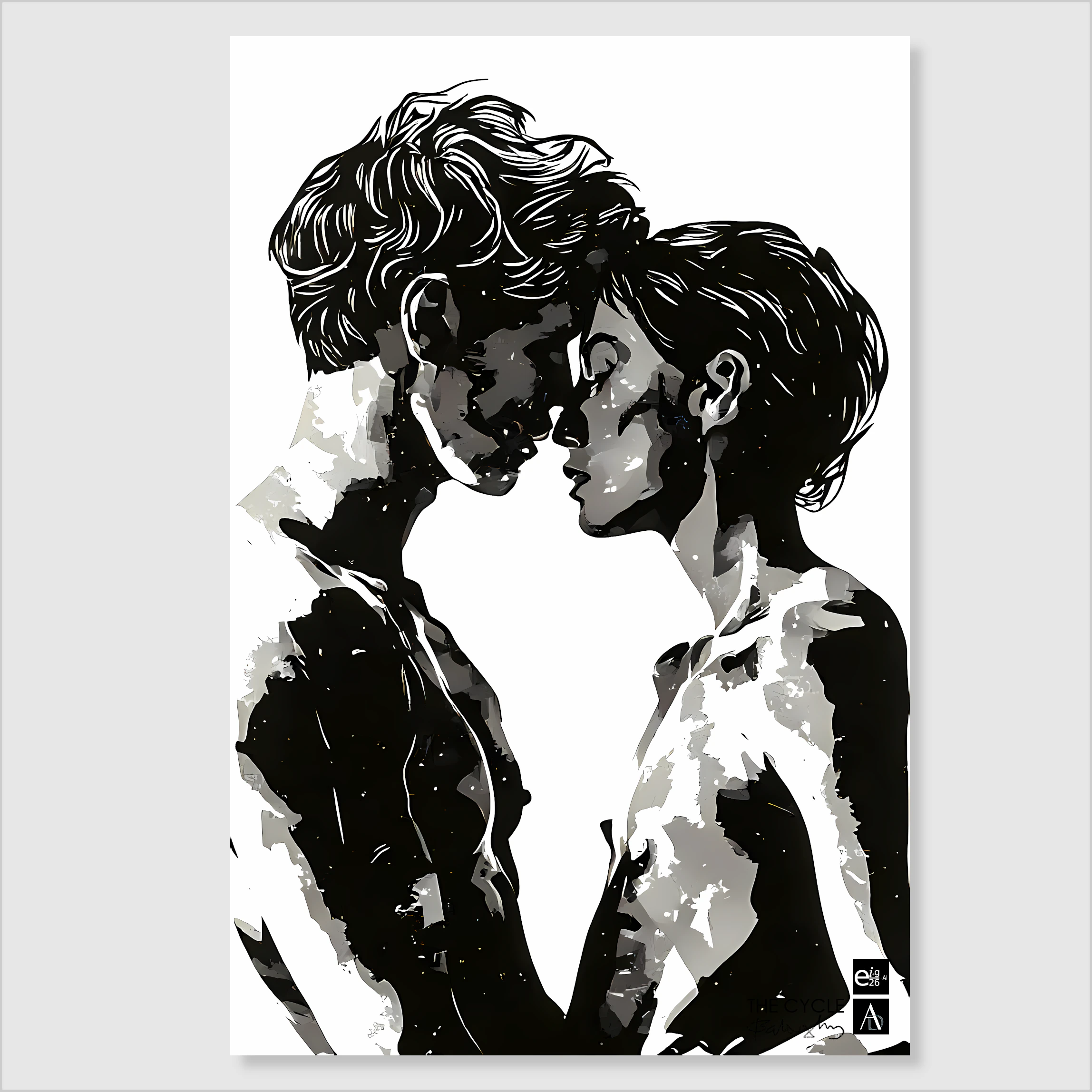
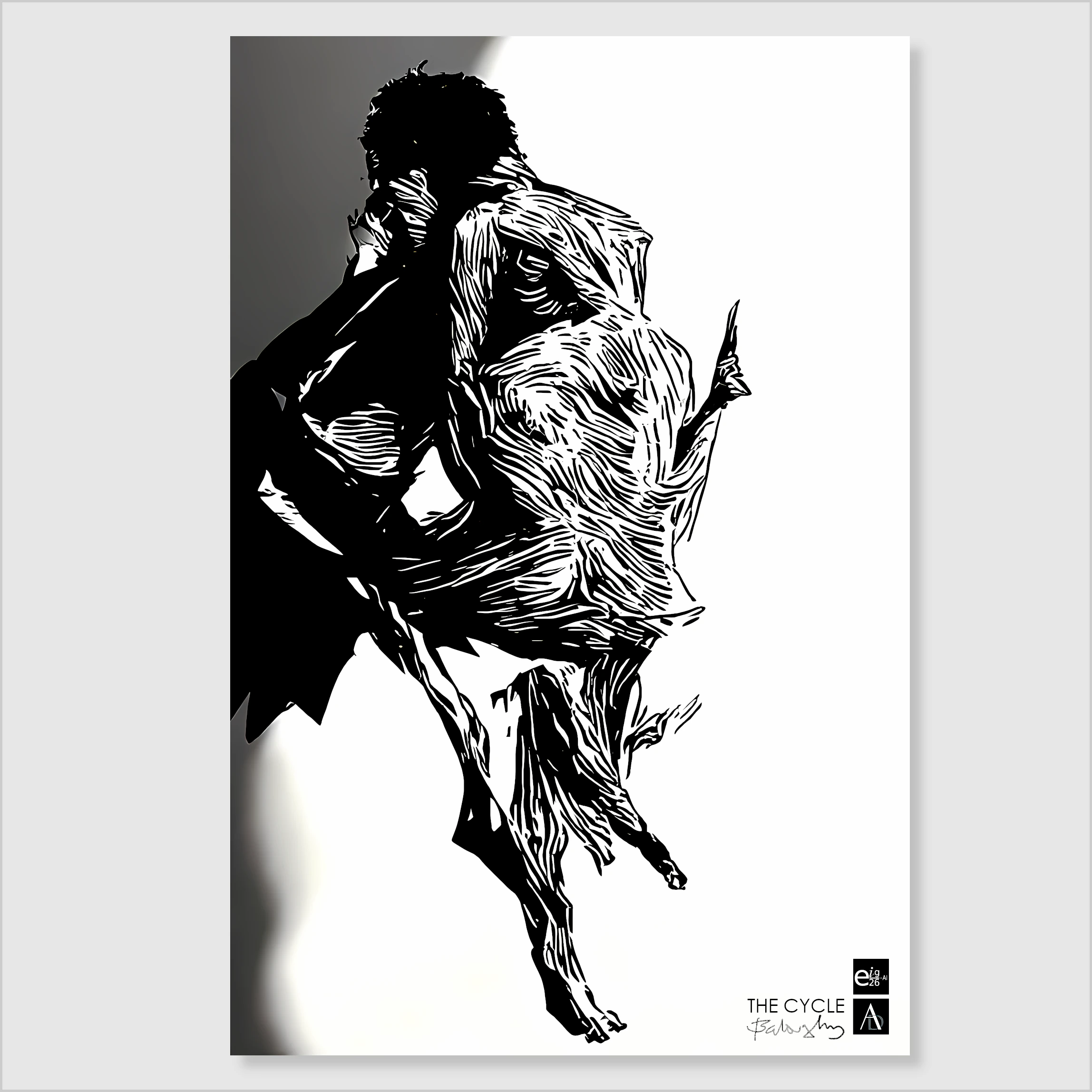

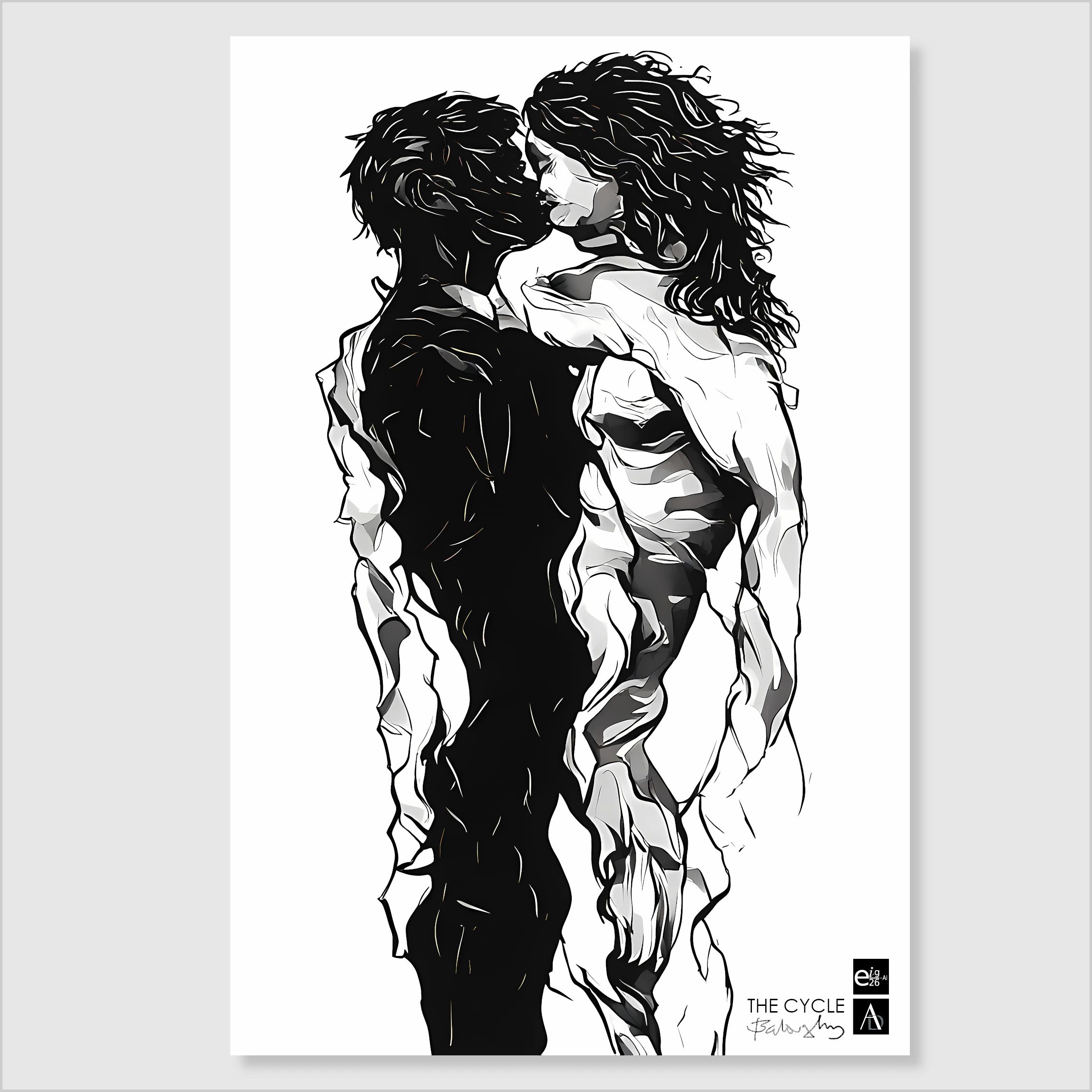


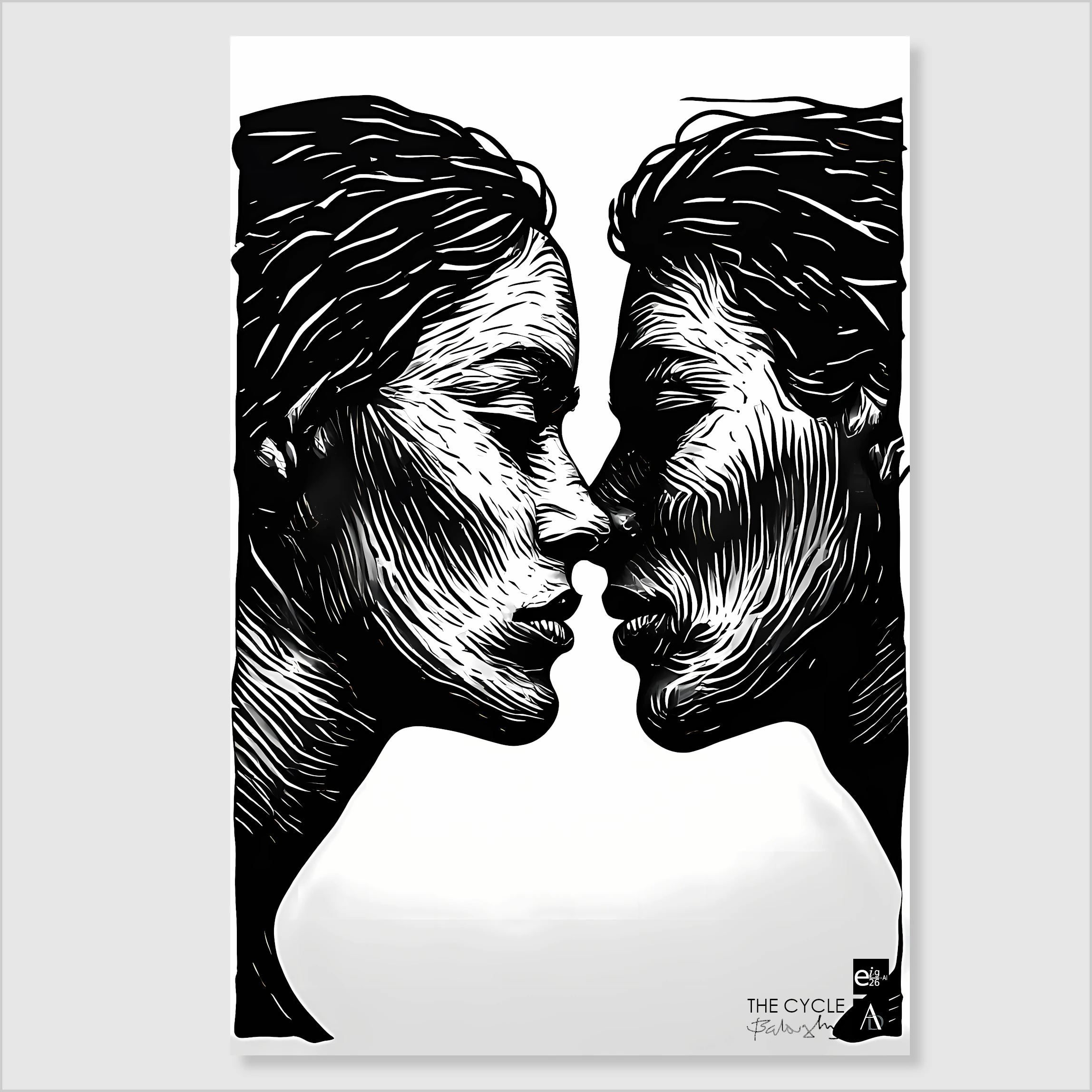
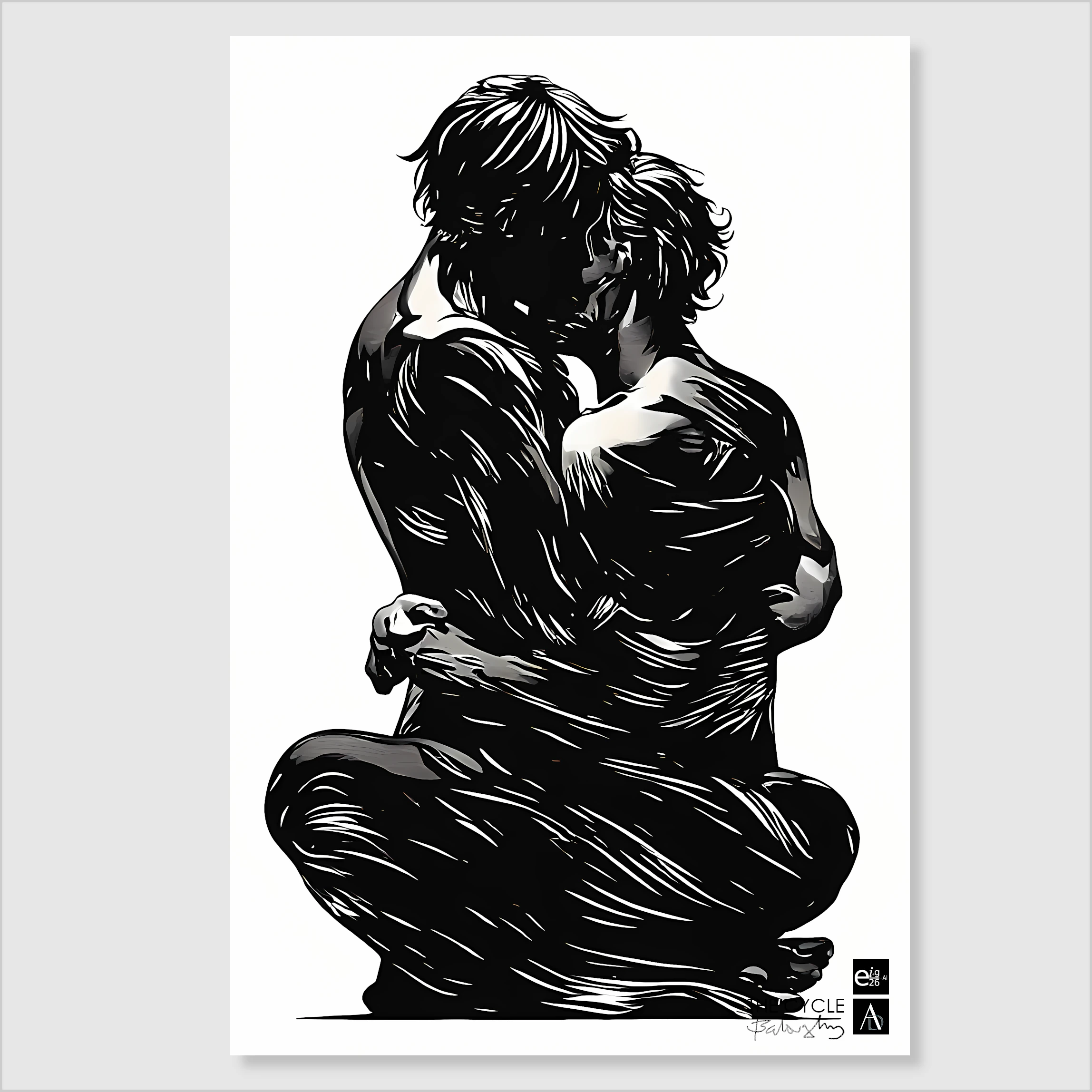
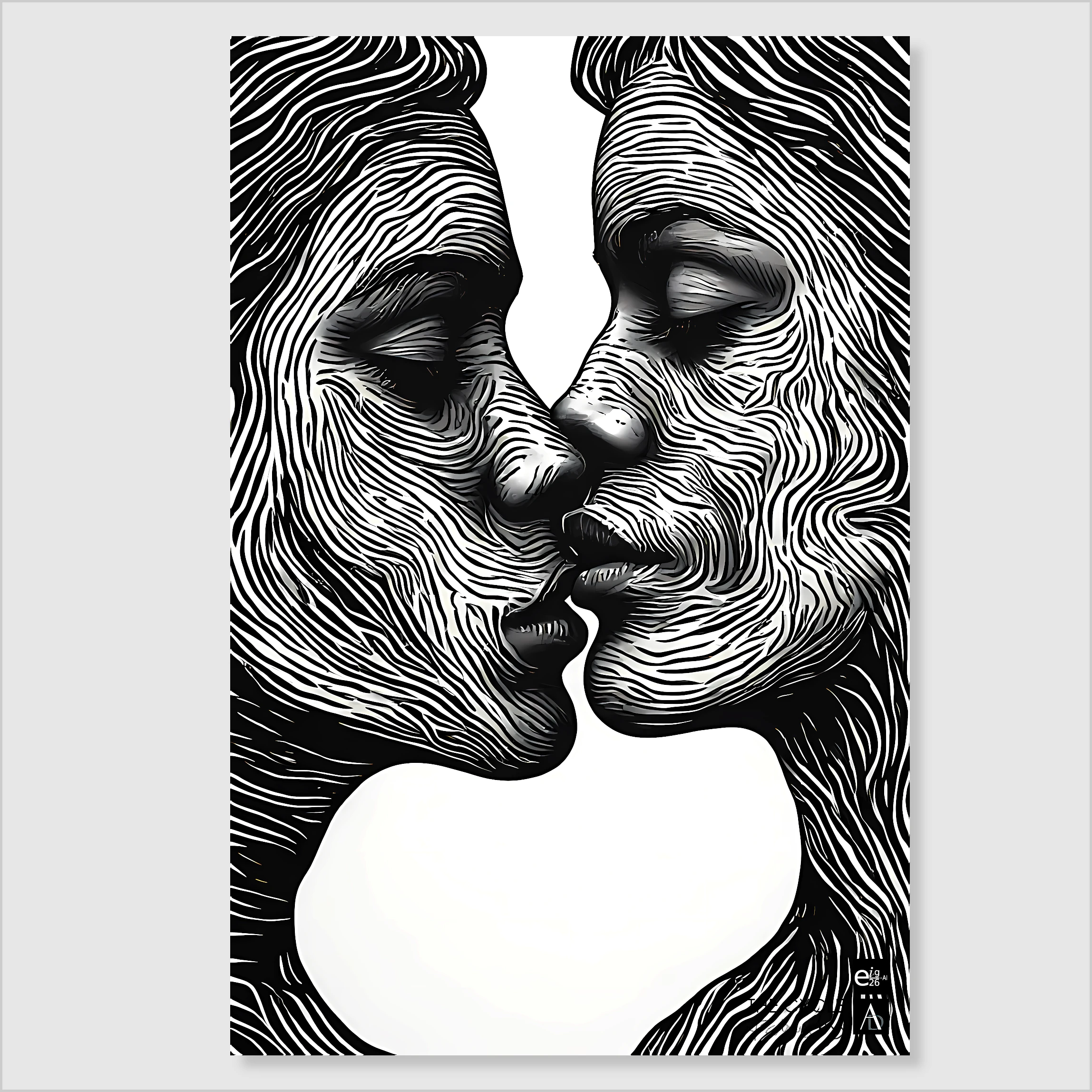

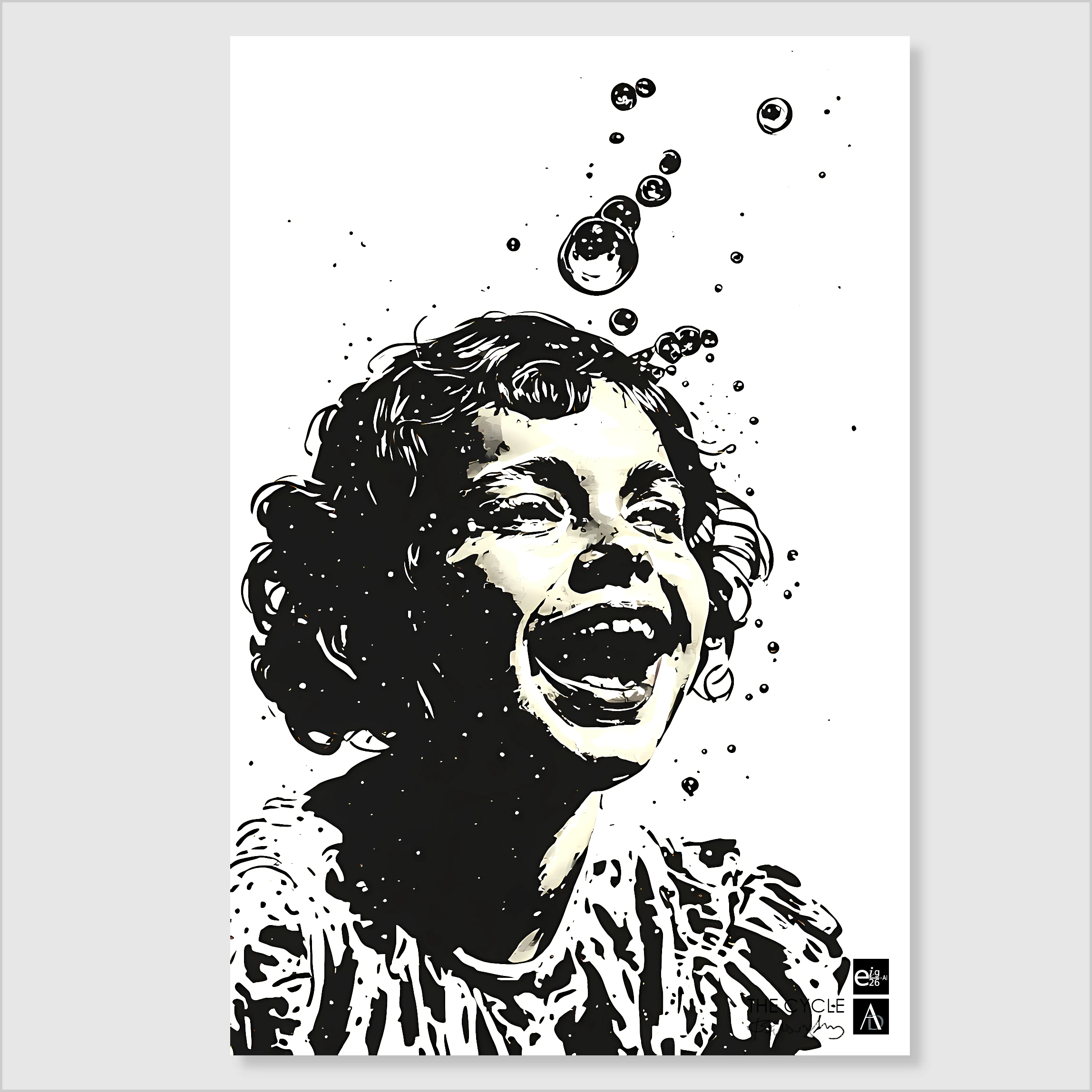
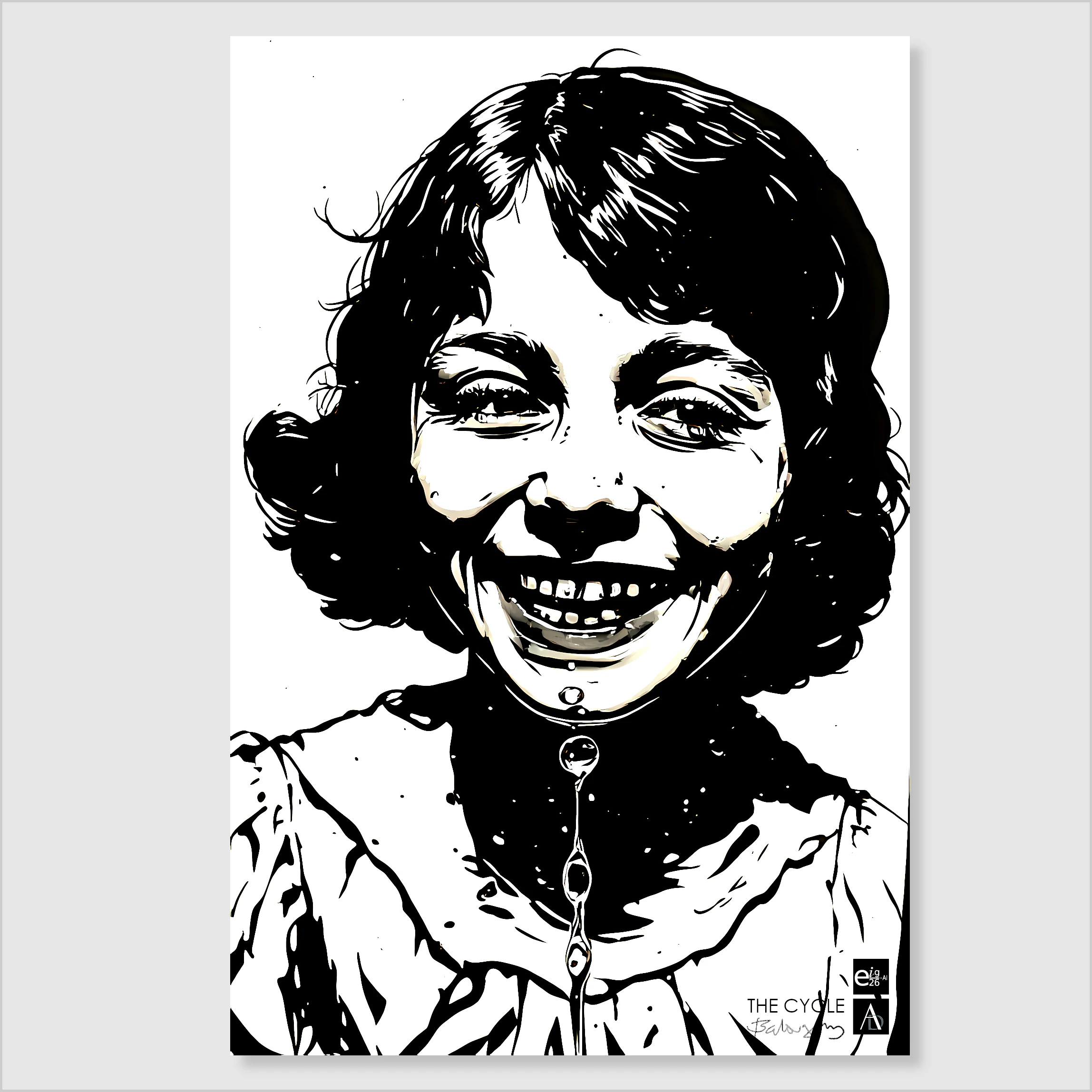

3. Frieden: Freudentanz, Liebe, Freudentränen, Wiederaufbau -> WIE LANGE DAUERT?
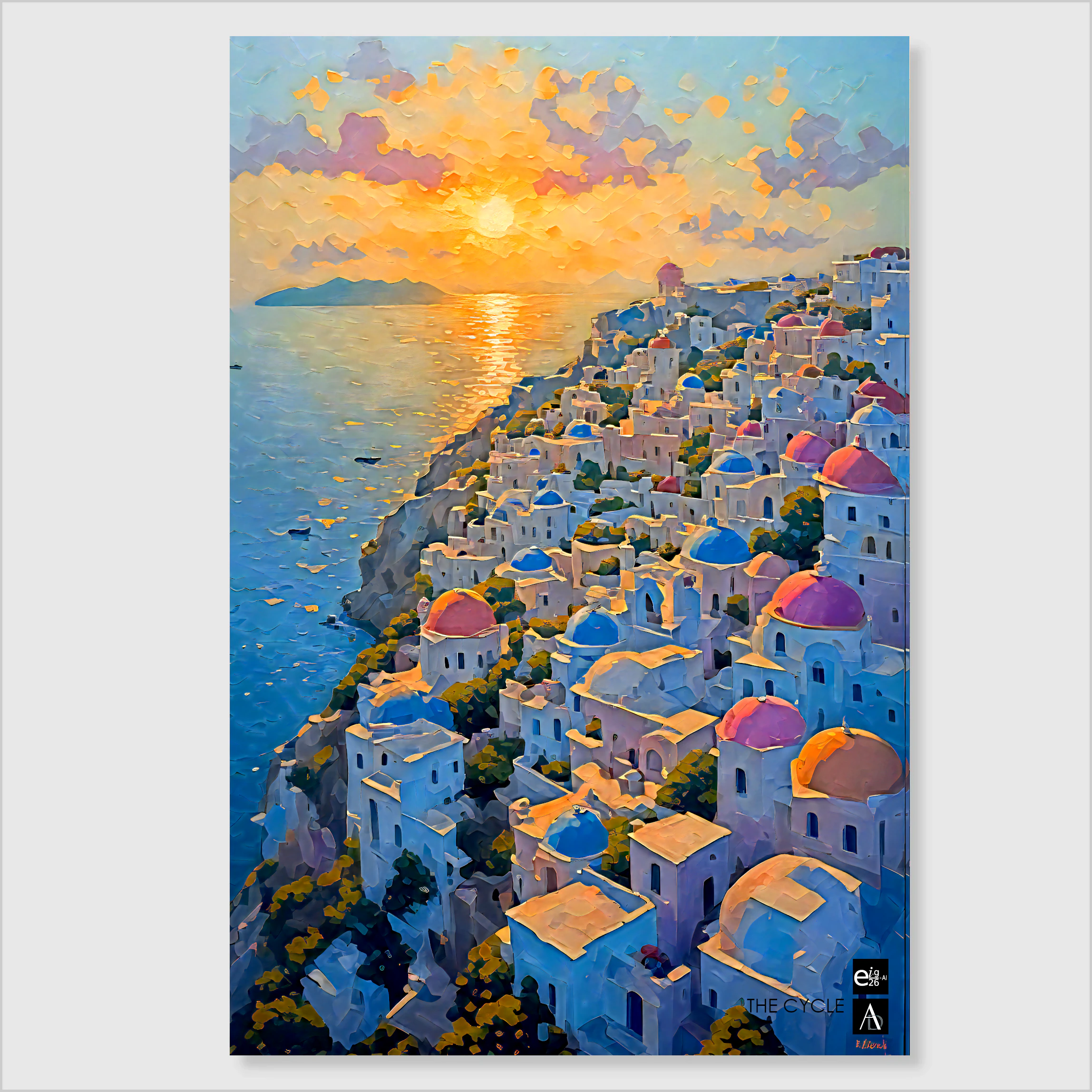
3. Peace: Dance of Joy, Love, Tears of Joy, Reconstruction -> HOW LONG DOES IT TAKE?
3. Béke: Örömtánc, Szerelem, Örömkönnyek, Újjáépités -> MENNYI IDEIG TART?
■ ■ ■
■ ■ ■
■ ■ ■
1 – THE CYCLE –
1. CURATORIAL ARTWORK INTERPRETATION AND ANALYSIS - THE CYCLE (2026)
Artist: J.A.G. Baloghy
Series: Essentials of Moments / Moment: Peace ... War ... Peace ... War ... Peace ... War ... ?
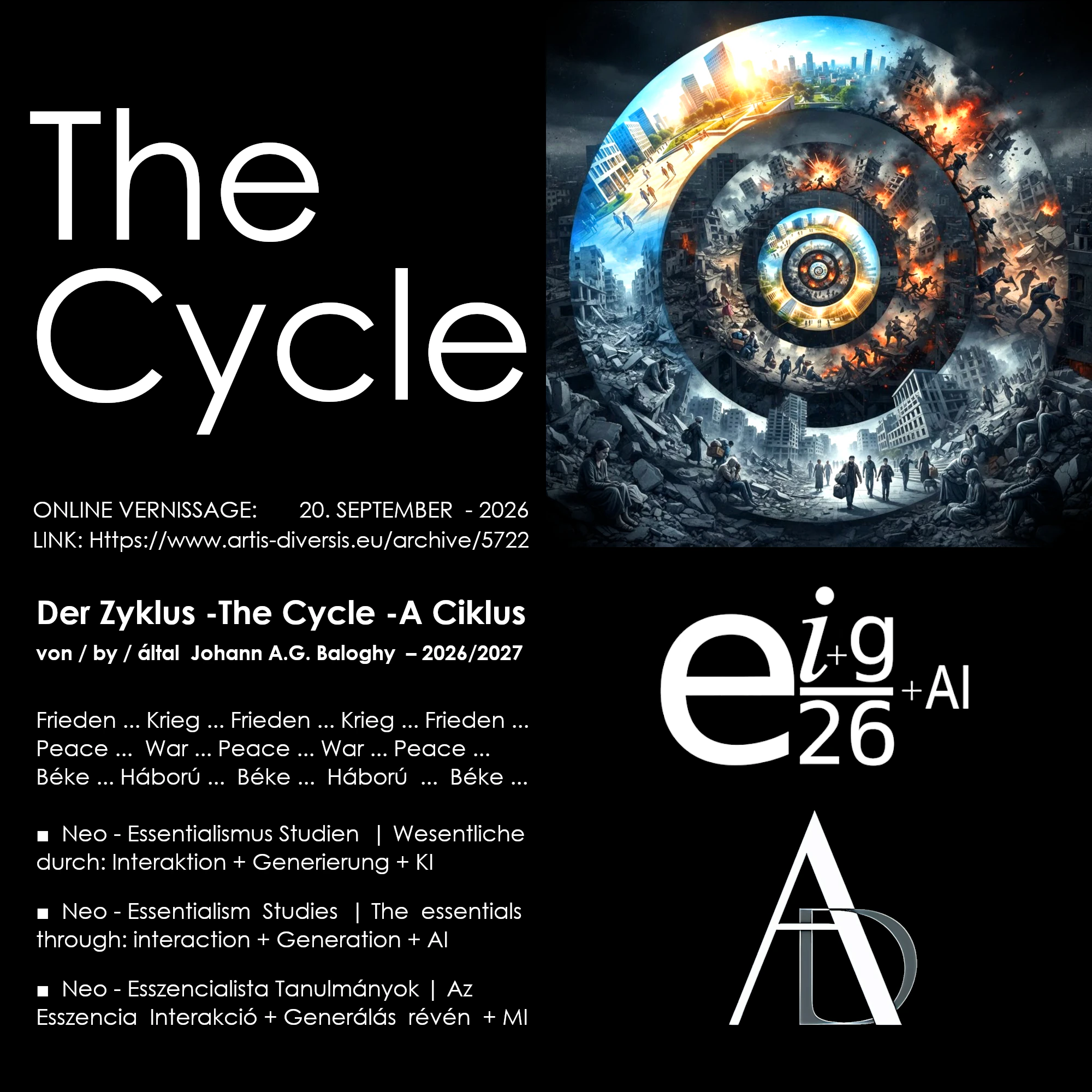
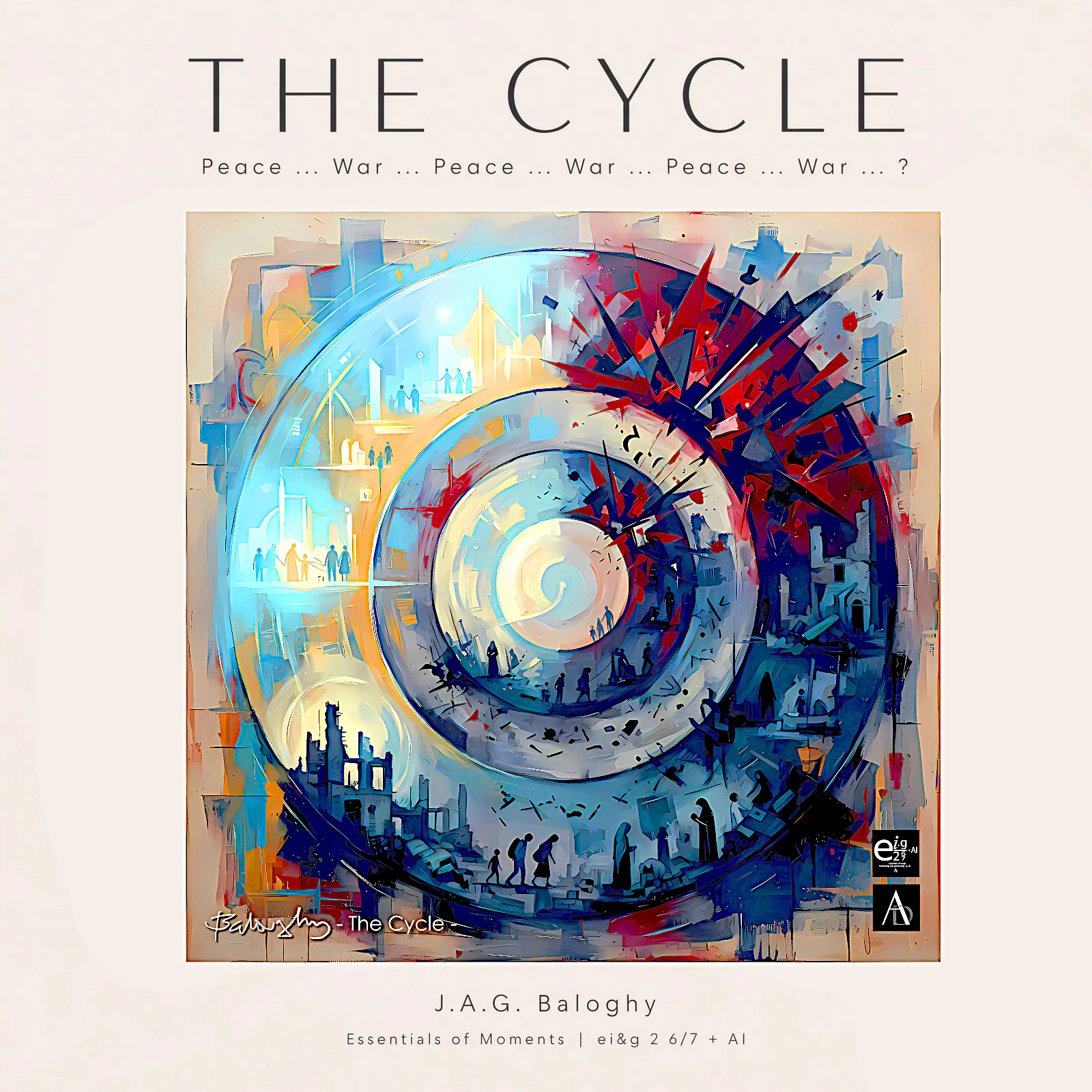
A) FORMAL ANALYSIS: The work is organized as a closed spiral/circle within 60x60 cm. Composition follows clockwise deconstruction. A central vortex in light ochre and pale blue transitions outward into denser, darker, fragmented zones. Upper left/left: translucent, pastel light – silhouetted figures in peace, family, city as utopia. Upper right: eruptive explosion in crimson, cobalt, black – sharp shards, de-construction. Bottom: ruins, exodus, mourning in cold blue-grey. Technique: concept, interactions, generative graphics, acrylic digitally transformed, AI-assisted. Brushwork shifts from soft sfumato (peace zone) to hard collage-like shards (war zone). The spiral functions as timeline and Möbius strip.
B) ICONOGRAPHIC & CONTENT INTERPRETATION: Title "The Cycle" is thesis and question: Peace ... War ... Peace ... War ... Peace ... War ... ?. Iconography reads as anthropological loop: 1. Idyll – walks, children, city as utopia. 2. Rupture – explosion as archetypal outbreak. 3. Rubble – destroyed architecture, uprooted people. 4. Exodus & mourning – figures with bundles, veiled women, bending. 5. Return to light – re-ascent into next peaceful loop. Miniature figures are de-individualized – humanity as species. Center remains white light: hope as indestructible potential or void? Baloghy depicts not a side but a system.
C) ART-HISTORICAL CLASSIFICATION: In tradition of Vanitas cycles, Goya's Desastres, Otto Dix war cycles, and simultaneously in digital post-painting. Stylistically between lyrical abstraction (Zao Wou-Ki), critical graphic narrative (Kollwitz) and contemporary AI posthumanism (Refik Anadol). Category ei&g | 2 6/7 + AI refers to Baloghy's two-year research project 2026-2027: essentials through interacting and generating + AI – positioning between hand-concept and machine co-authorship. Not AI as gimmick, but AI as material.
D) CURATORIAL TEXT: "The Cycle" is the graphic synthesis of a human question Baloghy pursues for years. In online exhibition "The Cycle" it serves as leitmotif: the cycle is not fate but a man-made spiral. The formal beauty of peace is painted deliberately fragile – the red of war is always already contained as splinter in blue. Baloghy's achievement is making the unspeakable – repetition – aesthetically tangible without aestheticizing. A work that in the digital age fulfills art's oldest task: to be warning and possibility at once.
1. KURATORISCHE KUNSTWERK INTERPRETATION UND ANALYSE - THE CYCLE (2026)
Künstler: J.A.G. Baloghy
Serie: Essentials of Moments / Moment: Peace ... War ... Peace ... War ... Peace ... War ... ?
A) FORMALE WERKANALYSE: Das Werk ist als geschlossene Spirale / Kreisform organisiert, 60x60 cm quadratisch. Die Komposition folgt einem Uhrzeigersinn-Dekonstruktionsprinzip. Formal dominiert ein zentraler Wirbel in hellen Ocker- und Lichtblau-Tönen, der nach außen in immer dichtere, dunklere und fragmentiertere Zonen übergeht. Links oben und links: pastelliges, transluzentes Licht – Figuren als Silhouetten in Frieden, Familie, Stadt. Rechts oben: eruptive Explosion in Karmesinrot, Kobaltblau, Schwarz – scharfe Splitter, De-Konstruktion. Unten: Ruinen, Flucht, Trauer in kalten Blau-Grau-Tönen. Maltechnik: Acryl digital transformiert, generativ überlagert. Pinselduktus zwischen weichem Sfumato (Friedenszone) und hartem, collageartigem Shard (Kriegszone). Die Spirale fungiert als Zeitachse und Möbiusband.
B) IKONOGRAFISCHE & INHALTLICHE DEUTUNG: Titel "The Cycle" ist These und Frage zugleich: Peace ... War ... Peace ... War ... Peace ... War ... ?. Die Ikonografie liest sich als anthropologischer Kreislauf: 1. Idylle – Spaziergänge, Kinder, Stadt als Utopie. 2. Bruch – die Explosion als archetypischer Kriegsausbruch. 3. Trümmer – zerstörte Architektur, entwurzelte Menschen. 4. Exodus & Trauer – Figuren mit Bündeln, Verschleierte, Beugung. 5. Rückkehr ins Licht – Wiederaufstieg in die nächste friedliche Schleife. Die Miniatur-Figuren sind entindividualisiert – Menschheit als Gattung. Das Zentrum bleibt weißes Licht: Hoffnung als unzerstörbares Potenzial oder Leere? Baloghy stellt nicht Partei, sondern System dar.
C) KUNSTHISTORISCHE EINORDNUNG: Das Werk steht in der Tradition des Vanitas-Zyklus, Goyas "Desastres", Otto Dix' Kriegszyklen und zugleich in der digitalen Post-Painting-Tradition. Stilistisch zwischen lyrischem Abstraktionismus (Zao Wou-Ki), kritischem Grafik-Narrativ (Käthe Kollwitz) und zeitgenössischem AI-Posthumanismus (Refik Anadol, Trevor Paglen). Kategorie ei&g | 2 6/7 + AI verweist auf Baloghys zweijähriges Forschungsprojekt 2026-2027: essentials through interacting and generating + AI – eine bewusste Positionierung zwischen Handkonzept und Maschinen-Co-Autorschaft. Nicht AI-generiert als Gimmick, sondern AI als Material.
D) KURATORISCHER TEXT: "The Cycle" ist die grafische Synthese einer Menschheitsfrage, die Baloghy seit Jahren verfolgt. In der Online-Ausstellung "The Cycle" fungiert das Werk als Leitmotiv: Der Zyklus ist kein Schicksal, sondern eine von Menschen gebaute Spirale. Die formale Schönheit des Friedens ist bewusst fragil gemalt – das Rot des Krieges ist immer schon als Splitter im Blau enthalten. Baloghys Leistung liegt darin, das Unaussprechliche – die Wiederholung – ästhetisch fassbar zu machen, ohne zu ästhetisieren. Ein Werk, das im digitalen Zeitalter die älteste Aufgabe von Kunst erfüllt: Mahnung und Möglichkeit zugleich zu sein.
1. INTERPRÉTATION ET ANALYSE CURATORIALE - THE CYCLE (2026)
Artiste: J.A.G. Baloghy
Série: Essentials of Moments / Moment: Peace ... War ... Peace ... War ... Peace ... War ... ?
A) ANALYSE FORMELLE: Œuvre organisée en spirale / cercle fermé, 60x60 cm. Composition suit une déconstruction horaire. Vortex central en ocre clair et bleu pâle qui s'ouvre vers des zones plus denses, sombres, fragmentées. En haut à gauche / gauche: lumière translucide pastel – silhouettes en paix, famille, ville utopique. En haut à droite: explosion éruptive en cramoisi, cobalt, noir – éclats tranchants. En bas: ruines, exode, deuil en gris-bleu froid. Technique: conception, interactions, graphique génératif, acrylique transformé numériquement, assisté par IA. Facture entre sfumato doux (zone paix) et collage dur (zone guerre). La spirale comme chronologie et bande de Möbius.
B) INTERPRÉTATION ICONOGRAPHIQUE ET CONTENU: Le titre "The Cycle" est thèse et question: Peace ... War ... ?. Iconographie comme boucle anthropologique: 1. Idylle. 2. Rupture – explosion archétypale. 3. Décombres. 4. Exode & deuil. 5. Retour vers la lumière. Figures miniatures dé-individualisées – humanité comme espèce. Le centre reste lumière blanche: espoir indestructible ou vide? Baloghy ne montre pas un parti, mais un système.
C) CLASSEMENT HISTORIQUE DE L'ART: Tradition du cycle Vanitas, Desastres de Goya, cycles de guerre d'Otto Dix, et post-peinture digitale. Stylistiquement entre abstraction lyrique (Zao Wou-Ki), récit graphique critique (Kollwitz) et posthumanisme IA contemporain (Refik Anadol). Catégorie ei&g | 2 6/7 + AI désigne projet de recherche de deux ans 2026-2027: essentials through interacting and generating + AI – entre concept manuel et co-auctorialité machine. IA non comme gadget mais comme matériau.
D) TEXTE CURATORIAL: "The Cycle" est la synthèse graphique d'une question humaine. Dans l'exposition en ligne "The Cycle", il sert de leitmotiv: le cycle n'est pas destin mais spirale construite par l'homme. La beauté formelle de la paix est peinte fragile – le rouge de la guerre est déjà contenu comme éclat dans le bleu. L'accomplissement de Baloghy est de rendre tangible l'indicible – la répétition – sans esthétiser. Une œuvre qui, à l'ère numérique, remplit la plus ancienne tâche de l'art: être à la fois avertissement et possibilité.
1. KURÁTORI MŰÉRTELMEZÉS ÉS ELEMZÉS - THE CYCLE (2026)
Művész: J.A.G. Baloghy
Sorozat: Essentials of Moments / Momentum: Peace ... War ... Peace ... War ... Peace ... War ... ?
A) FORMÁLIS MŰELEMZÉS: A mű zárt spirál / kör formában szervezett, 60x60 cm négyzetben. Kompozíciója óramutató szerinti dekonstrukció. Központi örvény világos okker és halványkék tónusokban, kifelé haladva egyre sűrűbb, sötétebb, fragmentáltabb zónákba megy át. Bal felső / bal oldal: transzlucens, pasztell fény – sziluettfigurák békében, család, város mint utópia. Jobb felső: eruptív robbanás karmazsinvörösben, kobaltkékben, feketében – éles szilánkok. Alul: romok, exodus, gyász hideg kék-szürkében. Technika: koncepcióalkotás, interakciók, generatív grafika, akril digitálisan transzformálva, AI-támogatott. Ecsetkezelés a lágy sfumato (béke zóna) és a kemény kollázsszerű szilánk (háború zóna) között. A spirál időtengely és Möbius-szalag.
B) IKONOGRÁFIAI ÉS TARTALMI ÉRTELMEZÉS: A "The Cycle" cím tézis és kérdés egyszerre: Béke ... Háború ... ?. Ikonográfia antropológiai ciklus: 1. Idill. 2. Törés – robbanás mint archetipikus kitörés. 3. Törmelék. 4. Exodus és gyász. 5. Visszatérés a fénybe. Miniatűr figurák de-individualizáltak – emberiség mint faj. Középpont fehér fény marad: remény mint elpusztíthatatlan potenciál vagy üresség? Baloghy nem oldalt, hanem rendszert ábrázol.
C) MŰVÉSZETTÖRTÉNETI BESOROLÁS: Vanitas-ciklusok, Goya Desastres, Otto Dix háborúciklusok hagyományában, és egyben digitális poszt-festészet. Stilisztikailag lírai absztrakció (Zao Wou-Ki), kritikai grafikus narratíva (Kollwitz) és kortárs AI poszthumanizmus (Refik Anadol) között. Az ei&g | 2 6/7 + AI kategória Baloghy kétéves kutatási projektje 2026-2027: essentials through interacting and generating + AI – kézi koncepció és gépi társszerzőség közötti pozicionálás. Nem AI mint trükk, hanem mint anyag.
D) KURÁTORI SZÖVEG: A "The Cycle" egy emberi kérdés grafikus szintézise, melyet Baloghy évek óta követ. Az online kiállításban "The Cycle" leitmotívumként szolgál: a ciklus nem sors, hanem ember alkotta spirál. A béke formai szépsége szándékosan törékenyen festett – a háború vöröse már szilánkként benne van a kékben. Baloghy teljesítménye, hogy a kimondhatatlant – az ismétlődést – esztétikailag megfoghatóvá teszi anélkül, hogy esztétizálna. Olyan mű, amely a digitális korban a művészet legrégebbi feladatát teljesíti: figyelmeztetés és lehetőség egyszerre lenni.
■ Neo-Essentialismus in der Kunst – von Copilot.Microsoft
■ Kurzfazit
Neo‑Essentialismus ist kein etablierter kunsthistorischen Begriff wie Neo‑Expressionismus, sondern ein neuer, theoretischer Ansatz, der versucht, eine Rückkehr zu „wesentlichen“, reduzierten, existenziellen oder archetypischen Formen der Kunst zu beschreiben. Er taucht in aktuellen Diskursen auf, wird aber nicht als offizielle Kunstrichtung geführt. Deshalb lässt er sich nur über Analogien, philosophische Bezüge und zeitgenössische Tendenzen definieren.
■ Was bedeutet „Neo‑Essentialismus“ in der Kunst? Der Begriff lässt sich sinnvoll über drei Ebenen verstehen:
Philosophische Ebene – Rückkehr zum Wesentlichen „Essentialismus“ bezeichnet in der Philosophie die Suche nach dem Wesen eines Gegenstands oder einer Idee.
Ein Neo‑Essentialismus in der Kunst wäre daher eine zeitgenössische Rückkehr zu grundlegenden, unverzichtbaren Ausdrucksformen, z. B.:
- Reduktion auf elementare Formen (Kreis, Linie, Fläche)
- Konzentration auf archetypische Symbole
- Fokus auf existenzielle Themen: Körper, Natur, Zeit, Identität
- Ablehnung von Ironie, Zitatkultur und digitaler Überreizung
Künstlerische Ebene – Gegenbewegung zur Postmoderne Die Postmoderne (inkl. Neo‑Expressionismus) ist geprägt von:
- Fragmentierung
- Zitatkultur
- Ironie
- Hybridität
- Überlagerung von Stilen
Formale Ebene – Minimalismus + Emotion Während Minimalismus oft kühl und analytisch ist, würde Neo‑Essentialismus versuchen:
- Reduktion + emotionale Tiefe
- Einfachheit + existenzielle Bedeutung
- Materialität + spirituelle Dimension
■ Mögliche Merkmale neo‑essentialistischer Kunst
- Elementare Formen statt komplexer Kompositionen
- Monochrome oder reduzierte Farbpaletten
- Natürliche Materialien (Stein, Holz, Erde, Metall)
- Archetypische Motive (Figur, Landschaft, Symbol)
- Langsame, meditative Bildsprache
- Ablehnung digitaler Effekte zugunsten von Handwerk und Materialität
■ Beispiele zeitgenössischer Positionen, die als „neo‑essentialistisch“ gelesen werden könnten (Interpretation, da der Begriff nicht offiziell etabliert ist)
- Anselm Kiefer – Materialität, Mythos, Archetypen
- Richard Serra – Reduktion, Material, Raum
- Agnes Martin – Spirituelle Minimalistik
- Wolfgang Laib – Essentielle Naturmaterialien (Pollen, Milch, Reis)
- James Turrell – Licht als elementare Erfahrung
- Lee Ufan – Reduktion + existenzielle Präsenz
Diese Künstler gehören offiziell anderen Bewegungen an, aber ihre Werke verkörpern das, was ein „Neo‑Essentialismus“ meinen könnte.
■ Warum taucht der Begriff heute auf? Weil die Gegenwartskunst zunehmend reagiert auf:
- digitale Überreizung
- KI‑Bilderflut
- Verlust von Materialität
- Sehnsucht nach Authentizität
- Rückkehr zu Handwerk und „echten“ Materialien
■ Viele Kuratoren sprechen von einer neuen Ernsthaftigkeit, einer Rückkehr zur Stille, einer Entschleunigung – all das passt zu einem Neo‑Essentialismus.
Die Abgrenzung zu verwandten Begriffen:
- Neo‑Expressionismus – emotional, wild, figurativ, farbintensiv
- Minimal Art – extrem reduziert, analytisch
- Arte Povera – einfache Materialien, politisch
- Postminimalismus – Reduktion + Körperlichkeit
- Spiritual Minimalism – Reduktion + Transzendenz
■ Neo‑Essentialismus wäre eine Synthese aus diesen Strömungen, aber mit stärkerem Fokus auf das „Wesen“ der Kunst.
■ Neo‑Essentialismus wäre eine Gegenbewegung, die wieder nach Klarheit, Authentizität und Verdichtung sucht.
■ ■ ■
URHEBERRECHT UND DATENSCHUTZ
Die durch ARTIS DIVERSIS – Johann A.G. Baloghy (Autor genannt) hier erstellten, präsentierten und veröffentlichten Inhalte sind geistiges Eigentum des Autors.
Diese sind geschützt und unterliegen den internationalen, europäischen und deutschen Urheberrechte bzw. dem persönlichen Datenschutzrecht der abgebildeten Personen. Die Screenshots, Bearbeitung, Verbreitung, und/oder jede Art der Verwertung sind strengstens untersagt.
Interessierte Pressevertreter/Schriftsteller müssen den Autor per E-Mail unter info.baloghy@gmail.com kontaktieren, um eine schriftliche Genehmigung für eine evtl. Veröffentlichung zu erhalten. Die abgebildeten Personnen dürfen jedoch nicht vom Dritter veröffentlich werden!
Die schriftliche Genehmigung des Autors enthält die Form der Quellenangaben, die unter dem veröffentlichten Material erscheinen müssen, sowie gegebenenfalls zusätzliche Bedingungen, abhängig von Ziel/Zweck und Umfang.
Jede Zuwiderhandlung löst rechtliche Schritte aus und führt zu strafrechtlichen Anklagen.
COPYRIGHT AND DATA PROTECTION
The content created, presented, and published here by ARTIS DIVERSIS – Johann A.G. Baloghy (referred to as the author) is the intellectual property of the author.
This content is protected by the International, European and German copyright laws and the personal data protection rights of the persons depicted. Screenshots, editing, distribution, and/or any kind of exploitation are strictly prohibited.
Interested press representatives/writers must contact the author by email at info.baloghy@gmail.com to obtain written permission for any publication. However, the persons depicted may not be published by third parties!
The author’s written permission includes the form of the source references that must appear under the published material, as well as any additional conditions depending on the purpose and scope.
Any violation will trigger legal action and lead to criminal charges.
Der/The Autor
YOUR LOCATION DATA
IP:
Continent Name:
Country Name:
Country Code:
Region:
Region Name:
City:
ZIP/Postal Code:
Latitude:
Longitude:
The Artis Diversis uses the IP2Location LITE database for IP geolocation